
Fast-growing, tiny flowers will brighten your garden and make it the main attraction in little to no time at all. They are low-maintenance and beginner-friendly, too, since you don’t need to do too much to coax their blooms. These plants are also compact and are suitable for almost any garden type.
1. Nasturtium (Tropaeolum majus)
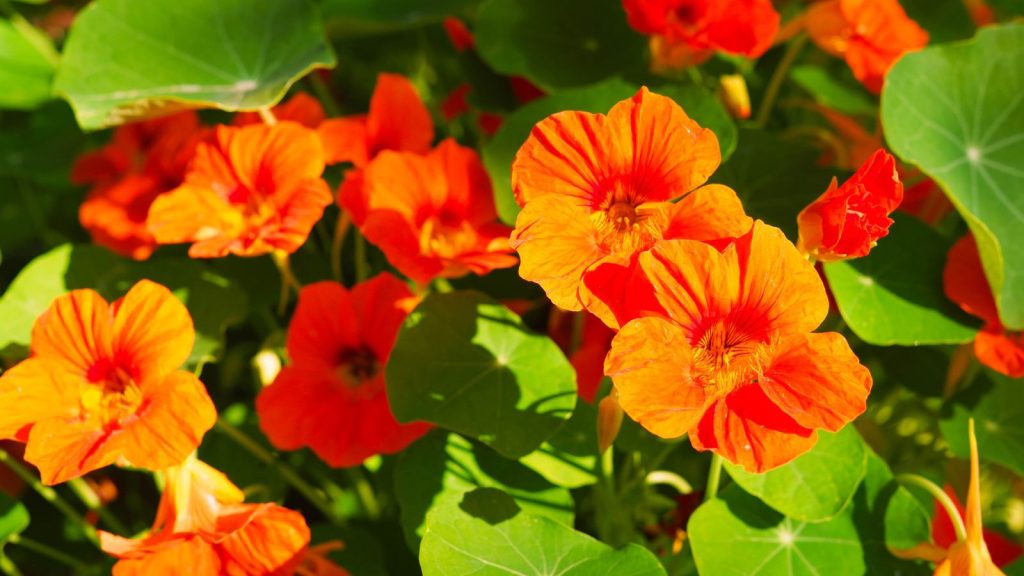
Nasturtiums are bold, fast-growing plants with bright, five-petaled blooms that pop off just 4–6 weeks after germination. They can sprawl or climb up to 10 feet tall and bloom best with at least 6 hours of full sun each day.
For best results, grow nasturtiums in poor to average soil (yes, really, as excessive fertility can slow the flowers) and in USDA zones 9–11. Keep the soil well-drained, and they’ll reward you with colorful, tiny flowers all season.
2. Baby’s Breath (Gypsophila paniculata)

Baby’s breath is airy, dainty, and surprisingly easy to grow. Its tiny white or pale pink flowers bloom in soft clusters, giving your garden a dreamy, cloud-like effect. This fast bloomer typically flowers 8–12 weeks after germination and can grow up to 3 feet tall.
Baby’s breath thrives in full sun but can tolerate a bit of light shade, especially in hotter climates. For best results, plant it in well-drained soil in USDA zones 3–9, and don’t overwater.
3. Spider Flower (Cleome hassleriana)
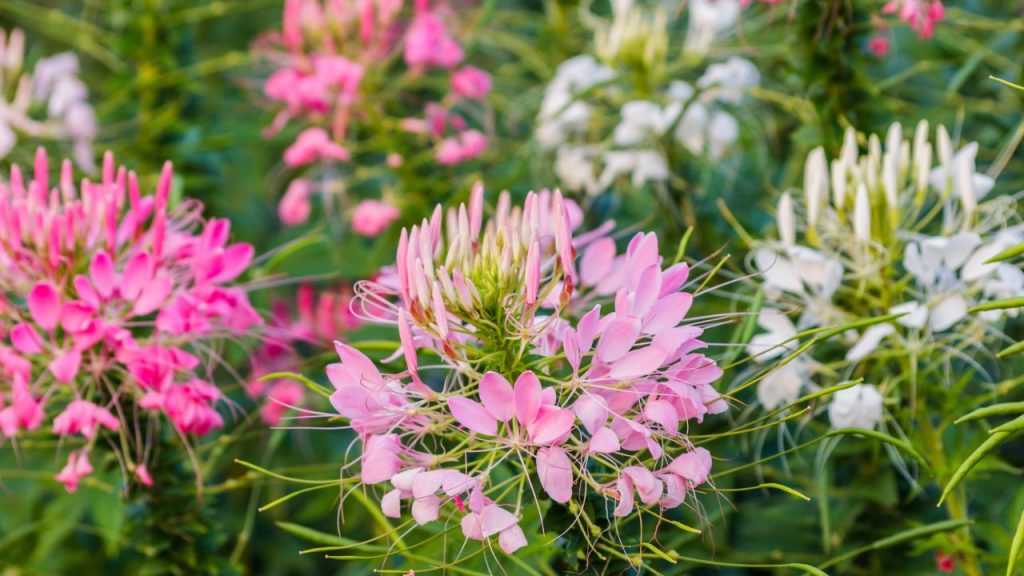
Spider flower is another fast-growing plant that wouldn’t take up much space in your garden. They usually bloom 8-12 weeks after germination. This plant requires 6-8 hours of full sunlight to grow healthy. At maturity, they can reach heights of 3 to 5 feet. Spider flowers thrive best in USDA zones 9 to 11.
Spider flower, also known as cleome, is a fast-growing plant that won’t crowd your garden. Spider flowers typically bloom 8–12 weeks after germination and reach a mature height of 3 to 5 feet.
They thrive in full sun, requiring approximately 6–8 hours of daily sunlight, and perform best in well-drained soil. For optimal growth, plant them in USDA zones 9–11 and water regularly, avoiding soggy soil.
4. Creeping thyme (Thymus serpyllum)

Creeping thyme is a hardy ground cover with dense green foliage and clusters of tiny tubular flowers in shades of pink, purple, or red. It’s low-maintenance, spreads easily, and adds a soft, fragrant feel to any garden path or border.
Seeds typically germinate within 2–3 weeks, and while the plant stays low to the ground (usually under 6 inches tall), it forms a thick, spreading mat over time. Creeping thyme grows best in full sun but can tolerate partial shade, and thrives in USDA zones 4–9 with well-drained soil.
5. Verbena (Verbena officinalis)

Verbena is another lush, fast-growing plant that doesn’t waste time to bloom. It typically sprouts within 21–30 days and produces clusters of small, star-shaped flowers in shades of red, purple, pink, or blue.
Verbena needs well-draining soil and 6-8 hours of full sunlight to thrive. It’s best suited for USDA zones 7–11 and typically grows to 9–12 inches tall when mature, making it ideal for garden beds, borders, or containers.
6. Sunflower (Helianthus annuus)
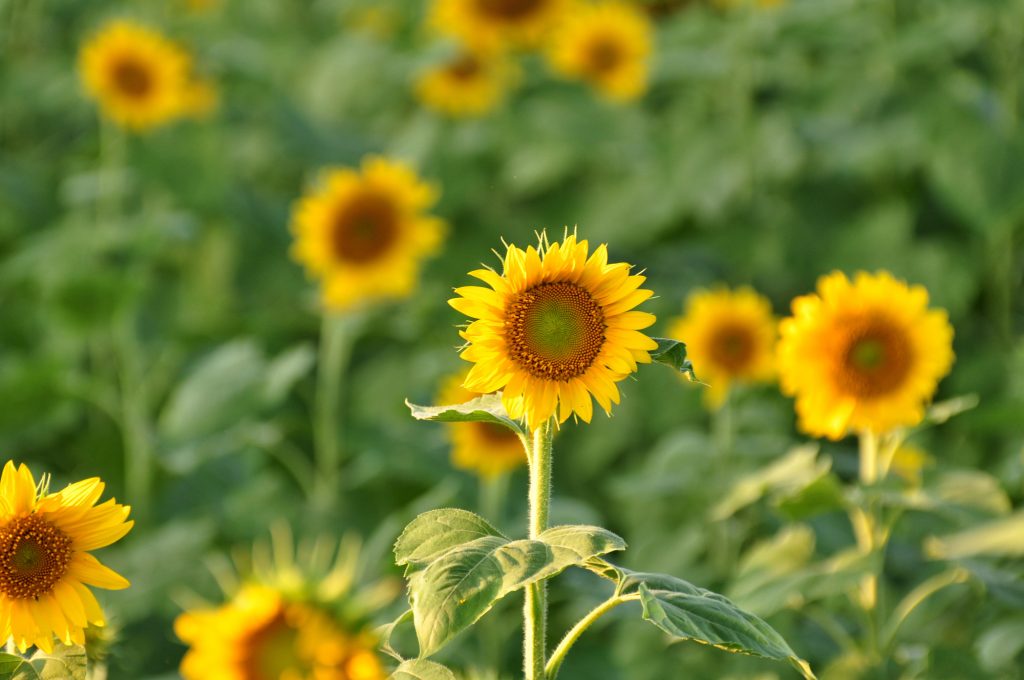
Sunflowers start as tiny plants, but don’t let that fool you—they can shoot up to a towering 10 feet tall at maturity. Their signature golden heads are made up of hundreds of tiny florets.
Most varieties flower between 11 and 18 weeks after planting.
7. Bugleweed (Ajuga reptans)

Bugleweed is another fast-growing ground cover plant that will brighten up your garden. Its dense, low-growing leaves are usually deep green, but some varieties have a purplish hue.
After approximately 18 days, it begins to germinate and will eventually produce spikes of soft, bluish-violet flowers, although it takes about 1–2 years to bloom. Bugleweed remains compact, typically reaching about 6 inches tall, and thrives best in USDA zones 3–10.
8. Sweet Alyssum (Lobularia maritime)
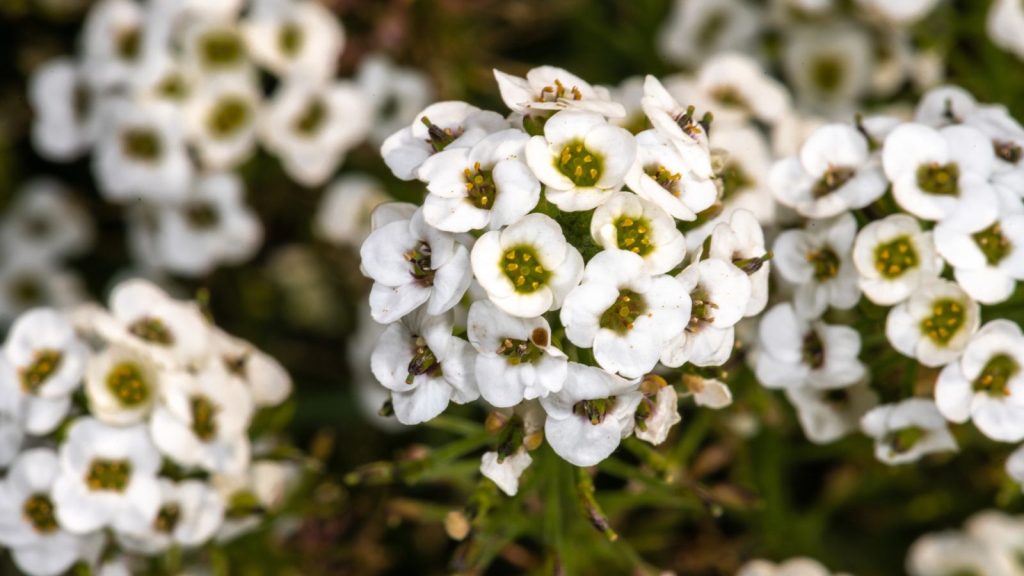
Sweet alyssum is a dainty, low-growing plant that’s as easygoing as it is charming. Clusters of tiny pink or purple flowers begin to bloom just 4 to 8 weeks after planting.
It needs at least 6 hours of sunlight to thrive and reaches a mature height of 4–12 inches. Sweet alyssum grows best in USDA zones 5–9.
9. Calendula (Calendula officinalis)

Calendula is a cheerful, low-growing plant with bright yellow or orange blooms that appear about 6–8 weeks after planting. It’s compact, eye-catching, and grows up to 12 inches tall.
10. Blue Star Creeper (Isotoma fluviatilis)

Blue star creeper is a dainty plant which produces lush foliage nd tiny, pale blue star-shaped flowers (as the name implies). It blooms best with full sun and grows well in USDA zones 6–8. This low-maintenance plant prefers moist, well-draining soil and benefits from occasional trimming to keep it neat.
11. Dwarf Tickseed (Coreopsis auriculata ‘Nana’)

Dwarf tickseed is a cheerful, daisy-like flower with bright petals and a sunny yellow center. It’s perfect for containers, borders, or lining pathways. This low-maintenance plant germinates in 2–3 weeks and grows best in USDA zones 4–9. They require moist, well-draining soil and full sun to partial shade. At full maturity, it reaches approximately 9 inches in height.
12. Wild Candytuft (Iberis amara)
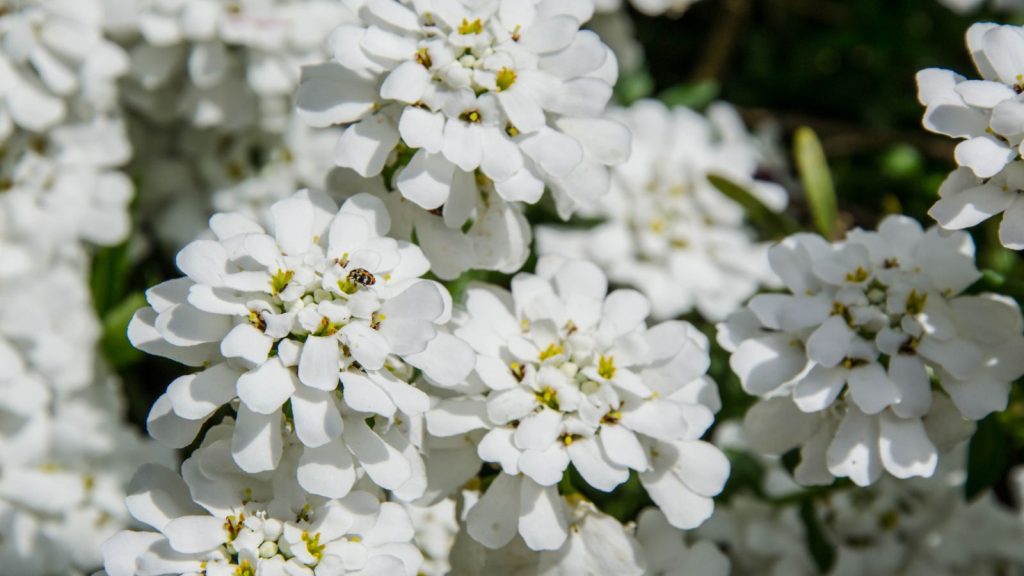
Wild candytuft is a fast-growing annual flower that produces dense clusters of four-petaled flowers in white or violet. It thrives in full sun and does best in USDA zones 3–9. At maturity, it reaches 4–12 inches tall and prefers well-drained soil for better blooms.
13. Mexican Sunflower (Tithonia diversifolia)

Mexican
Unlike regular
14. Zinnia (Zinnia elegans)
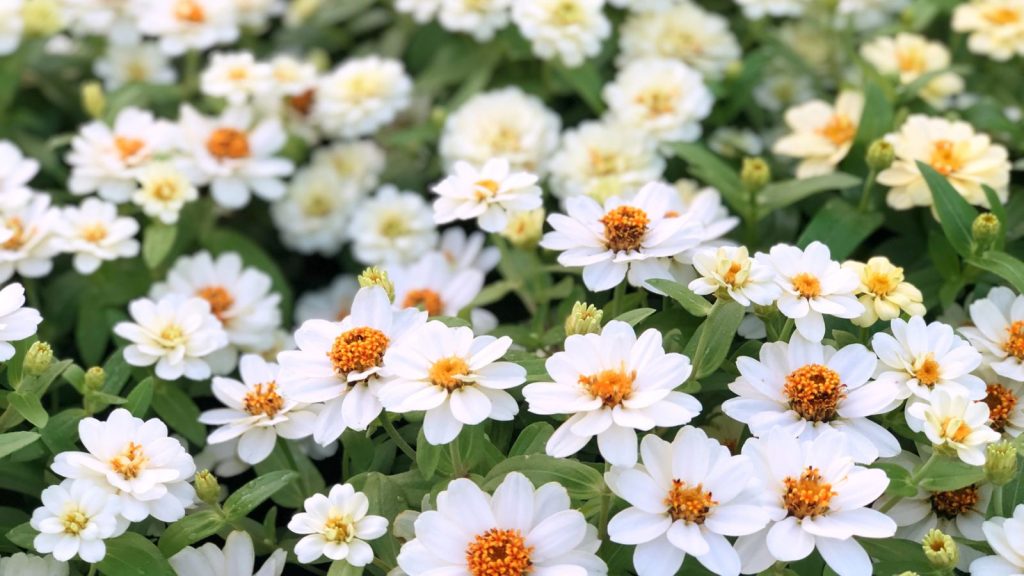
Zinnias have layered, dome-shaped flowers in bold colors such as red, orange, yellow, purple, cream, and even green. They flower quickly, usually within 12 weeks, and thrive in full sunlight.
Zinnias grow best in well-drained soil and USDA zones 2–11. For fuller plants and more blooms, pinch off the first few flower buds to encourage branching.
15. Cosmos (Cosmos bipinnatus)

Cosmos are daisy-like flowers with a broad yellow center and petals in shades of white, yellow, pink, or brown. They germinate in 7–21 days and bloom approximately 12 weeks later.
Cosmos can reach up to 6 feet tall and thrive in full sun and well-drained soil. They’re best grown in USDA zones 2–11 and need minimal care once established.
16. Lobelia (Lobelia erinus)

Lobelia is a very colorful plant with delicate purple, white, or pink flowers and bronze-tinted green leaves. The flowers bloom in just under 8–10 weeks and can grow 2–4 feet tall.
Lobelia prefers full sun but tolerates light shade and thrives in USDA zones 10 and 11. For best results, plant it in moist, well-drained soil and keep it consistently watered.
17. Lantana (Lantana camera)

Lantana is a fast-growing plant native to Central and South America. It’s known for its clusters of white, pink, or orange flowers and small black fruits. Lantana germinates in 3–4 weeks and typically blooms within 12–14 weeks.
It grows best in full sun, well-drained soil, and USDA zones 8–11. Once established, it’s drought-tolerant and needs minimal care beyond occasional pruning.