
Catnip (Nepeta cataria) is a hardy, low-maintenance herb that belongs to the mint family. It features soft, fragrant, silver-green foliage, making it an ideal choice for pollinator gardens, herb patches, or cottage borders.
Catnip naturally repels pests such as aphids, squash bugs, and flea beetles, making it a great companion planting choice for organic gardeners. But
Here are 15 excellent companion plants for
1. Chamomile (Matricaria chamomilla)

Chamomile and
Chamomile can help improve soil health and may enhance the flavor and vigor of nearby herbs, while
2. Echinacea (Echinacea purpurea)
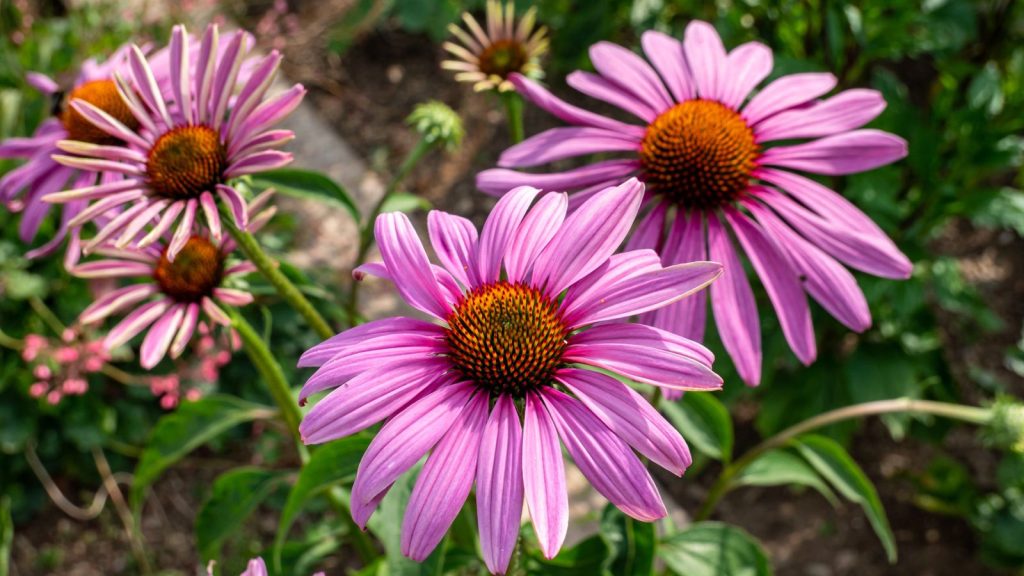
Echinacea, commonly called
Echinacea thrives in similar dry-to-medium soils. Like
3. Calendula (Calendula officinalis)

Calendula features sunny orange and yellow flowers that brighten up any garden and attract beneficial insects and pollinators. It’s also a great trap crop for common catnip pests, such as aphids and whiteflies. Plant
4. Lemon Balm (Melissa officinalis)
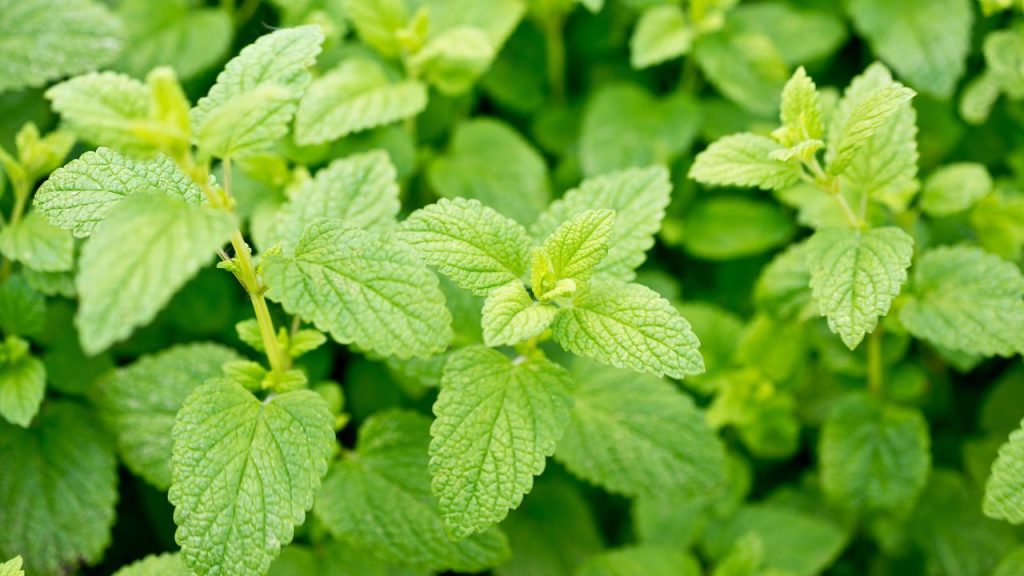
Although
They both share similar water and light needs, thriving in USDA zones 4 to 9. Be sure to plant it in a container or prune it aggressively, as
5. Yarrow (Achillea millefolium)

Yarrow is a natural companion to
Plant it close, but not too close to
6. Bee Balm (Monarda didyma)

Bee balm is a magnet for pollinators, especially hummingbirds and bees. It also helps to reduce the risk of fungal diseases that affect
Bee balm’s bold blooms can also help divert attention away from
Related: How to Make Bee Balm Tea
7. Thyme (Thymus vulgaris)
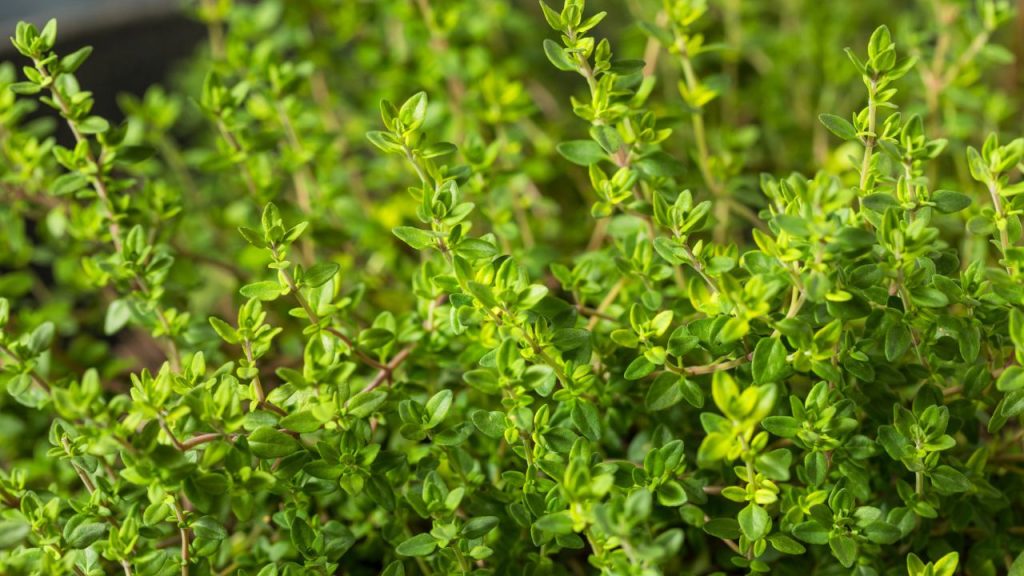
Thyme is a low-growing, woody plant, making it an ideal border plant for
Thyme tolerates dry conditions and full sun, and grows well in USDA zones 5 to 9.
8. Borage (Borago officinalis)
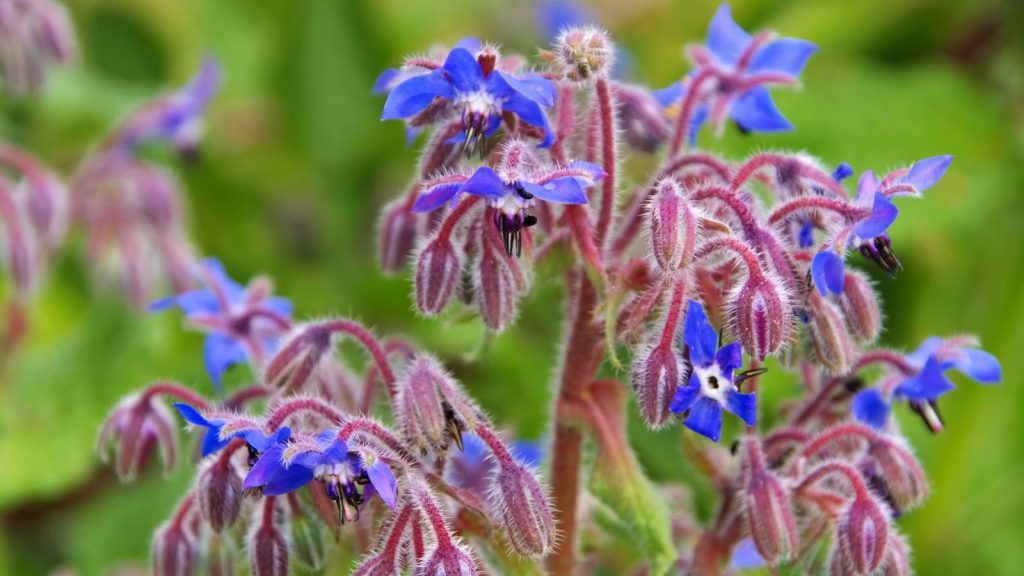
Borage has star-shaped blue flowers and is known for attracting pollinators and deterring tomato hornworms. It improves soil health by accumulating minerals in its leaves, which eventually return to the soil when the plant dies. This benefits
Borage thrives in USDA zones 3 to 10 and enjoys full sun and well-drained soil, just like
9. Caraway (Carum carvi)

Caraway’s delicate leaves complement
Grow caraway in full sun in USDA zones 4 to 10. Space both plants properly to prevent overcrowding, especially in raised garden beds.
10. Marigolds (Tagetes spp.)

Marigolds and
11. Chives (Allium schoenoprasum)
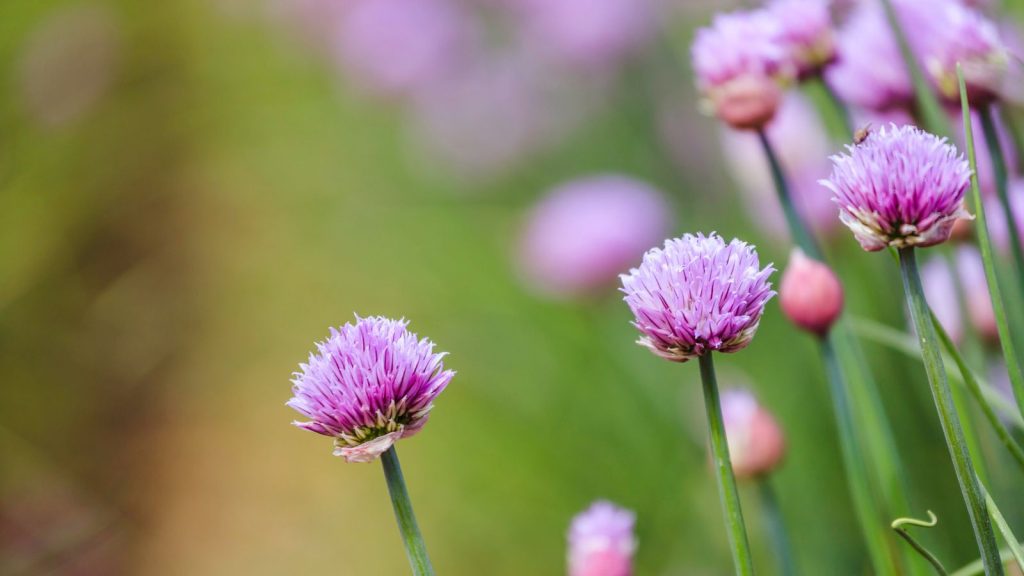
Chives contain sulfur compounds that are responsible for their smell. These compounds also help to deter aphids, Japanese beetles, and mites naturally. Chives thrive in USDA zones 3 to 9 and grow well in clumps around the edges of herb beds.
Their upright, slender form contrasts nicely with
12. Tansy (Tanacetum vulgare)
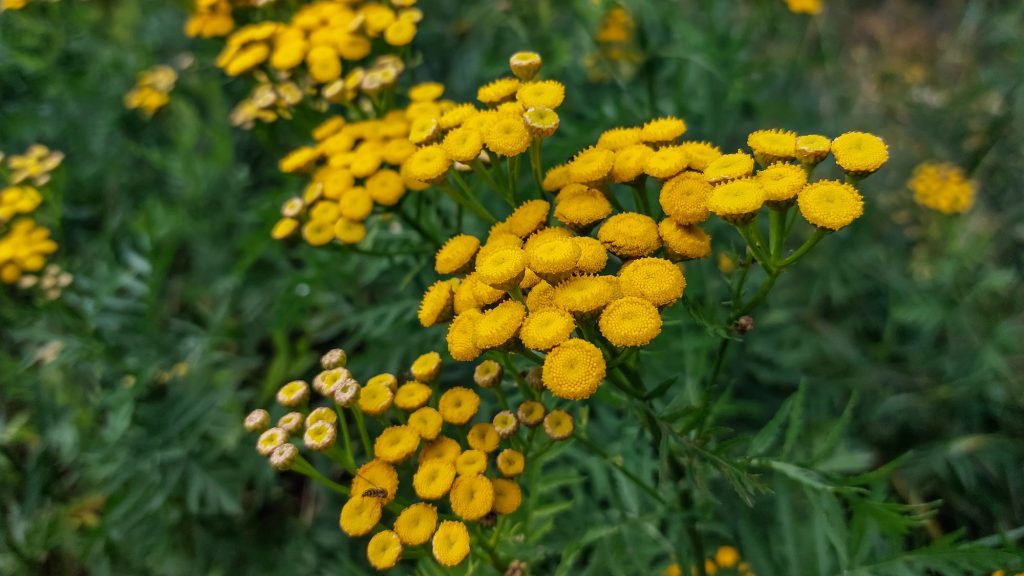
Tansy isn’t a common garden herb, but it’s an effective natural insect repellent. Planting it near
13. Feverfew (Tanacetum parthenium)

Feverfew is a cheerful little flowering plant that adds a bright contrast to
14. Sage (Salvia officinalis)
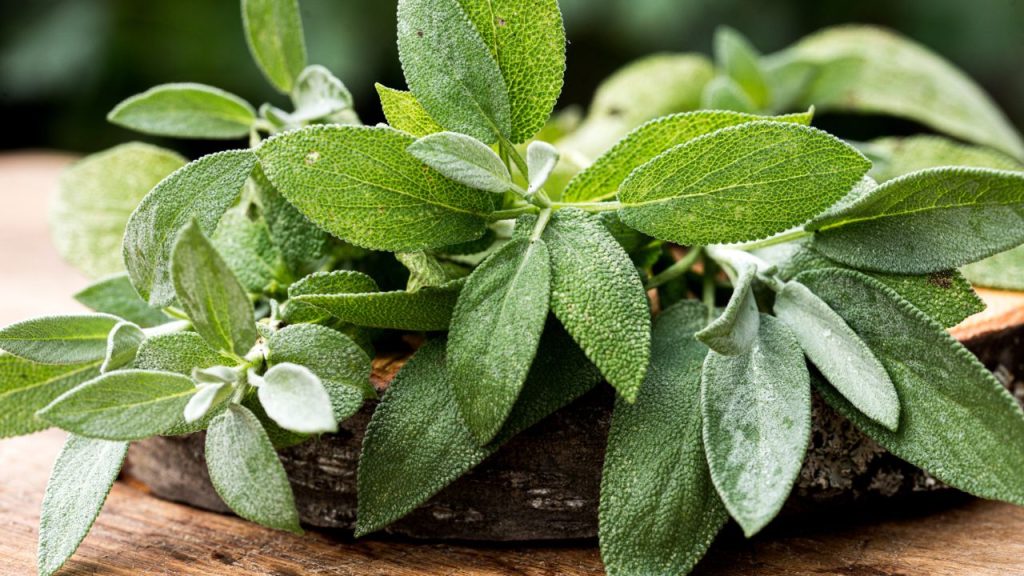
Sage and
Plant them in USDA zones 5 to 9, spacing them to allow for air circulation and prevent mildew.
17 Companion Plants to Grow Next to Sage for Healthier, Larger Crops
15. Nasturtiums (Tropaeolum majus)
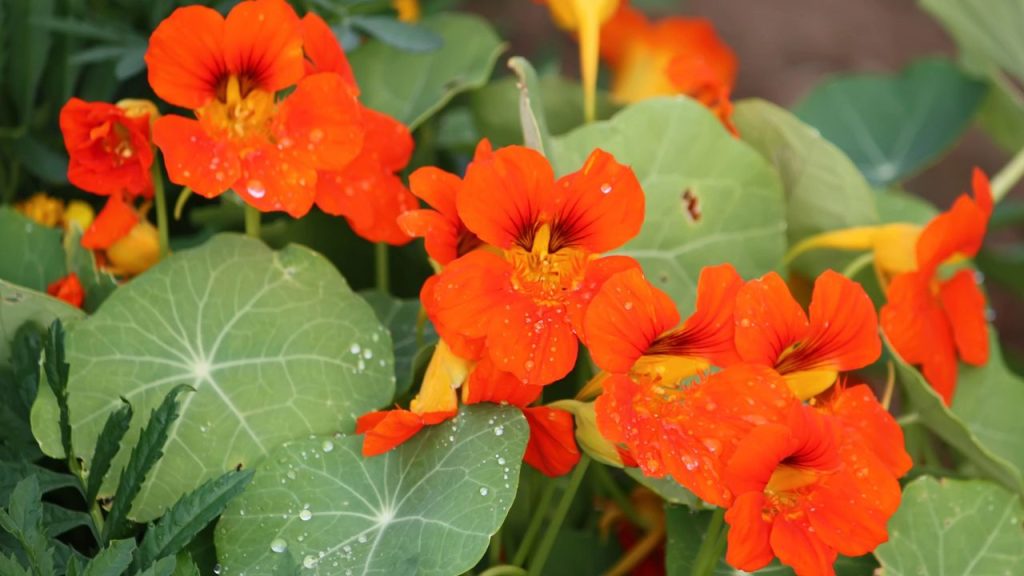
Nasturtiums act as trap crops, drawing aphids and flea beetles away from more sensitive crops, such as
Related: 12 Plants That Benefit From Being Near Nasturtiums
21 Cheap Perennials to Grow That Will Make Your Garden Pop

You can fill your space with lush, eye-catching blooms with the right selection without overspending. Here are 21 affordable perennials bringing long-lasting beauty without stretching your wallet this year.
21 Cheap Perennials to Grow That Will Make Your Garden Pop
Your Strawberries Will Thank You for Growing Them Next to These 21 Plants

While some gardeners remain skeptical about companion planting, many have experienced firsthand the benefits of strategically pairing crops. Healthier plants, fewer pest issues, and a more abundant harvest are just a few of the advantages that make this method worthwhile. Here are 21 plants that can help your strawberries thrive.
Your Strawberries Will Thank You for Growing Them Next to These 21 Plants
32 Colorful Perennials That Will Never Leave Your Garden Once Planted

If you want to brighten your garden, consider these 32 colorful varieties that will thrive and bring life to your outdoor area year after year.
32 Colorful Perennials That Will Never Leave Your Garden Once Planted