
Spanish gardens are known for their elegance, order, and sometimes, bold colors. They’re inspired by Moorish, Mediterranean, and Renaissance influences and often follow a geometric layout with clean lines, tiled walkways, and central water features. Every added element, be it a clipped hedge, tree, or flowering vine, is carefully placed to create balance and symmetry.
Unlike the wild, whimsical charm of cottage gardens, Spanish gardens are more refined and structured in design. Plants are chosen not just for their beauty or hardiness in heat, but also for how well they fit into a structured space. The right plants can highlight courtyards, frame fountains, soften stone walls, or add scent and shade to tiled patios.
If you’re starting a Spanish garden but unsure of which plants to add, you can begin with any of the 15 plants listed below.
1. Bougainvillea (Bougainvillea spectabilis)
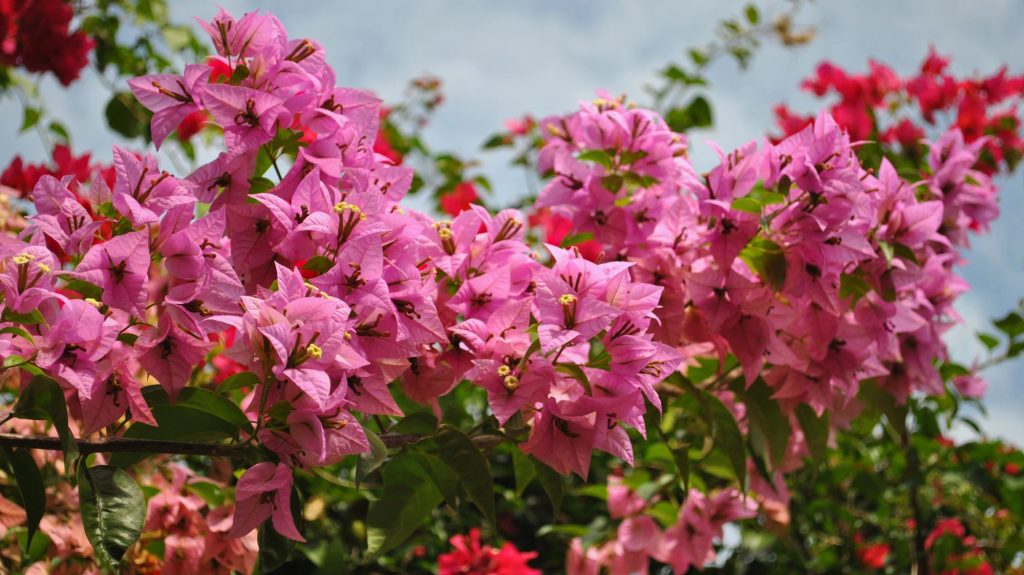
Sometimes, the riot of colors that a bougainvillea brings is just what a Spanish garden needs, not to appear too rigid. Bougainvillea is a woody climber that thrives in USDA zones 9-11. Its flowers bloom in vivid pinks, purples, reds, and oranges, sometimes spilling over walls or climbing arched trellises.
Bougainvillea thrives in full sun and needs minimal water once established. Bougainvillea can grow as high as 13 to 26 feet at maturity, depending on the species. In cooler climates, it can be kept in containers and brought indoors in winter.
2. Tropical Hibiscus (Hibiscus rosa‑sinensis)

Tropical hibiscus are showy, evergreen shrubs that exude understated elegance, a look that’s quintessential for Spanish gardens. The flowers are bold, exotic blooms in saturated shades of red, orange, pink, and yellow, nestled in glossy, deep green leaves. This creates an aesthetic that complements terracotta tiles and stucco walls.
They can be grown year-round outdoors in USDA zones 10 to 11. Elsewhere, they’ll need to be overwintered indoors. They can get up to 4-10 feet tall when they reach maturity. These shrubs thrive in warm climates and appreciate full sun and regular watering. They also require regular fertilization to bloom optimally.
3. Mandevilla (Mandevilla sanderi)

Mandevilla is a perfect match for Spanish gardens due to its elegant, trumpet-shaped flowers in various colors, including pink, red, yellow, and white. Mandevilla is a twining vine that grows quickly and can be trained to climb walls, pillars, or archways.
It thrives in USDA zones 9 to 12, prefers full sun, and appreciates regular watering with well-draining soil. It blooms continuously from spring through fall, attracting pollinators. It can grow up to 3-10 feet tall when mature.
4. Geranium (Pelargonium)
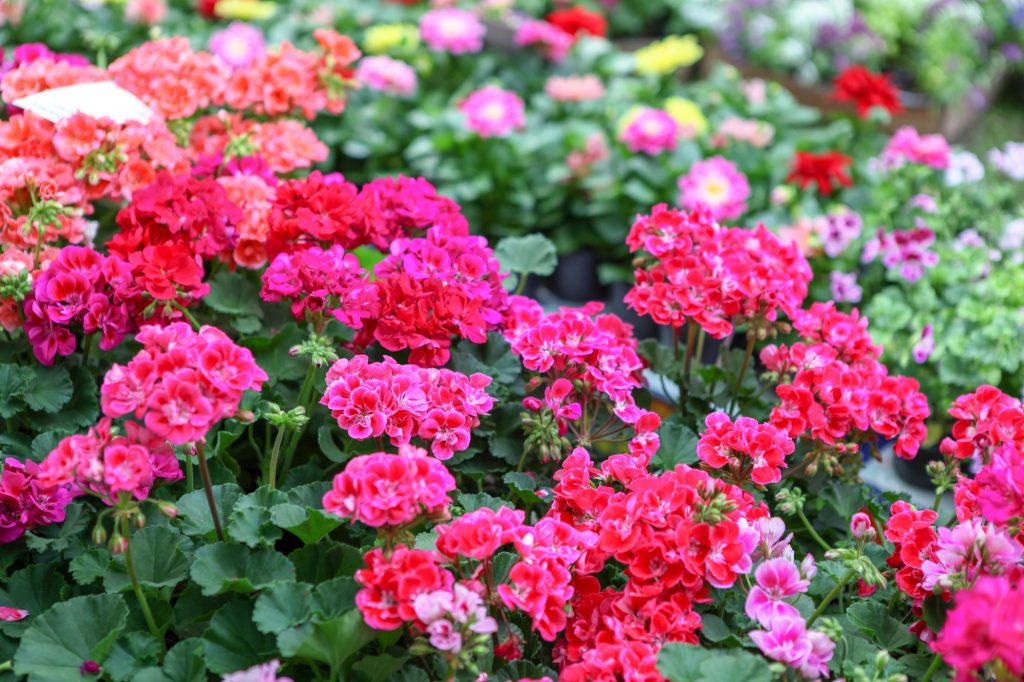
Geraniums are staples in Spanish window boxes and terracotta pots. They have five-petaled umbels that bloom in pinks, reds, and whites. Geraniums are long-lasting and thrive with very little care.
They thrive in full sun and can tolerate dry conditions, making them ideal for USDA zones 9 to 12 or as annuals in other zones. At maturity, they can reach heights of up to 3 feet.
5. Common Olive (Olea europaea)
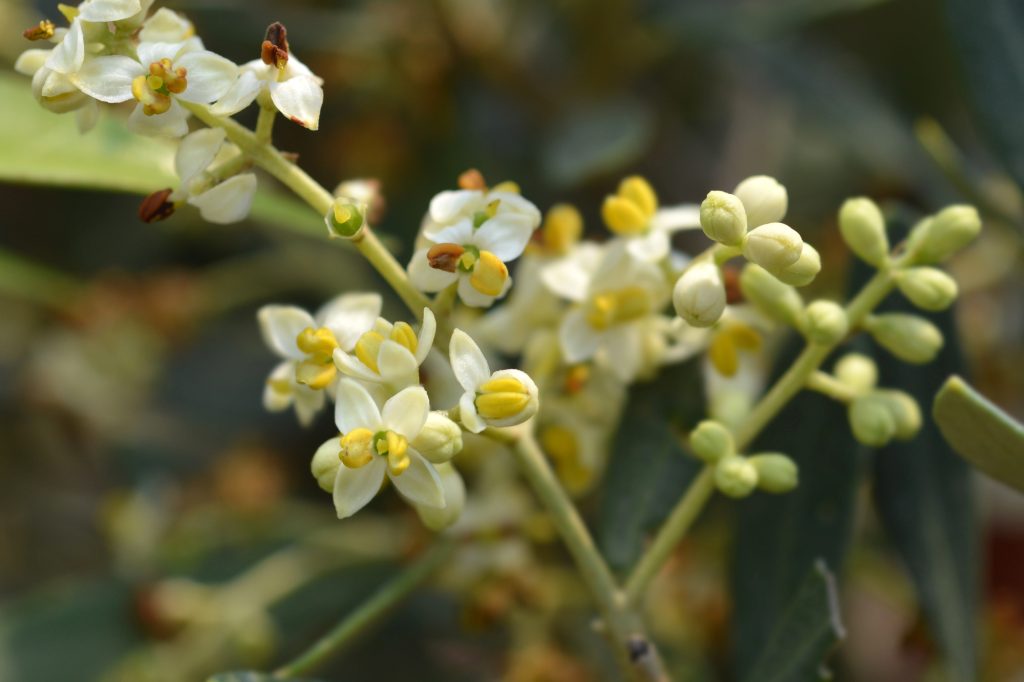
Although olives are a slow-growing plant, they are perfect for Spanish gardens. Once they mature, they produce silver-like leaves and black or purple fruit. They can reach heights of 20-30 feet at their mature stage.
Olives require moderate watering and direct sunlight daily. They thrive in USDA zones 8-10, prefer full sun, and well-drained, sandy soils.
6. Passionflower (Passiflora incarnate)
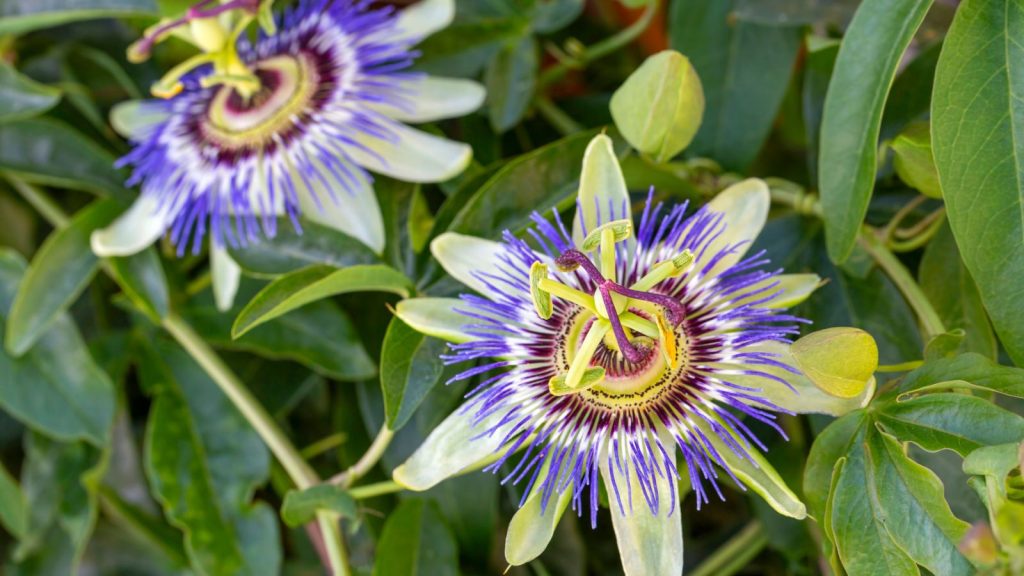
Passionflower has the exotic, tropical appearance that makes it a must-have for Spanish gardens. These fast-growing vines can be twined along walls, pergolas, fences, or trellises in your garden or as shrubs.
The flowers bloom along the vine in shades of purple, blue, and white. Passionflower can reach 10–30 feet tall and spread 6 feet wide when mature. Depending on the variety, they can thrive in USDA zones 7-10, and prefer full sun to part shade.
7. African Lily (Agapanthus africanus)

The leaves of this South African native are thick, green, and sword-shaped. The funnel-like flowers bloom around early summer in shades of blue, white, or purple.
African Lily is fairly easy to grow and is best planted along pathways. The dwarf variety only reaches 8 inches in height at maturity. It grows best in USDA zones 8-11, preferring well-draining soil and full sun or partial shade. Prune them to stimulate new growth.
8. Agave (Agave americana)

Agaves are architectural, drought-tolerant succulents that complement the style of any Spanish garden. Their spiky, symmetrical rosettes come in various sizes and colors, from soft blue, yellow, red, and gray-green. Agaves are perfect for xeriscaping and hardy in USDA zones 8-9. They need full sun, sandy soil, and minimal watering.
They can reach 3-6 feet at maturity, anchoring the garden beds and adding contrast to softer, billowy plants. Unfortunately, the
9. Lantana (Lantana camara)
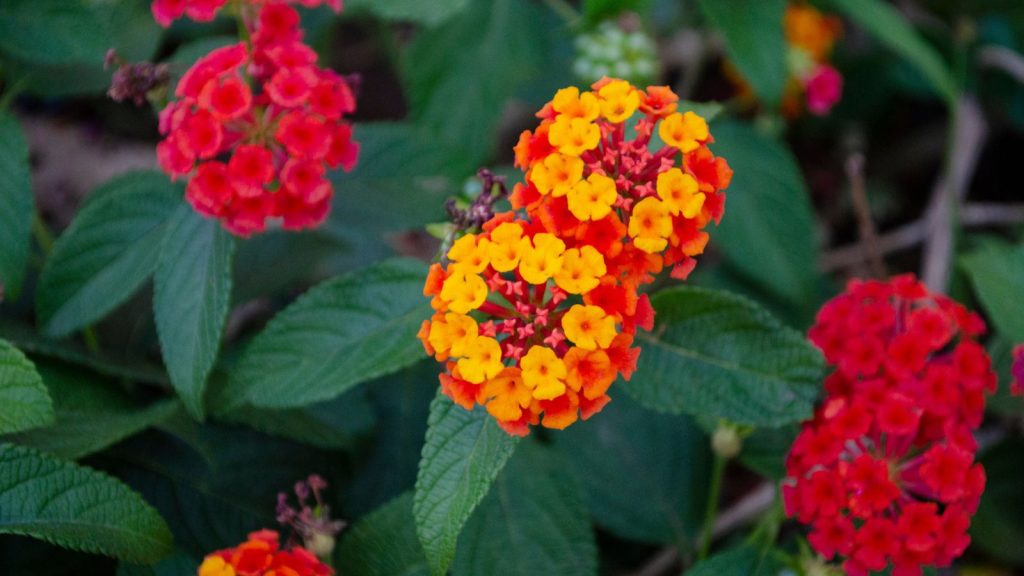
Many love Lantana for its bright, multi-colored blooms that change shades as they age. Its purple, orange, pink, red, or purple flower clusters attract pollinators and tolerate heat and drought. Lantana comes in several varieties with different growing patterns. They can be compact, bushy, or trailing. Most people prefer the trailing variant because they are larger.
It’s an evergreen that can be grown as an annual or perennial. It works well as a groundcover, in hanging baskets, or as a compact shrub. At maturity, lantana can reach heights of up to 6 feet. They grow best in USDA zones 9-11 and require full sun.
10. Common Jasmine (Jasminum officinale)
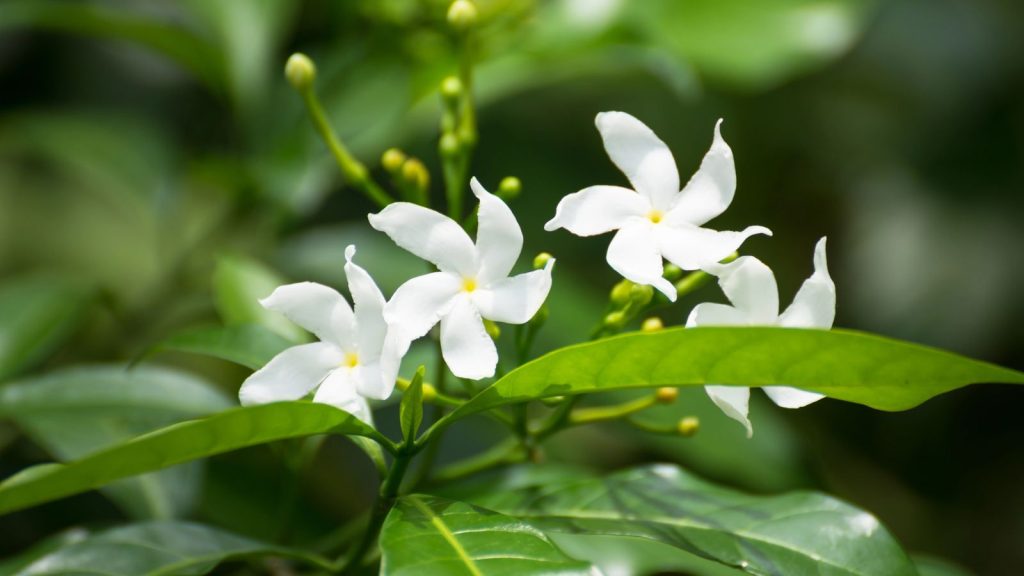
Common Jasmine is native to Turkey, Central China, Iran, and Northern India. Jasmine produces delicate white or pink flowers with an intoxicatingly sweet fragrance. It twines gently up trellises or along fences, softening the structure with its tubular petals.
It grows in full sun to partial shade and well-draining soil, thriving in USDA zones 7-10. Plant it near seating areas or entryways to enjoy its sweet scent in the warm evening air.
11. Climbing Rose (Rosa setigera)

While climbing roses are often associated with English gardens, they also play a significant role in Spanish gardens, particularly when trained over archways or pergolas. Their fragrant red, pink, and purple blooms create a beautiful contrast with rustic stone and tile.
Normal climbing rose variants can grow as tall as 8- 15 feet, while the dwarf varieties reach 3-4 feet. Choose varieties that are heat-tolerant and bloom repeatedly. They are best suited for growth in USDA zones 4-11, with full sun and regular watering.
12. Silverbush (Convolvulus cneorum)
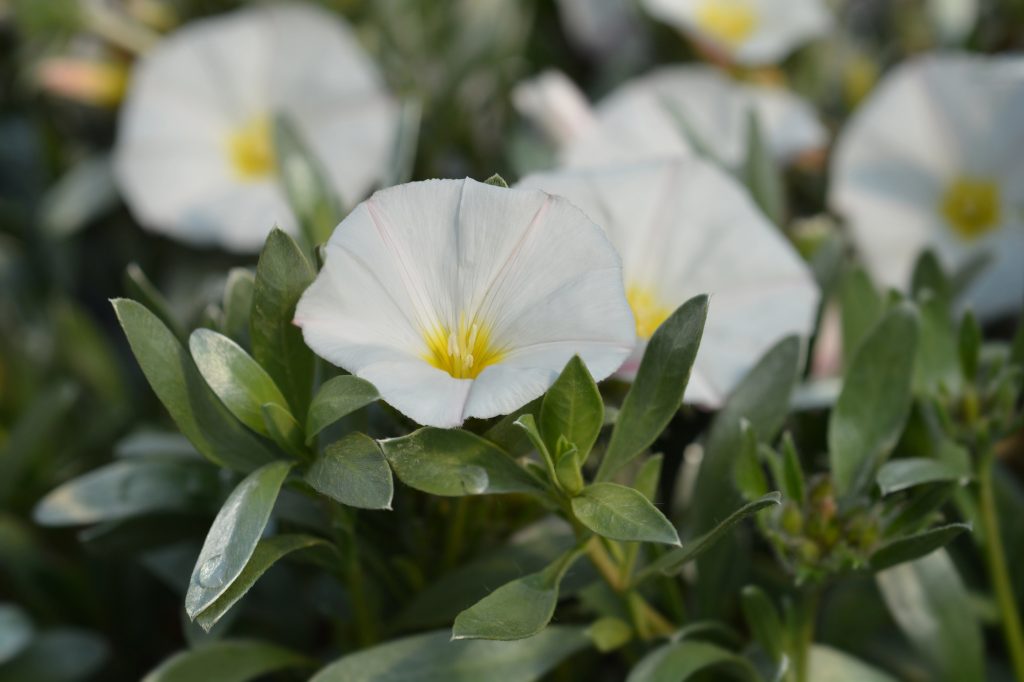
Silverbush is a great plant to diversify your Spanish-style garden. This low-growing, evergreen shrub shines with woolly, silver-gray leaves and funnel-shaped white flowers. It’s perfect for edging paths or tucking into rock gardens and reflects sunlight beautifully.
At maturity, they can reach heights of 2-3 feet. Silverbush grows best in USDA zones 9-11, loves full sun, and well-drained soil.
13. California Poppy (Eschscholzia californica)
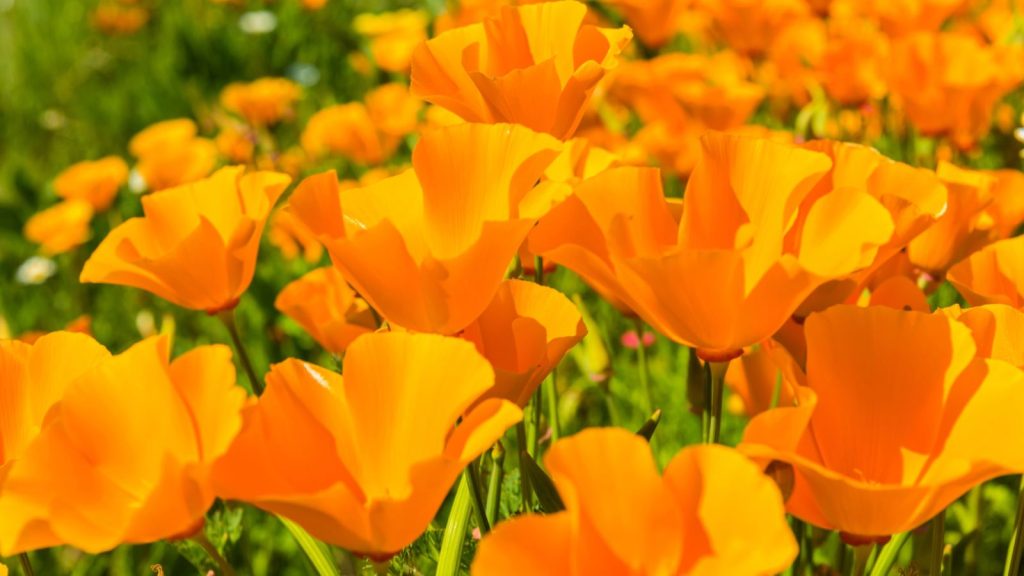
California poppy fits in with the effortless and natural style of Spanish gardens. It produces cheerful, sun-loving flowers that bloom in bursts of orange, gold, or red. Their silky petals dance in the breeze, bringing a naturalistic wildness to the structured beds of Spanish gardens.
California poppy is drought-tolerant and can grow up to 2 feet tall if cared for. They reseed easily and grow well in USDA zones 6 to 10. Plant them in full sun and lean soil for the best blooms.
14. Oleander (Nerium oleander)

Oleander is a robust, flowering shrub that perfectly fits the majestic, sophisticated style of Spanish gardens. They produce leathery leaves and clusters of flowers in various colors, including pink, white, red, and yellow. Oleander is tolerant of heat, salt, and drought and works beautifully as a garden’s privacy hedge or focal point.
Oleander thrives in USDA zones 8 to 10, and needs full sun and well-drained soil. However, it’s important to note that all parts of the oleander plant are toxic if ingested.
15. Rosemary (Salvia rosmarinus)
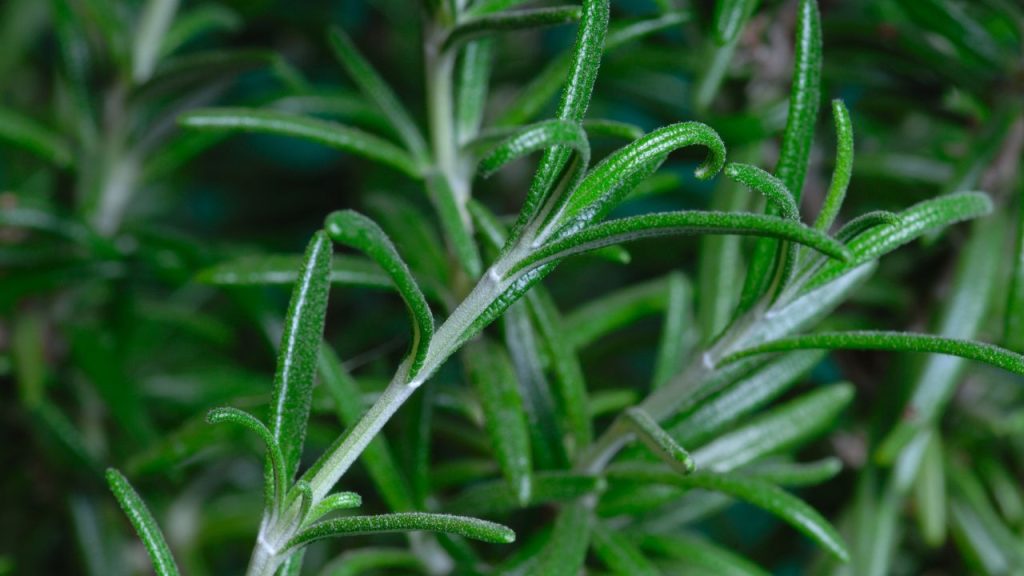
Rosemary is an aromatic shrub with needle-like leaves and small flowers in shades of white, blue, or pink that blends right in a Spanish garden. It thrives in hot, dry climates and fits perfectly along paths, in pots, or as clipped low hedges. Rosemary grows best in USDA zones 8 to 10 with full sun and sandy, well-drained soil.