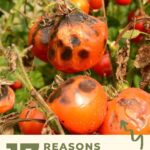
Tomato plant leaves turning brown can be caused by several things. Sometimes, it might be natural, and other times, it might be caused by bacteria or diseases.
The most important thing is to identify the signs quickly and apply solutions to save your plants from dying. Here are 17 reasons why your tomato plant leaves are turning brown
1. Canker

Some bacterial diseases, such as canker, can cause tomato leaves to turn brown. Cranker is caused by an organism infesting tomato seeds. Symptoms can include wilting, browning, and yellowing around the borders.
Unfortunately, canker is not treatable, so treating your tomato seeds before planting is best to prevent its growth.
2. Septoria Leaf Spot

Septoria leaf spot is a fungus that affects tomato leaves. It is prominent in wet and humid areas. It appears as a round gray spot around the bottom of the leaves, eventually causing browning. Septoria leaf spot treatment includes removing the affected leaves, using antifungal sprays, or controlling weeds in your garden.
3. Spider mites
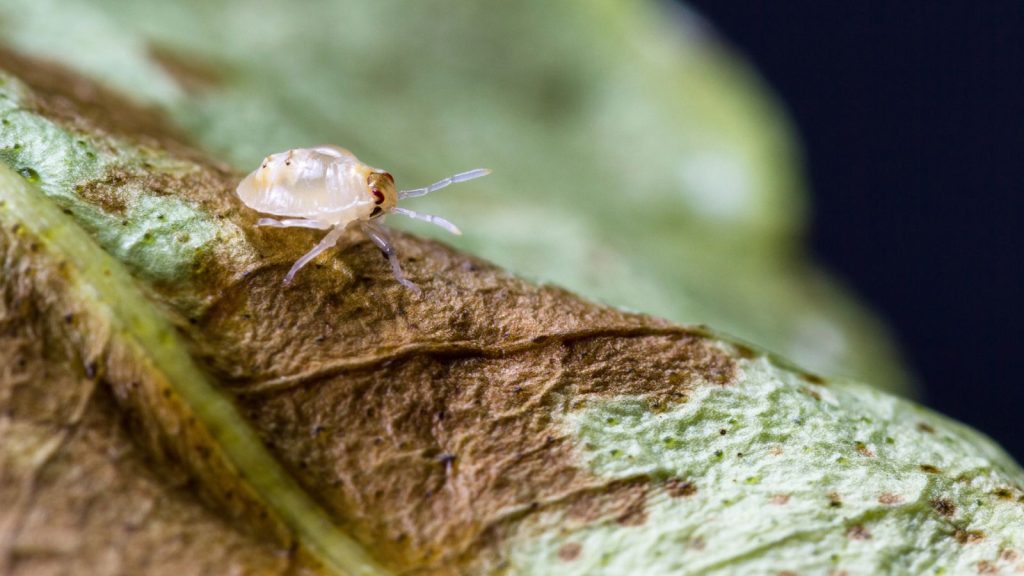
Spider mites are tomato pests that arise from too many nutrients, underwatering, or too much nitrogen. Symptoms of spider mites are yellowing or browning of leaves around the top area, curling of leaves, and spots underneath the tomato leaves. Use
4. Underwatering

The most obvious sign that your tomato plants are not getting enough water is when the leaves turn brown. Drooping and wilting of leaves may occur at later stages, and the dehydrated leaves become crispy.
Fortunately, watering your plants consistently fixes the problem. The best time to water your tomato plant is in the morning. Water at the soil level to keep the leaves dry, and only water your plant if the top three inches of the soil feel dry to prevent overwatering.
5. Early Blight

Early blight is one of the most common reasons your leaves turn brown. Early blight is caused by the fungus Alternaria Linariae. In the beginning stage, early blight targets older leaves and causes them to have brown, round spots. Eventually, these leaves dry up and may cling to the stem.
To solve this problem, you will have to prune the affected tomato leaves carefully. Also, apply a synthetic fungicide.
6. Late Blight
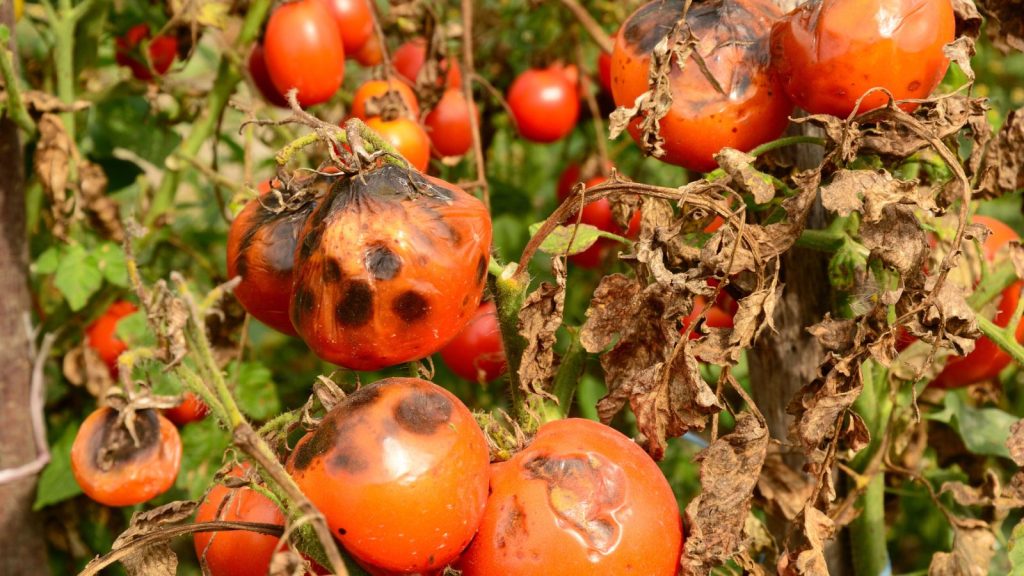
Late blight is caused by the pathogen Phytophthora infestans. The symptoms include brown patches surrounded by gray borders on the leaves.
Late blight is trickier to manage than early blight. However, solutions include digging up and properly disposing of the affected plants. Remember not to plant in the same place where the affected plant was uprooted. Also, avoid leaving water on your plant’s leaves for too long.
7. Verticillium Wilt

Verticillium wilt is a fungal disease that affects the soil and makes it hard for the plant to absorb the nutrients needed for growth. Although it doesn’t kill the tomato plant, it can stunt its growth.
The early signs include wilting, yellowing of the bottom leaves, and stunted growth. The late signs are the browning of leaves. Since it is a soil-borne disease, there’s no solution. Once a plant has been affected, it’s best to remove it and not compost it.
8. Nutritional Deficiencies
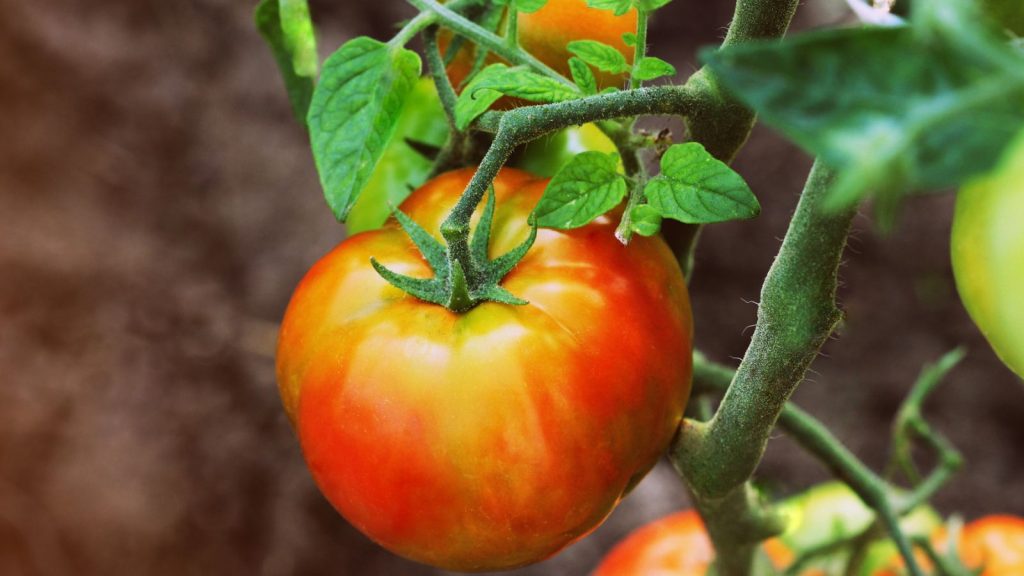
Another reason why tomato plants may turn brown is nutritional deficiencies. Lack of magnesium can cause the leaves to turn yellow and then brown. To solve this problem, ensure you give the plant the essential nutrients like nitrogen, phosphorus, and potassium, which are important for the plant to thrive.
9. Bacterial Disease
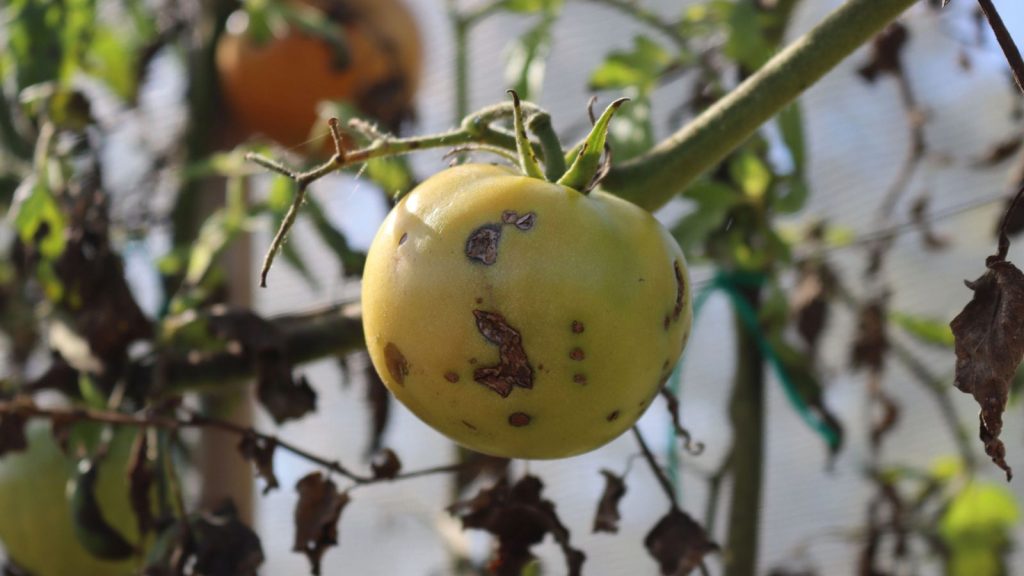
Some bacterial diseases, such as Xanthomonas, affect the leaves of tomatoes. The most obvious sign of bacterial disease is brown water spots on the leaves. If not treated urgently, the disease can spread to the tomato itself.
You can prevent bacterial diseases by planting tomato varieties that are immune and buying clean seeds.
10. Root Damage

When a tomato plant’s roots are damaged, from transplant shock, pests, or physical injury, they struggle to absorb water and nutrients. This stress can cause the leaves to turn brown and wilt. To prevent this, handle the plant gently when transplanting and ensure the soil is loose enough for root growth.
11. Herbicide Exposure

If used incorrectly, herbicides can curl the leaves and turn them yellow and brown. Once you notice signs of herbicide exposure, wash the plant’s leaves immediately and thoroughly. You might also need to prune affected leaves.
12. Sunscald

Too much exposure to sunlight and excessive pruning cause sunscald. Symptoms may include yellowing or browning of the upper side of the leaf. Unfortunately, once the leaves and fruit have been affected, the only solution is to remove them. Ensure you shade or cover the plant with a cloth to avoid too much exposure to the sun.
13. Poor Drainage

Poor soil drainage is another reason your leaves are turning brown. When soil becomes clogged with water, it can lead to other problems, like fungal disease. You can improve soil drainage by applying compost.
13. Salt Build-Up

Excess salts in the soil from fertilizers or hard water can dehydrate tomato roots, leading to browning leaf edges. To prevent salt build-up, flush the soil periodically with fresh water and avoid over-fertilizing.
14. High Temperature Stress
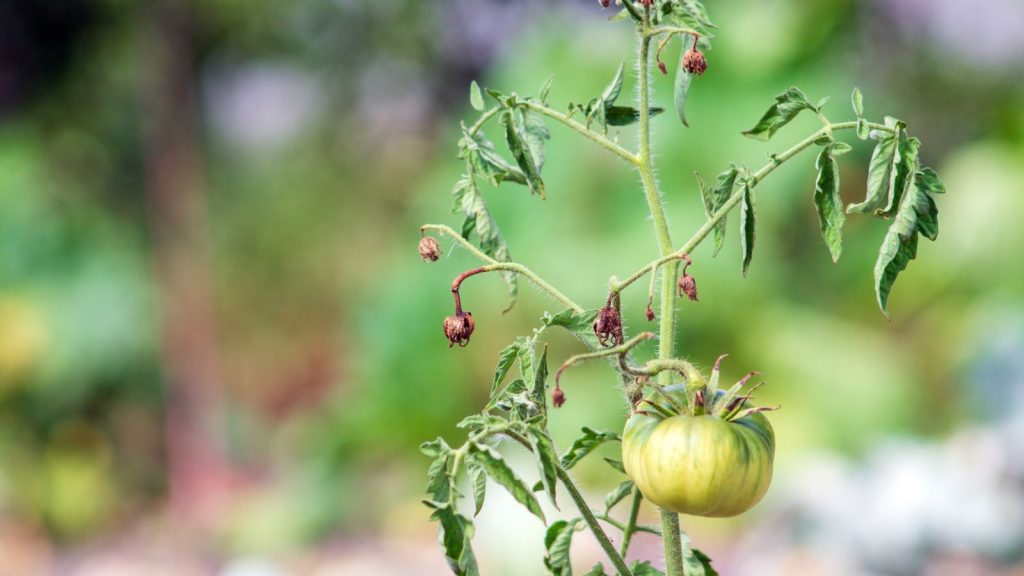
Tomatoes grow well in warm temperatures, usually between 71 and 84 degrees. At higher temperatures, they begin to show signs of stress, including browning of the leaves. Ensure you shade your plant when it starts showing signs of excessive heat.
15. Cold Weather

On the other hand, cold weather can also cause tomato leaves to turn brown. In fact, any sudden change in temperature causes stress for your plant. Avoid planting tomatoes in freezing temperatures to prevent brown leaves. Mulching your soil aids in heat retention and can promote healthy leaves. Also, use protective materials to cover your plants during cold weather.
17. Unhygienic Environment

The environment may not be an obvious reason your leaves turn brown. But if you’ve done everything and nothing seems to work, it’s best to check the environment where your tomato is planted. Ensure you’re weeding the area and keeping it dirt-free.
How to Keep Deer from Ruining Your Tomato Harvest

Though deer are nice to watch, they can cause problems in the garden, particularly when they start munching on tomatoes. To help you protect your tomato plants this season, here are 15 strategies to keep deer at bay.
How to Keep Deer from Ruining Your Tomato Harvest
Grow Juicier, Tastier Tomatoes with These 15 Companion Plants

Companion planting is an age-old gardening method that can help prevent common plant issues and boost crop yields. By using some of the best companion plants for tomatoes, your harvests will be better than ever. Here are the 15 best companion plants for your tomato garden.
Grow Juicier, Tastier Tomatoes with These 15 Companion Plants
How to Support Tomatoes: Tomato Stakes vs. Tomato Cages
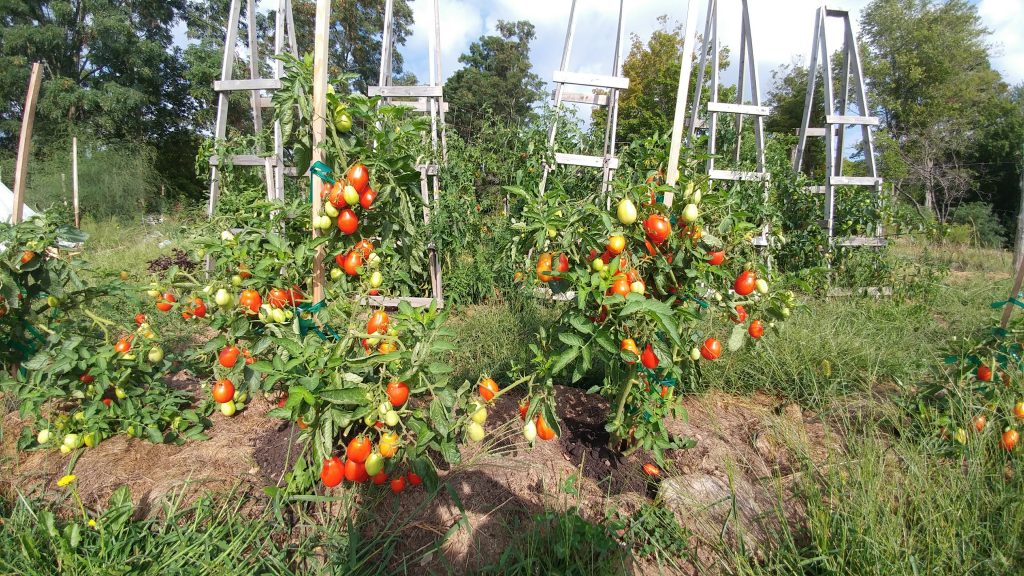
Supporting garden tomatoes with tomato stakes or cages is necessary for all but a few varieties of tomatoes. Without some form of support, your tomato plant will sprawl out over the ground. Here, we’ll share some considerations to help you make a choice that will work for your garden.