There’s something undeniably captivating about the color red. It’s bold, vibrant, and naturally draws the eye. That’s part of what makes red birds so striking—you don’t always expect to see a vivid flash of red against the blue sky or among the greenery as a bird darts through your garden.
In many bird species, it’s the males that wear the brightest plumage, while the females often have duller, more camouflaged feathers to help them stay hidden. The bright red coloring in males is usually a sign of strength, good health, and strong genetics—qualities that appeal to potential mates.
Whether you’re an avid bird watcher or simply enjoy hearing birdsong from your porch, observing these vibrant birds adds beauty and interest to your outdoor space. Here are 15 red birds that are sure to brighten your garden and spark your curiosity.
1. Northern Cardinal (Cardinalis cardinalis)

You cannot make a list of stunning red birds without including the Northern Cardinal, specifically the male species. They have bright red feathers that are almost impossible to ignore. That fiery color is hard to miss as it stands out sharply against the dark green (or brown in fall) leaves and the whites and blues of the sky.
The females are a lot more muted, mostly brown, but with soft reddish hints along the wings and tail. Northern Cardinals are year-round residents in many parts of the U.S. and are easy to attract with sunflower seeds. Fill a bird feeder with some of those and you’ll enjoy their clear, sweet songs every morning, even on cold winter days.
2. Scarlet Tanager (Piranga olivacea)
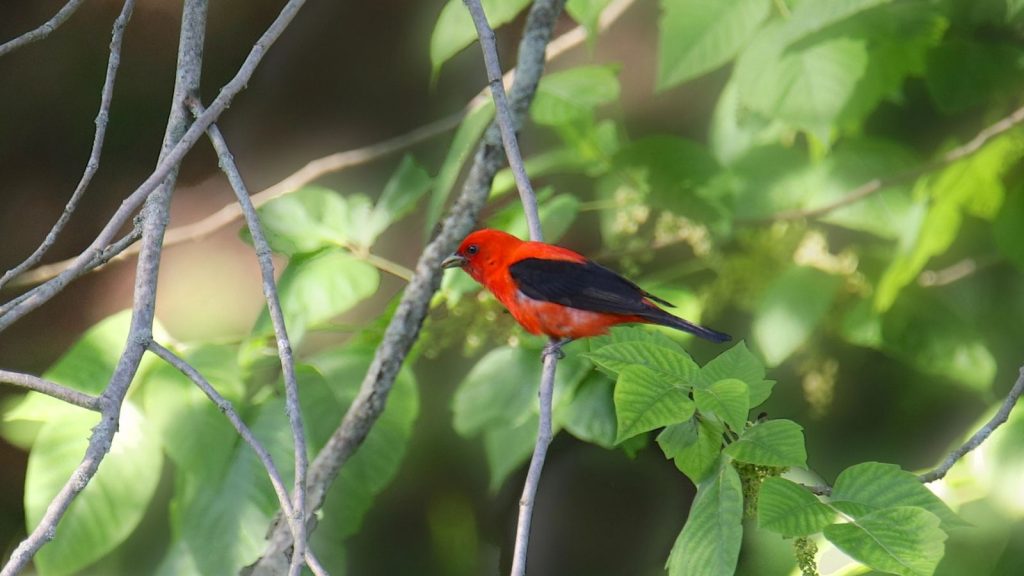
Most of the year, both male and female Scarlet Tanagers have an olive-yellow color with darker wings. However, as the breeding season approaches in spring, the males molt into a brilliant scarlet-red that can appear orange-red under certain lighting conditions. They have black (occasionally blue) wings that, together, form a striking plumage.
Scarlet Tanagers have surprisingly soft, raspy songs that don’t match their flashy looks. These birds migrate from South America to nest in North American forests each spring. While they prefer wooded areas, you might spot one in your garden during migration if you’ve got tall trees and plenty of cover.
3. Summer Tanager (Piranga rubra)
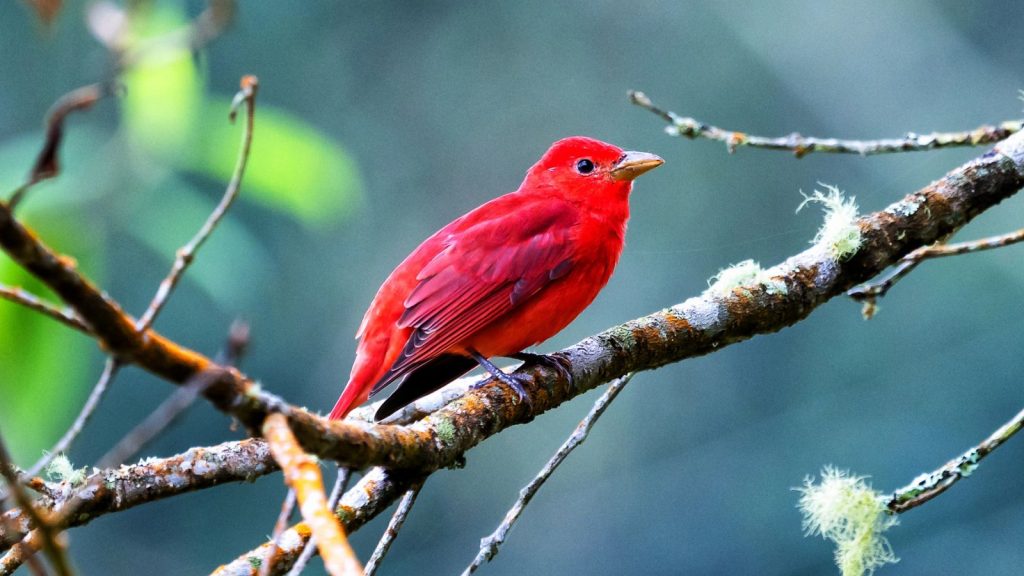
The Summer Tanager is red all over, from head to tail, with no black wings to break up its color like the Scarlet Tanager. Or black face like the Northern Cardinal. It’s a deep, rich red, too, like the flesh of a ripe cherry. Females, by contrast, are warm yellow to golden-olive.
You’ll usually find Summer Tanagers in open woodlands, especially those with oak trees, but they’ll occasionally visit gardens, especially if you offer fruit. Stock a fruit feeder with orange slices or bananas, and it might just tempt one down to your garden.
4. House Finch (Haemorhous mexicanus)
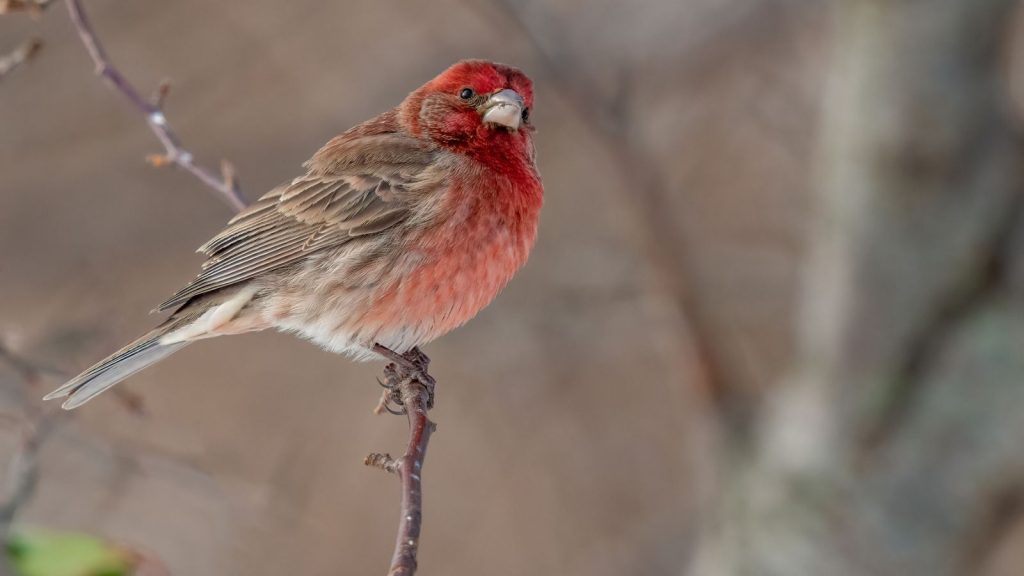
House Finches are one of the few bird species that are well-adapted for urban areas. You’ll see these small, red birds in city parks, suburbs, hanging baskets, or even nesting in wreaths and street signs. You can attract them to your garden by setting out a tube feeder with seeds, and they’ll stop by frequently.
Only the males are red, and even then, the red varies widely from deep raspberry red to orangey or even yellowish-red. This color originates from their diet, particularly the pigments in the foods they consume. A redder color usually signals a better food source or health. Females are brown and streaky, with no red, which can make them blend easily into the background.
5. Pine Grosbeak (Pinicola enucleator)

Pine Grosbeaks are also a part of the Finch family but belong to a different genus. These small birds are called grosbeak because of their large, thick beaks, which are well-suited for cracking hard seeds and berries.
The male Pine Grosbeak is covered in soft, rosy-red feathers from head to belly, with charcoal-gray wings and tail. The red color is less bold than that of a Summer Tanager or House Finch (more of a muted, almost frosted red, really).
Pine Grosbeaks are often found in northern forests and are not commonly seen as garden visitors. However, if you live in a colder climate, you might be able to tempt one to your backyard with a reliable source of food, like berries or crab apples.
6. Red-breasted Nuthatch (Sitta canadensis)

Unlike most birds on this list, where the red feathers can be found on the top, the red-breasted Nuthatch is only red on its chest and belly. It’s also not a vivid red, but more of an orange-rust color. It has a blue-gray back, white face, and a bold black eye stripe that gives it a masked appearance. Both sexes look alike, although the males’ colors are slightly brighter.
The Red-breasted Nuthatch is a small, acrobatic bird with a high-pitched call that resembles a squeaky toy. You’ll often see them climbing head-first down tree trunks, a signature move that sets them apart from other birds.
Red-breasted Nuthatches prefer coniferous forests but will visit feeders in winter, especially for sunflower seeds, peanuts, and suet. They also nest in tree cavities, often sealing entrances with sticky sap.
7. Cassin’s Finch (Haemorhous cassinii)

Cassin’s Finch is a little more understated than others, but it’s still a beauty. Its rosy red feathers may not be as bright as the Cardinal’s, but it’s still eye-catching, especially in the spring and summer. The females are brown and streaked, with no red, and can easily be confused with House Finches.
These birds are primarily found in the western U.S., especially in high-altitude pine forests. But in winter, they may come to lower elevations and visit feeders, especially if you offer black oil sunflower seeds.
8. Crimson-collared Tanager (Ramphocelus sanguinolentus)

The Crimson-collared Tanager is another striking bird, characterized by its deep crimson-red hood and chest that contrasts sharply with jet-black wings, back, and tail.
These birds are native to Central America and can occasionally be spotted in gardens, particularly in warmer areas. Their diet consists of fruit, insects, and seeds, and they often visit fruit feeders or low-growing shrubs in tropical gardens.
9. Purple Finch (Haemorhous purpureus)

Male Purple Finches are red from their head, but the color starts to fade into light brown streaks from their bellies and flanks. Unlike House Fiches that have a striped appearance, the color remains uniform throughout. The females have brown and white streaks with a bold white eyebrow stripe that sets them apart from other streaked songbirds.
These finches love coniferous and mixed forests, and are harder to attract than House Finches. But if your garden has tall trees and a feeder with black oil sunflower seeds or safflower, then you may see them around a few times.
10. Pyrrhuloxia (Cardinalis sinuatus)

Pyrrhuloxia is a North American songbird found in arid areas like the southwest and Northern Mexico. It’s sometimes mistaken for the Northern Cardinal, except it’s only red around the face, crest, wings, and tail (not all over).
They rarely visit gardens but can still be attracted if you live in their areas of interest and provide seeds (especially sunflower or millet) and some brush for cover.
11. Common Redpoll (Acanthis flammea)

The Common Redpoll is often found in colder regions and travels in flocks, jumping through snowy birch or alder trees. Males have a bright red patch on the forehead and, sometimes, a pinkish wash on the chest, while females share the red cap but lack the pink tones.
They love thistle (nyjer) seed and birch catkins, and will happily visit feeders, especially tube feeders with narrow perches.
12. Harris’s Hawk (Parabuteo unicinctus)
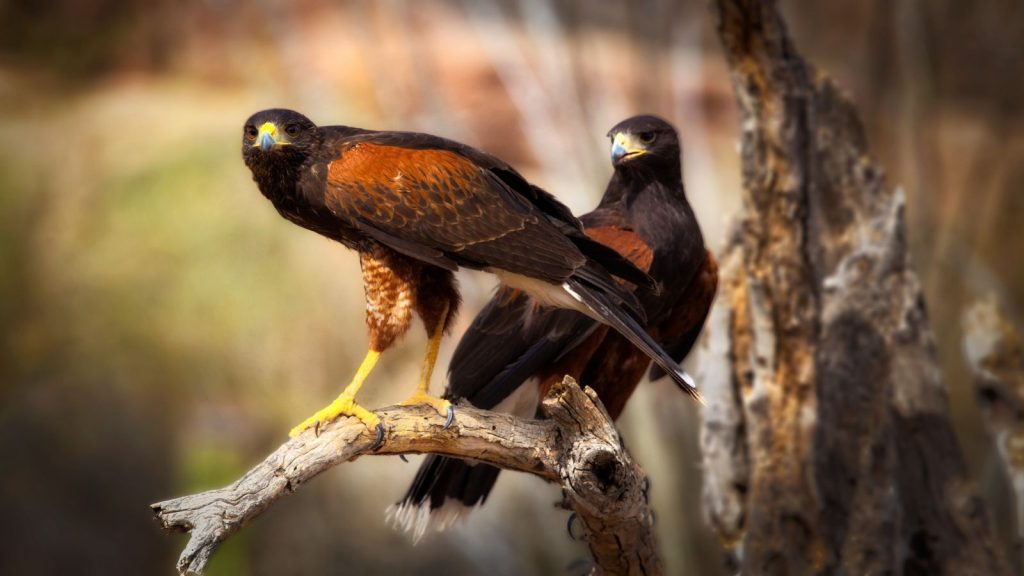
Although not typically known for their red feathers, Harris’s Hawks have a reddish-brown color on their bodies that can catch the eye, especially in the right light.
These birds are often found in deserts and open plains, so they might not be your typical backyard bird. But if you have a large garden or open space, they may visit in search of small mammals or reptiles. Their call is a loud, harsh scream that echoes through the air.
13. Vermilion Flycatcher (Pyrocephalus rubinus)
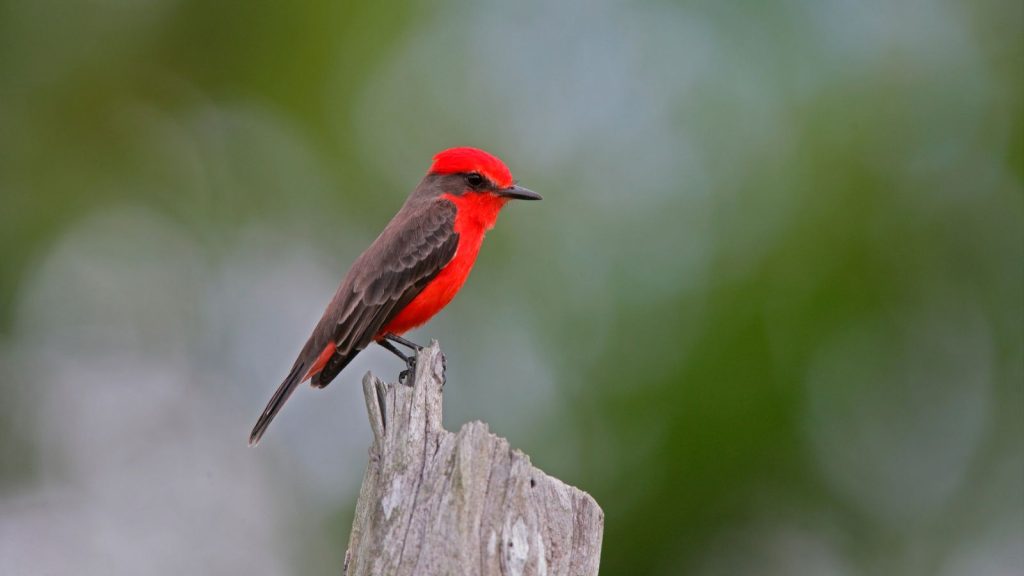
The Vermilion Flycatcher is one of the most strikingly red birds you can hope to spot, especially in the American Southwest, Central America, or parts of South America. It’s small but impossible to miss with its brilliant, vermilion-red feathers. Females are a little less conspicuous with their salmon red underparts and gray backs.
They’re often seen in open, shrubby areas where they perch and wait for insects to fly by. It takes very little effort to attract them to your garden as they prefer dry, open spaces with an abundance of insects.
14. Red-headed Woodpecker (Melanerpes erythrocephalus)
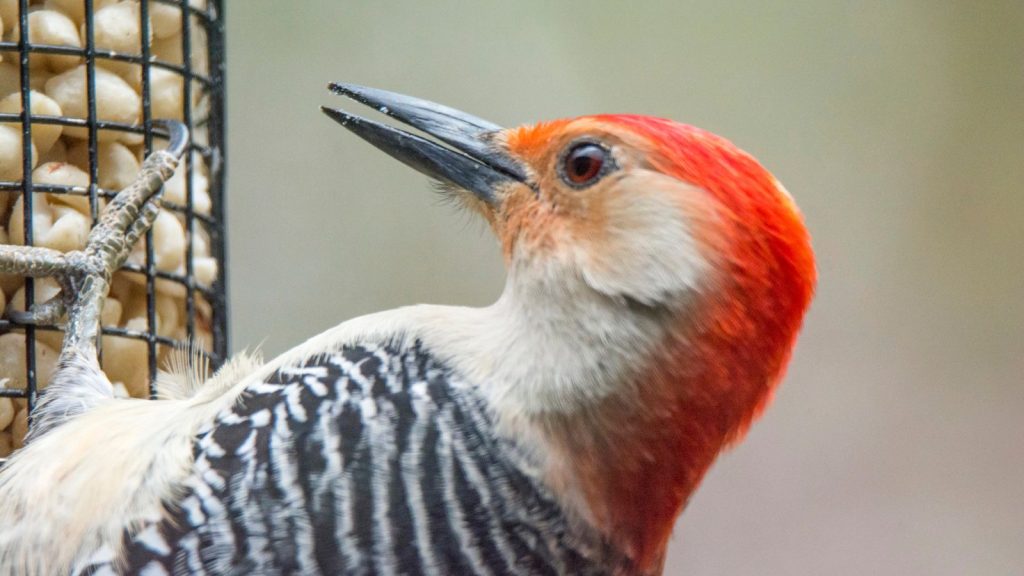
The Red-headed Woodpecker has a bright red head that appears almost as if it has been dipped in paint. The rest of the body is mostly black and white, which makes the red head stand out even more. These birds are excellent fliers, more agile than you’d expect from a woodpecker, and one of the few that store food in caches.
These woodpeckers prefer open woodlands, orchards, forest edges, and even old farm fields. You’re most likely to spot them in the eastern and central U.S. If you’re hoping to attract some of them to your garden, offer them food like suet, nuts, or fruit in open spaces with tall, dead trees nearby for nesting.
15. American Robin (Turdus migratorius)
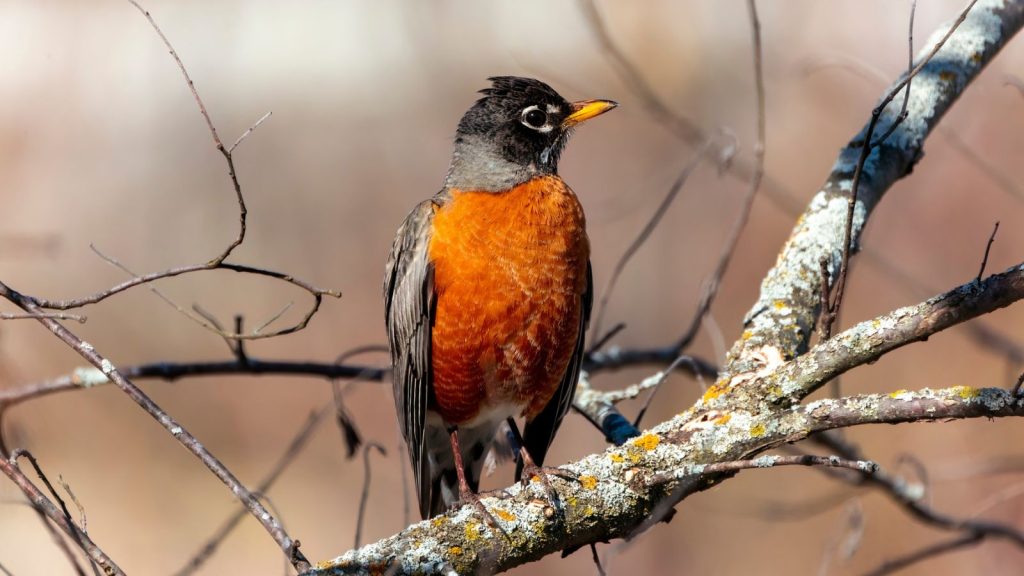
The American Robin is one of the most famous red birds in the US. It’s widely recognized by its bright red-orange chest, dark head, and gray back. Robins are early birds, often seen tugging earthworms from lawns or gardens at dawn.
They forage for food on the ground but also eat berries and small fruits, especially in winter.