

There’s nothing more frustrating than trying seemingly “tested and trusted” tips only to end up with a disappointing harvest. If you’re tired of trial and error and need advice that actually yields results, here are 18 tips that’ll help you grow the best tomatoes of your life.
1. Start with healthy, disease‑resistant varieties

More than half the problems associated with growing tomatoes can be avoided if you begin with strong stock. Choose tomato varieties labeled as resistant or “VFN,” meaning they are resistant to Verticillium, Fusarium, and nematodes.
Apart from the fact that these disease-resistant varieties make the work easier by fending off some of the most common diseases, they often come from trusted seed catalogs or nurseries with local experience. That way, you know you’re getting plants suited to your region.
2. Always harden off seedlings before transplanting

Seedlings raised indoors need some time to adjust to conditions outside. When you move them outside too quickly, they may wilt or fail to thrive. To avoid this, start hardening off the seedlings about a week before transplant day.
Bring the tomato plants outdoors for a few hours in the shade, gradually exposing them to morning sun and breezes over a period of seven to ten days. This process toughens their stems, thickens leaves, and builds resilience for long-term growth.
3. Plant tomatoes deeply

Tomatoes are interesting plants. They’ll grow roots all along whatever portion of their stems is buried. If you plant them deeply, removing the lower leaves and staggering the stems, you’ll develop a stronger root system.
This means steadier nutrient uptake and sturdier plants that can better resist stress. When planting, gently pack the soil around the stem to ensure the plant is secure and moisture reaches the new root zones.
4. Space plants properly to ensure good air circulation

Crowded tomato plants can trap moisture, and when that happens, their foliage becomes a magnet for disease. Aim for at least 2 to 3 feet between plants in all directions.
Proper spacing encourages better airflow that ensures the plants dry faster after watering or rain. It also ensures each plant receives adequate light for flowering and fruiting.
5. Provide support early for better growth
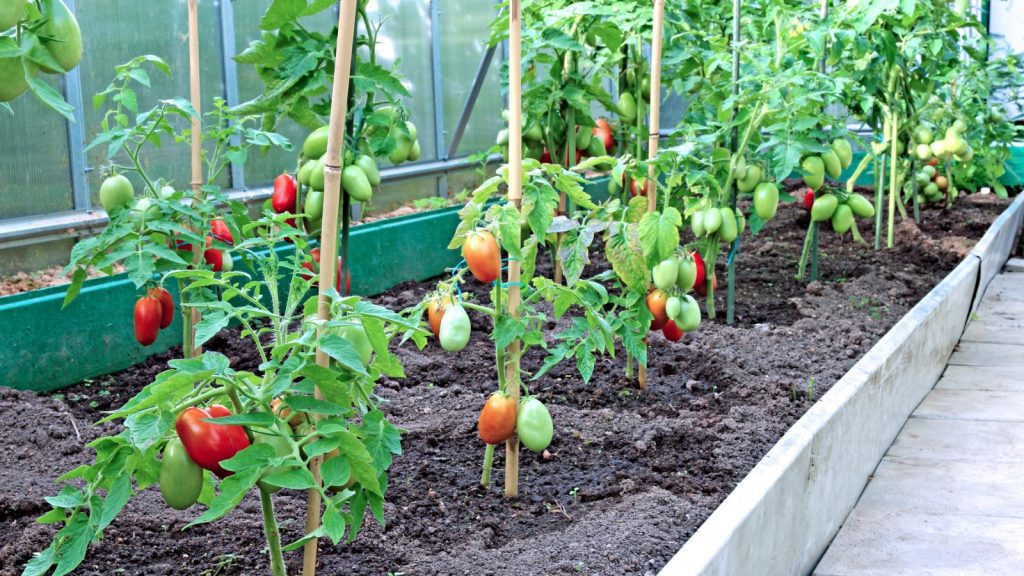
Rather than waiting until vines start to tangle up to stake the tomato plants, provide support upfront. You can use sturdy cages, tall stakes, or a trellis made from the fallen sticks and twigs in the garden.
Tie or loop the tomato vines loosely as they grow to guide their stems upward and keep the fruits off the ground. Providing early support prevents heavy branches from bending or breaking and improves airflow through the canopy. It also helps to simplify pruning, fertilization, and harvesting.
6. Water at the base, not on the leaves

Wet leaves are an open invitation for fungal diseases like early blight. To avoid this, use a watering wand or soaker hose aimed directly at the soil around the stem, not the plant.
Water deeply and infrequently, at least once or twice a week, unless you’re in unusually dry conditions. If rainfall is enough to keep your soil moist, skip watering entirely. Watering the soil deeply encourages strong roots, while dry foliage remains healthier.
7. Mulch to retain moisture and reduce soil splash

Add a 2–3 inch layer of straw, wood chips, or compost around your plants as mulch. Mulch helps keep moisture stable, suppresses weeds, and stops soil (and the germs they may carry) from splashing onto leaves. That splash is often how disease spores reach your plant.
As the plants mature, the mulch layer also stabilizes soil temperature, which benefits fruit yield and flavor. Make sure the mulch is on the soil and doesn’t cover the stem directly.
8. Use a balanced, slow‑release fertilizer

Compost and aged manure are great for improving the soil. But beyond that, you also need to supplement your tomatoes mid-season with a balanced fertilizer (like 5-10-10 or 10-10-10) or granular organic mix.
Use the fertilizer sparingly, according to the label rates, as excessive nitrogen can lead to leaves with poor fruit development. A small amount of phosphorus helps the plant establish roots early, while potassium enhances fruit size and disease resistance.
9. Pinch off suckers for better airflow and fruit production

Suckers are the little shoots that grow between the main stem and the branch. They drain energy from the plant because resources that could have gone towards fruit production are now spent on growing a new branch.
Pinching them off early, when they’re still small, focuses the plant’s energy on fruit-bearing branches. However, if you prefer bushier tomato plants and don’t mind a smaller overall harvest, you can leave a few. Just be sure the spacing can handle the extra foliage.
10. Rotate crops yearly to prevent soil‑borne disease

Tomatoes are part of the Nightshade family, along with peppers, eggplants, and potatoes, so they share many diseases in common. Avoid planting tomatoes, or any other plant in this family, in the same bed more than once every three to four years. Rotate them with
Grab Your Ultimate Garden Planner Printable
Take the guesswork out of gardening with this thoughtfully designed 48-page printable planner. It’s more than a planner—it’s your personal gardening companion
11. Prune lower leaves once plants grow taller

Once the plant reaches 8–12 inches tall, remove the bottom 6 inches of leaves. Pruning opens up the plant, improving airflow and making it easier to see signs of disease early. Plus, if there are no leaves close to the soil, you won’t get dirt splash during watering. You can cut off the lowest leaflets weekly as the plant grows.
12. Use companion plants to deter pests naturally

Tomatoes pair well with basil, which can improve flavor and repel thrips.
13. Add crushed eggshells or lime to prevent blossom end rot

Blossom end rot is a tomato plant disease that comes from calcium deficiency. It always shows up on the fruit as a sunken, brown spot on the bottom. Add crushed eggshells around the drip line of plants before or after transplanting, or apply
Combine these calcium supplements with consistent watering, so the minerals are washed into the soil and healthy compost to avoid the problem.
14. Harvest tomatoes just before they’re fully ripe

For tomatoes with the best texture, pick them right before they turn fully red at the breaker or turning stage. They’ll finish ripening indoors in a few days. This reduces the risk of splitting, sunscald, or pests. If frost is imminent, harvest everything, even green tomatoes; you can ripen them inside, too.
15. Monitor for pests and diseases weekly

Spend just five minutes per plant each week inspecting the leaves, stems, and fruit for signs of trouble. Note holes, sticky honeydew, yellowing leaves, wilting, or odd spots. Early detection of pests like aphids, eager hornworms, or fungal issues makes it easier to control.
16. Remove yellowing or diseased leaves immediately

When you spot yellowing or spotted leaves, remove them right away. Cut below the affected areas using clean scissors or
17. Feed with compost tea or organic fish emulsion during fruiting

Once flowers finish setting and berries start to appear, feed your tomatoes with compost tea or fish emulsion every two to three weeks. These gentle, nutrient-rich brews support flower development, increase beneficial microbes and keep leaves deep green. Avoid synthetic fertilizers at this stage, as too much nitrogen can delay fruit production.
Related: How to Give Your Garden a Nitrogen Boost
18. Keep a garden journal to track what works year to year

Record the variety names, planting dates, transplant times, fertilization practices, irrigation habits, pest issues, and harvest amounts. Reviewing your notes next planting season helps you choose better varieties, adjust the spacing, or try different mulch techniques.


