Trees add beauty and structure to any garden, but flowering trees offer even more. They produce seeds and fruits that can serve as a food source for birds, as well as colorful flowers that attract other beneficial animals, such as bees, for pollination.
If you’re going to grow an ornamental tree in your garden, you might as well settle for one that blooms for a long time. That way, you can enjoy all the benefits of having a beautiful tree in your garden.
Here are 15 of the best flowering trees that bloom for a long time. Many of these trees have shapes and shades that add more details to your garden.
1. Yoshino Cherry Tree

The Yoshino cherry tree is a fast-growing ornamental that can reach 15 feet in height within its first three years and matures to 20–40 feet tall. It’s known for its soft white or pale pink flowers that bloom in spring for about two weeks (longer in cooler weather).
Its average lifespan of around 15–25 years, elegant canopy, and continuous blooms make it a favorite. Plant in USDA zones 5–8 in full sun and well-drained soil for best results.
2. Chaste Tree

Chaste trees have fragrant, deciduous, green leaves with a silver-colored underside. It also features spiky flower clusters of pink, blue, or white that bloom from late spring through early fall.
Chaste trees typically reach 10–20 feet tall, especially when grown in USDA zones 7–8. It thrives in full sun, receiving at least six hours of daily sunlight, and is highly drought-tolerant once established.
3. Oleander

Oleander produces bright, fragrant flower clusters in shades of pink, white, red, or yellow. These flowers bloom heavily from late spring through fall, with their peak in summer.
It’s an evergreen shrub or small tree that can grow up to 20 feet tall and thrives in USDA zones 8–11. A little warning, though: all parts of the plant are toxic to humans and animals if ingested, so handle with care around children or pets.
4. Ohio Buckeye

The Ohio Buckeye is another tree with beautiful, lasting blooms. They usually bloom from early spring and are among the earliest bloomers. This tree produces greenish-yellow flowers and large, palmate leaves, with glossy brown seeds that resemble a deer’s eye.
Ohio Buckeye can tolerate almost any moist and well-drained soil. It thrives in USDA zones 4–7, in moist, well-drained soil, and reaches heights of up to 40 feet in shaded locations.
5. Eastern Redbud

Redbuds are an ornamental favorite that explodes with colorful flowers in March or April. Their pea-like pink or magenta flowers appear in early spring, sometimes before the leaves even emerge.
Blooms grow in tight clusters along bare branches and even the trunk. Redbuds grow 20–30 feet tall in full sun and well-drained soil, and thrive in USDA zones 4–9.
6. Tropical Hibiscus

Tropical hibiscus has glossy green leaves, which can be toothed for some cultivars. The tree produces large, beautiful, and bold trumpet-shaped flowers which can be peach, white, yellow, purple, pink, orange, or blue.
It’s a long-season plant that blooms from spring through late fall and even into winter in warm climates. It can be grown as a small tree or shrub, reaching up to 15 feet tall, and prefers rich, moist, well-drained soil with plenty of sun in USDA zones 10–12.
7. Catalpa

Catalpa trees are easily recognized by their large, heart-shaped leaves. These fast-growing plants produce distinct clusters of showy white flowers speckled with yellow or purple, that bloom in late spring to early summer.
It grows quickly and can reach heights of 40–70 feet with a spread of up to 50 feet. Catalpa tolerates a wide range of soils and is suitable for USDA zones 4–8.
8. Kousa Dogwood

Kousa dogwood displays its beautiful blooms from May to June, and by fall, it produces edible, red fruits that attract birds. It has tiny, greenish-yellow flowers surrounded by star-like, white bracts.
This ornamental tree can grow to be 15-30 feet tall with a vase-shaped appearance. Kousa dogwood thrives best in USDA zones 4 through 8.
9. Crape Myrtle

Crape myrtle comes in several varieties that bloom from early summer into fall. They produce showy flower clusters in red, white, purple, or pink clusters that grow at the tips of the branches.
The leaves are typically dark green in the summer, and then in the fall, they turn brilliant shades of orange and red. They grow best in USDA zones 6–9 and need full sun, well-drained, moderately alkaline to acidic soil to thrive. Depending on the variety, mature height ranges widely.
10. Tulip Poplar

Tulip poplars can reach heights of 70–120 feet, making them one of the tallest deciduous trees native to North America. But its flowers, not the height, are the main attraction, often mirroring a tulip shape and having yellow-green blooms with an orange underside.
They usually bloom during spring and prefer full sun, well-drained, moist, and slightly acidic soil. They are low-maintenance and can thrive in USDA zones 4 through 9.
11. Fringetree
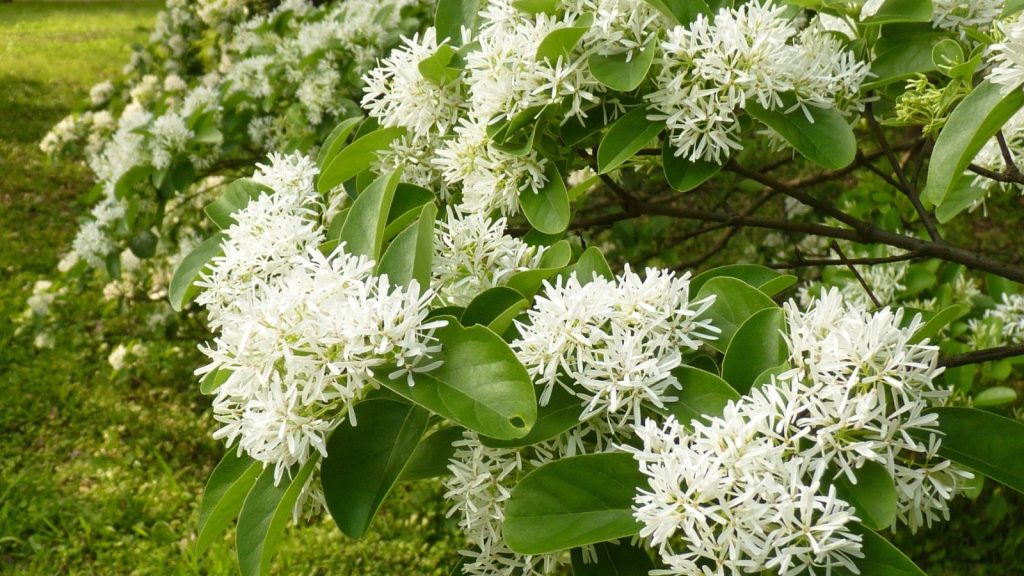
Fringetree is named after its delicate, drooping flowers that resemble a fringe. The flowers bloom elegantly in white and are aligned in drooping panicles. The female trees produce small, bluish-black, olive-like fruit that attracts birds.
They are tolerant of a wide range of well-draining soils and require less watering once established. They do best in USDA zones 3–9 and can grow up to 20 feet tall.
12. Serviceberry Tree

Serviceberry is an early bloomer that produces clusters of white flowers in spring, often before the leaves unfurl. It also produces edible berries that birds and humans alike can feed on.
Serviceberry trees reach 15–25 feet tall with a similar spread. It’s ideal for USDA zones 4–8 and prefers full sun but tolerates partial shade and most well-drained soils.
13. Smoke Tree

Smoke trees are named after their fiery red, yellow, or orange smoke-like plumes. This deciduous shrub often blooms in spring and early summer.
They can tolerate any well-draining soil and require consistent watering, especially during the early stages. Smoke tree grows well in USDA zones 4–9 and benefits from hard pruning in winter for fuller growth.
14. Bottlebrush Tree

The bottlebrush tree is known for its striking, brush-shaped flowers that bloom in red, pink, yellow, or cream colors. It typically blooms in the spring and summer, with some varieties reblooming in the fall.
This showy tree is drought-tolerant and adaptable to various soils. It’s best suited for USDA zones 8–11 and typically grows 15–20 feet tall.
15. Golden Chain Tree

Golden chain tree yields long, drooping clusters of golden yellow flowers. They typically bloom in late spring, from May to June. This plant requires pruning to cut back weak branches for healthy growth.
It prefers rich, well-drained soil and moderate moisture. Though beautiful, all parts of the plant are toxic if ingested. This ornamental tree grows up to 15 feet tall in USDA zones 5–7.
11 Impressive Trees You Can Tap for Sap and Syrup
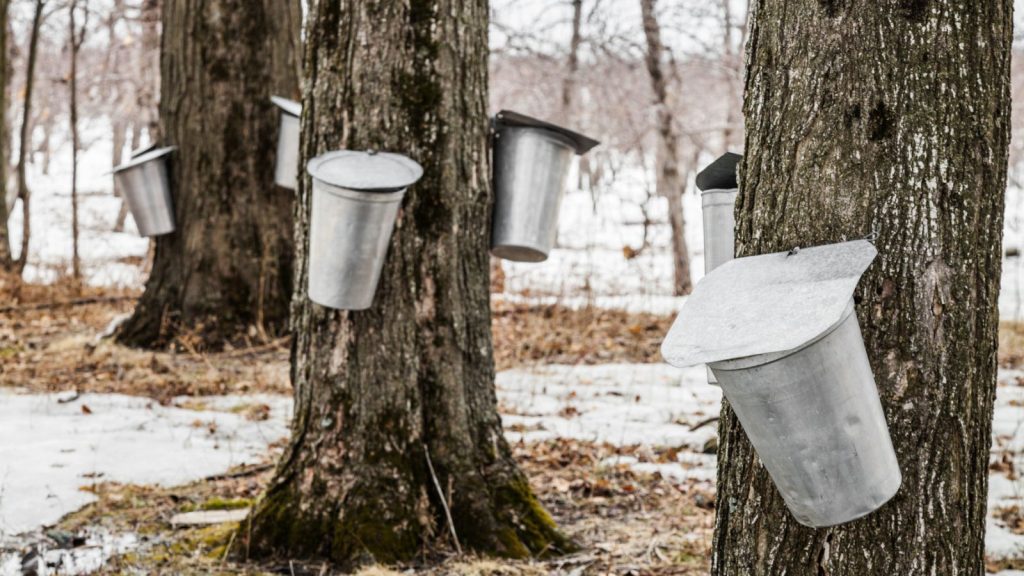
Tapping trees is an age-old skill that is often overlooked by modern-day homesteaders. But when you realize that tree sap can be used to make syrup, candy, vinegar, natural sweeteners, and fermented drinks, this free resource becomes far more appealing!
11 Impressive Trees You Can Tap
38 Perennial Flowers That Deliver Gorgeous Blooms Every Blooming Season

Perennial flowers are a great way to add lasting color to your garden, returning year after year to keep it looking vibrant. If you’re looking to brighten your garden, check out these 38 colorful options that thrive and come back every season.
38 Perennial Flowers That Deliver Gorgeous Blooms Every Blooming Season