
There’s something irresistibly charming about climbing plants. They turn plain fences into flower walls, archways into romantic entryways, and drab corners into a luscious paradise.
However, not all climbing plants are the same. Some climb with curling tendrils, others twine their stems around supports, and a few cling to surfaces with aerial roots. Understanding how each one grows makes it easier to place them where they’ll thrive. These 16 climbing plants are a great place to begin.
1. Clematis (Clematis spp.)
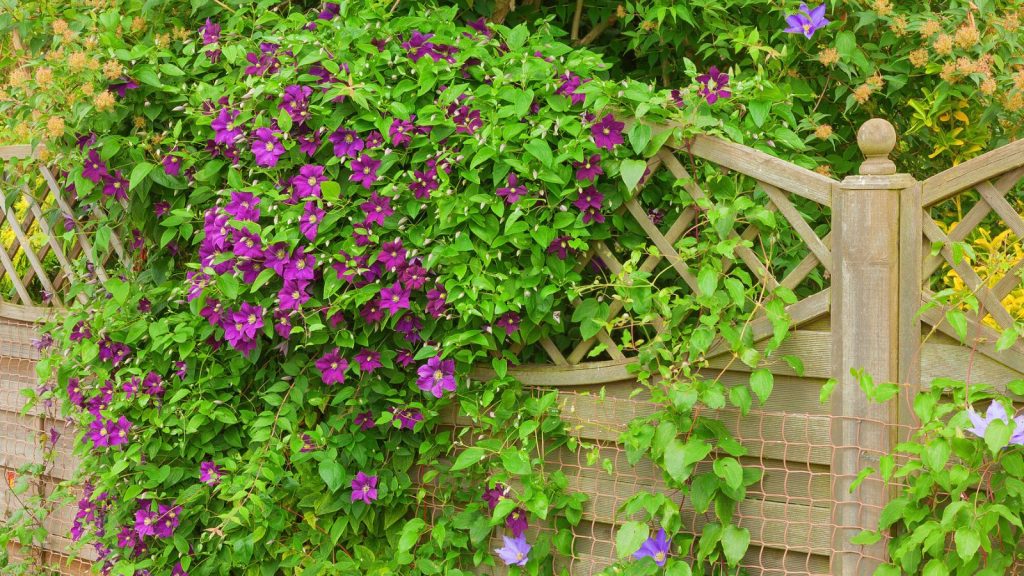
Clematis is often called the “queen of climbers” for good reason. With a huge variety of bloom colors, shapes, and sizes, this versatile vine can fit almost any garden style. It climbs by wrapping its leaf stems around supports, making it ideal for trellises, arbors, or obelisks.
Plant in full sun with its roots kept cool; mulch or low-growing plants can help. Clematis prefers rich, well-drained soil and thrives in USDA zones 4 to 9, depending on the variety. Bloom time ranges from spring to fall, with some types even blooming twice.
2. Sweet Pea (Lathyrus odoratus)

Sweet peas have delicate, ruffled blooms and an irresistible scent that makes them perfect for fences, arches, and obelisks. These annual vines climb using slender tendrils that latch onto supports.
They prefer cool weather, rich soil, full sun, and are best grown in USDA zones 3 to 8 in spring or fall. They bloom from early to midsummer, putting on a dazzling show of pastels, bicolors, and deep jewel tones. Deadhead your
3. Climbing Rose (Rosa spp.)
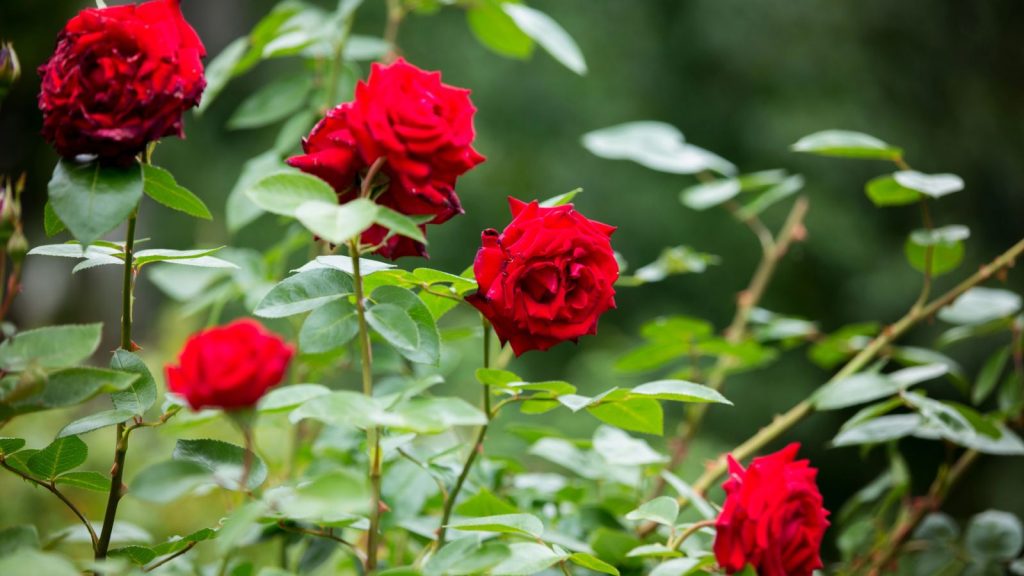
Unlike some fast climbers, climbing roses grow more slowly and need guidance. But when they do bloom, their rewards are unmatched. These romantic bloomers produce full, fragrant flowers in nearly every color. They don’t actually cling or twine, so tie them loosely to supports as they grow.
Depending on the variety, they thrive in full sun, moist, well-drained soil, and in USDA zones 4 to 9. Bloom time varies from spring to fall, with many modern varieties repeatedly flowering. Prune the flowers in late winter or early spring, and train long canes horizontally to encourage more blooms.
4. Nasturtium (Tropaeolum majus – climbing types)
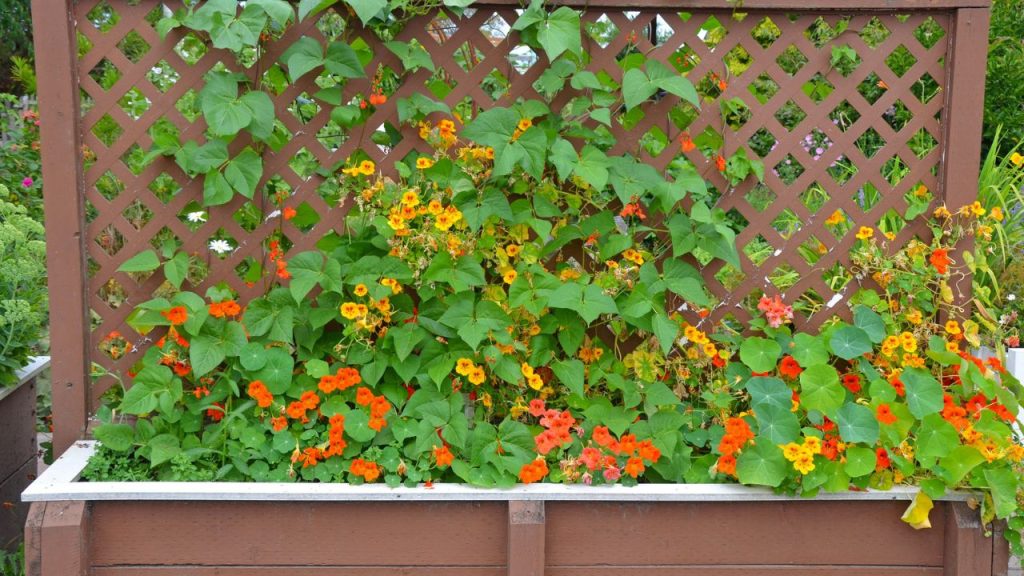
Nasturtium’s rounded leaves and cheerful orange, red, and yellow flowers are a favorite for cottage-style borders and edible gardens. The climbing types trail with ease.
These annuals bloom from late spring through summer in USDA zones 2 to 11. They’re easy to grow from seed and make great companions for vegetables. Grow in full sun and average, well-drained soil. Avoid overfeeding them as too much fertilizer means more leaves and fewer blooms.
5. Wisteria (Wisteria sinensis/W. floribunda)
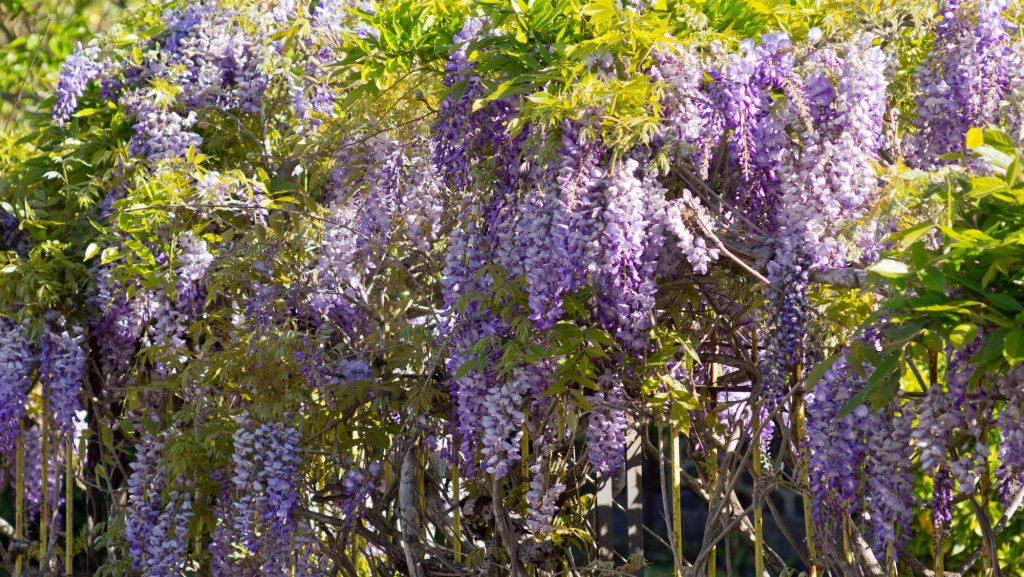
Wisteria climbs by twining thick stems around anything in its path and needs strong support from the start. They’re especially great for pergolas or porches and create a draping effect.
This vigorous vine thrives in full sun and fertile, well-drained soil. It suits USDA zones 5 to 9 and blooms in late spring. Choose grafted varieties and prune them hard; ungrafted wisteria can become invasive and take years to bloom.
6. Honeysuckle (Lonicera spp.)

Honeysuckle attracts hummingbirds and bees with its tubular flowers, and its twining stems quickly cover fences and railings. Bloom colors range from creamy white to coral and deep red.
They’re hardy in USDA zones 4 to 9, require full sun to partial shade, and well-drained soil. Many varieties bloom from spring through summer, and some are evergreen in mild climates. Prune them after flowering to control growth and encourage secondary blooms.
7. Morning Glory (Ipomoea purpurea)

Morning glories are fast-growing annuals known for their heart-shaped leaves and luminous trumpet-shaped flowers that open with the sunrise. They twine easily up trellises, fences, and poles, making them ideal for quick coverage.
They love full sun and do best in poor to average soil. Plant in USDA zones 3 to 10 as an annual. Blooming starts in early summer and continues until frost. They reseed easily, so deadhead spent flowers, unless you want them again next season.
8. Jasmine (Jasminum officinale or Jasminum polyanthum)
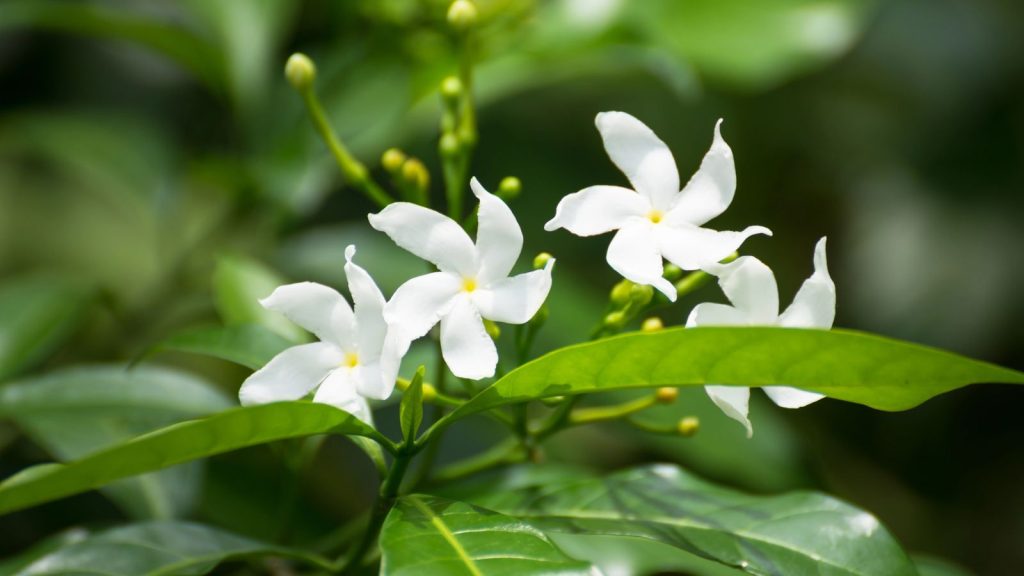
Jasmine’s twining vine produces clusters of small white or pink star-shaped blooms that fill the evening air with a sweet, sultry fragrance that is hard to beat. It climbs best with light support or can be allowed to scramble.
They grow best in USDA zones 7 to 10 in full sun to partial shade, and fertile, well-drained soil. Blooming begins in late spring or summer, depending on the type. Some jasmines can grow aggressively, so keep them in check with regular pruning.
9. Passionflower (Passiflora incarnate)
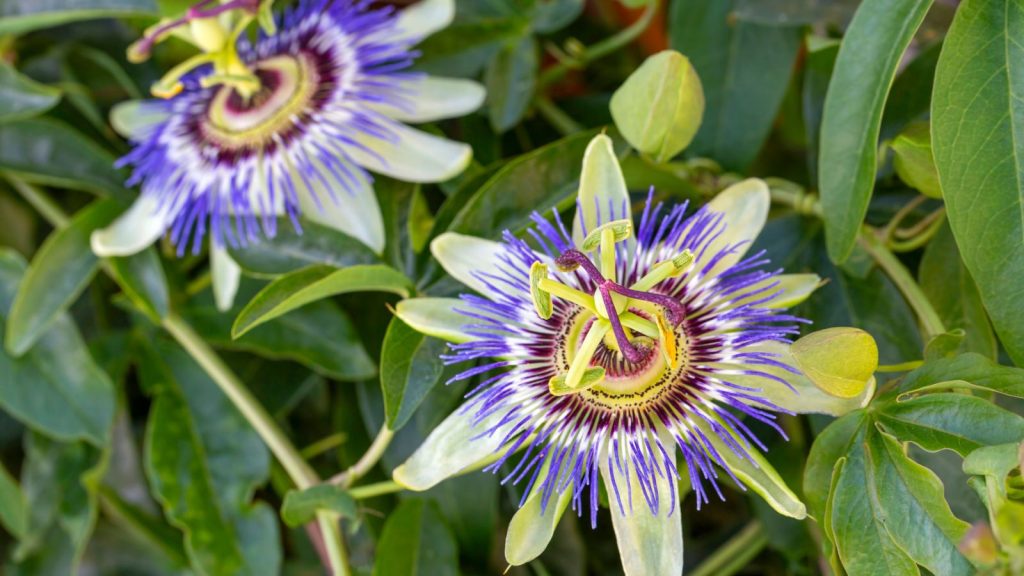
Passionflowers look like something from a fairytale. Their intricate blooms are eye-catching and often fragrant, and their tendrils climb rapidly along trellises and fences. They prefer full sun and well-drained soil. Depending on the species, they’re hardy in USDA zones 6 to 10.
Bloom time ranges from midsummer to fall, often followed by colorful fruit.
If you’re in colder zones, protect the roots with mulch; some types can die back to the ground and return to bloom in spring.
10. Black-eyed Susan Vine (Thunbergia alata)
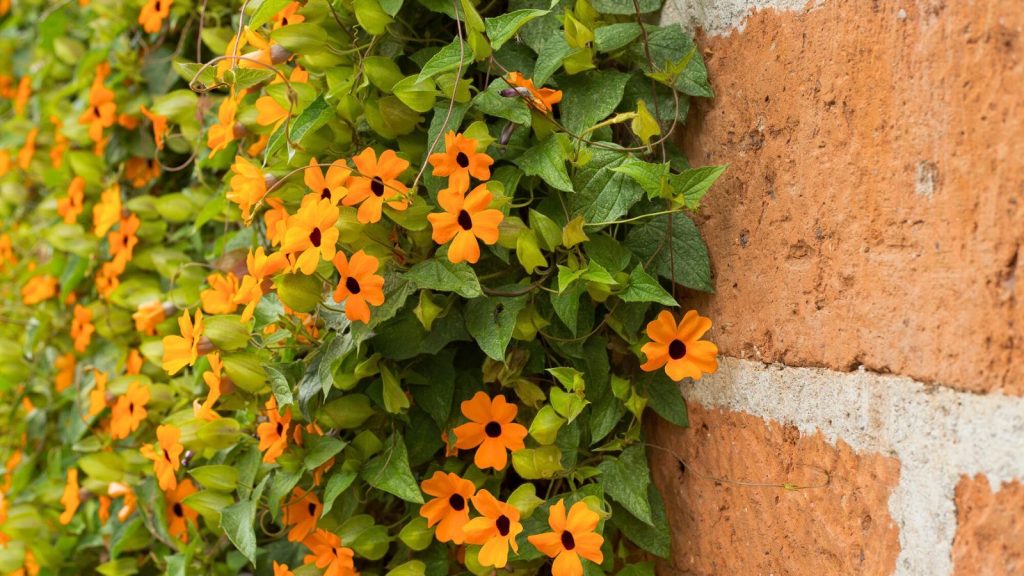
With its bright yellow, orange, or apricot blooms and dark centers, the
They’re best grown as an annual in USDA zones 2 to 9 or as a tender perennial in zones 10 and 11. They thrive in full sun and well-drained soil and flower from midsummer into fall. Pinch back young growth to encourage bushier vines and more blooms.
11. Canary Creeper (Tropaeolum peregrinum)

The canary creeper is a lesser-known cousin of the
Grow in full sun with average soil in USDA zones 2 to 11 as an annual. It blooms in late summer through early fall, adding a touch of glam to arches, trellises, or fences. Soak seeds before planting for quicker germination, and, like
12. Star Jasmine (Trachelospermum jasminoides)
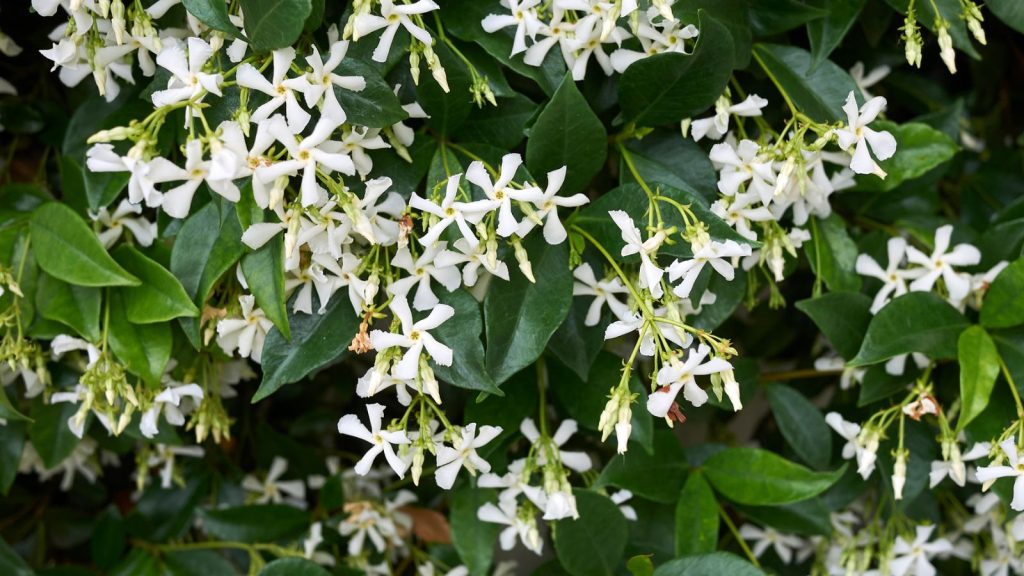
Star jasmine offers the best of both worlds—an evergreen vine with glossy foliage and an intense, sweet fragrance. It thrives in full sun to partial shade, has well-drained soil, and is best suited for USDA zones 8 to 11.
It blooms in late spring to early summer, with occasional reblooming later in the season. Train early growth onto supports, and prune after flowering to maintain shape.
13. Moonflower (Ipomoea alba)

The moonflower is a tropical relative of the
It loves full sun and blooms from midsummer to frost. Nick the seeds or soak them overnight before planting to help germination.
14. Chocolate Vine (Akebia quinata)

Chocolate vine produces clusters of purplish-brown flowers that smell faintly of vanilla or chocolate. Its twining habit and five-part leaves make it perfect for arbors or tall fences.
It grows well in USDA zones 5 to 9, full sun to partial shade, and moist, well-drained soil. Chocolate vine grows quickly, so prune hard after flowering to keep it in check.
15. Coral Honeysuckle (Lonicera sempervirens)
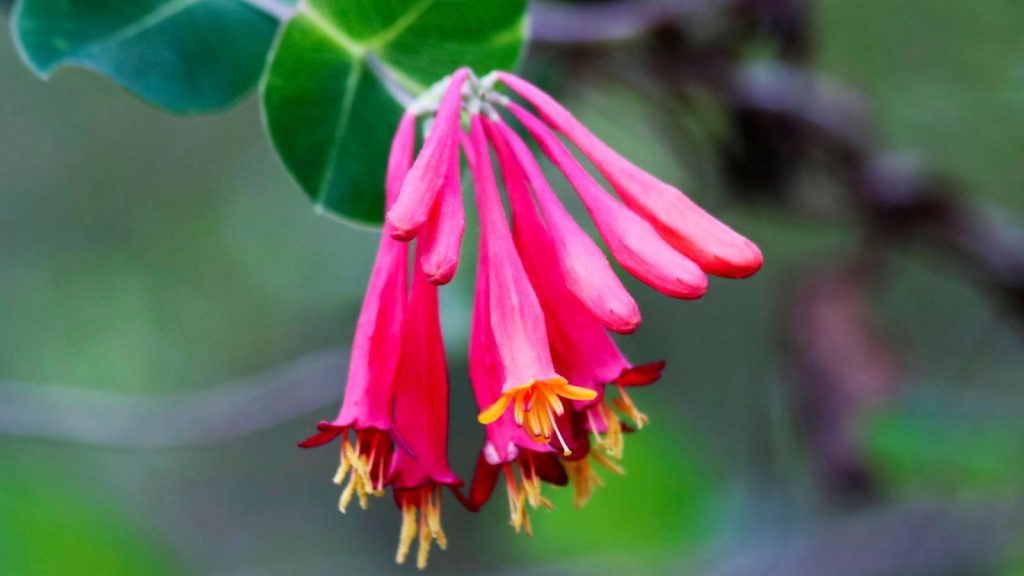
Coral honeysuckle is a native and non-invasive plant with slender red-orange trumpet blooms that hummingbirds adore. Unlike some of its aggressive cousins, this twining vine behaves well and blooms from spring to summer.
It thrives in USDA zones 4 to 9, with full sun and well-drained soil. Train stems along supports early on, and prune after the first flush of flowers to encourage more.
16. Climbing Hydrangea (Hydrangea anomala petiolaris)
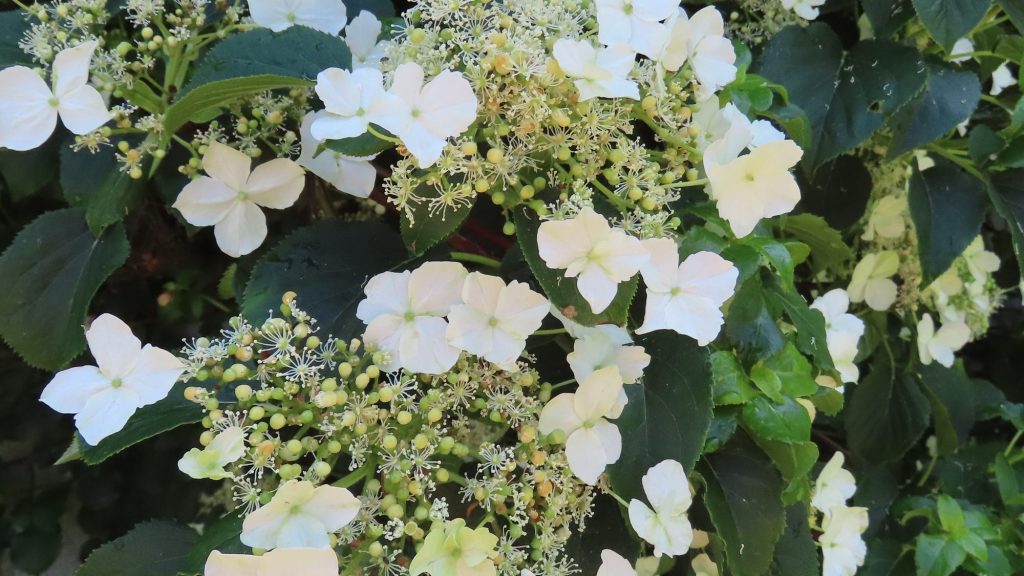
Climbing hydrangea takes its time to mature. But when it does, it climbs using aerial rootlets, producing lacecap white flowers and attractive peeling bark.
Climbing hydrangea prefers partial shade to full sun in cool climates with rich, moist, well-drained soil. It blooms in late spring to early summer and is hardy in USDA zones 4 to 8.
17. Snail Vine (Vigna caracalla)
This unusual vine has coiled, snail-shaped flowers in purples, creams, and whites, and an intoxicating scent. It twines rapidly and thrives in heat, making it perfect for sunny patios or railings.
Snail vines grow as an annual in zones 3 to 8 or a tender perennial in zones 9 to 11. They love full sun and well-drained soil and bloom from midsummer to frost in warmer climates.
Plant them from seed indoors in cooler zones for a head start on growth.
Other Posts You Might Like
- 20 Strikingly Bold Red Perennials That Bloom Year After Year
- 16 Purple Perennials That Will Bring Your Garden to Life Year and Year
- 18 Shade Loving Perennials to Brighten Your Garden
- These 12 Fall Blooming Perennials Will Be Everywhere This Season
- 38 Perennial Flowers That Deliver Gorgeous Blooms Every Blooming Season