
Make the most of your garden’s shaded areas with these resilient perennial plants and flowers. Ideal for areas that receive limited sunlight, these selections bring beauty and life without requiring full sun exposure.
If you’ve hesitated to use perennials because of shaded spots in your garden, these perennials will add color and energy to your outdoor spaces.
Ladybells (Adenophora spp.)

Ladybells boast delicate, bell-shaped flowers, offering a touch of grace to any shaded garden. They thrive under the canopy of trees, brightening up shaded spaces. This cheerful plant is a low-maintenance plant that spreads but is not invasive. Zones 3-9
Bellwort

Bellwort is a charming spring native wildflower. Its flowers are nodding and bell-shaped, featuring long yellow petals. Bellwort thrives in shaded areas, making it a lovely addition to any shaded garden. Zones 4-9
Jacob’s Ladder

Jacob’s ladder is a charming spring-blooming perennial native to North America. It thrives in both full sun and partial shade, making it a great addition to shaded gardens. The flowers are a delicate purplish-blue, adding a splash of color to the landscape. This plant is ideal for USDA zones 3 through 8.
Coral Bells (Heuchera spp.)

Coral bells are a low-growing perennial plant that produces mounds of colorful leaves and delicate spikes of bell-shaped flowers, attracting pollinating insects. This hardy plant rarely suffers from disease and grows best in shaded woodland gardens.
Columbine

Columbine is a perennial plant with bright flowers that contrast against dark, clover-shaped leaves. It blooms in spring to early summer. This sun-loving perennial is Ideal for slopes, ledges, or open garden spaces. Columbine adds beauty, attracts wildlife, and deters deer. Zones 3-9
Mayapple

Mayapple (Podophyllum peltatum) is a native plant in North America. The mayapple has beautiful white flowers and thrives in shaded, moist woodland areas. Zones 3-8
Hybrid Astilbe (Astilbe x arendsii)

Hybrid
Hardy Begonia (Begonia grandis)

Hardy Begonia features beautiful, heart-shaped leaves and delicate flowers. It’s a resilient choice for adding a splash of color to the shaded parts of the garden. This plant thrives in partial to full shade in rich, moist, well-drained soil. Zones 6-9
Turtlehead (Chelone obliqua)

Named for its unique flower shape, which resembles a turtle’s head, Turtlehead thrives in moist, shaded areas, providing late-season color with its pink or white blooms. This plant pairs nicely with small shrubs. Zone 3-8
Spicebush (Calycanthus floridus)

Spicebush, commonly known as Allspice, is a native shrub that flourishes in shaded areas. It produces deep burgundy-red flowers in spring or early summer that are both showy and sweetly fragrant, attracting butterflies and other pollinators. This plant is ideal for growing in USDA Zones 4 to 9.
Virginia Bluebells

Native to the Eastern U.S., these plants feature pale green leaves and stalks of tubular blue flowers, transitioning from pink to clear blue before going dormant. They naturalize well, creating breathtaking drifts of color in spring.
Bleeding Heart (Dicentra spectabilis)

Known for its heart-shaped flowers on arching stems, Bleeding Heart is a beautiful addition to shady spots. This plant requires rich garden soil that doesn’t dry out but drains well. It is the longest blooming of all the perennials and grows up to 15 inches. Zones 3-9
Foxglove
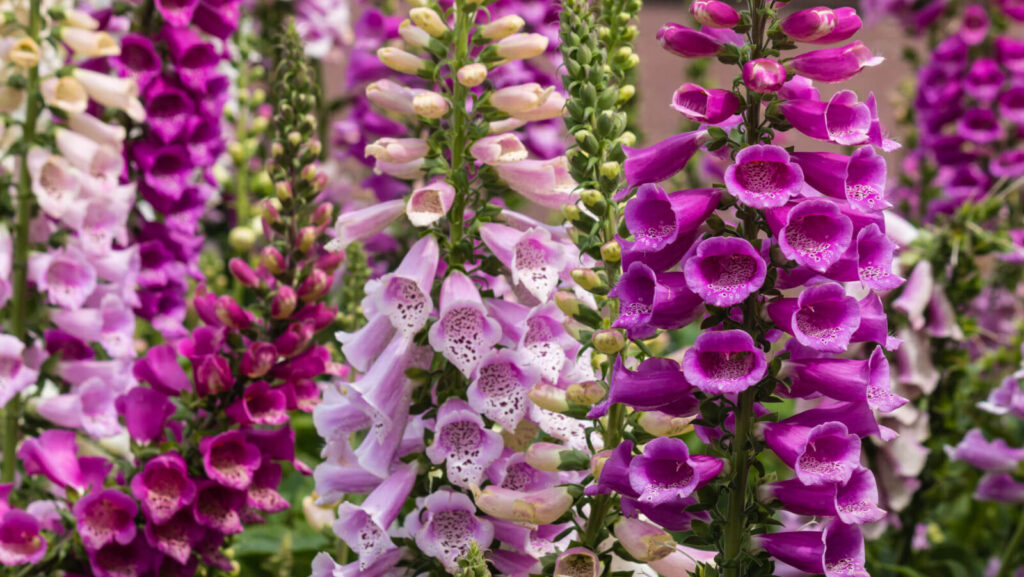
Foxglove features tall spikes of bell-shaped flowers, making it perfect for adding height to shaded gardens. Blooms late spring to early summer. Zones 4-10
Japanese Painted Fern (Athyrium niponicum ‘Pictum’)

Japanese Painted Fern brings grace to shaded areas with its silver-green fronds and purple accents. It’s perfect for adding texture and color contrast. Grow this fern in sheltered shady spots near water sources such as streams and ponds. Zones 4-8
Lenten Rose (Helleborus spp.)

Lenten Rose, or Hellebores, blooms early, offering flowers in shades from white to deep burgundy. It’s a hardy, low-maintenance perennial for the shade garden. Zones 4-10
Hostas (Hosta spp.)

Hosta is valued for its stunning foliage in various shapes and colors, complemented by lily-like flowers. It’s a staple for shaded gardens, providing reliable beauty.
Woodland Phlox (Phlox divaricata)

Woodland Phlox covers the ground with fragrant flowers in spring, ideal for adding a splash of color beneath trees or along shaded pathways.
Solomon’s Seal (Polygonatum spp.)

Solomon’s seal is a beautiful woodland plant that produces a sea of delicate white blooms above a mass of dense green foliage. This plant grows best in a shaded, damp location. This plant grows well with black walnut trees.
Foamflower (Tiarella cordifolia)

Foamflower is a charming ground cover with white or pinkish flowers rising above variegated foliage, perfect for a woodland garden. It is a tough plant that requires little care to grow and flower. Zones 3-9
Autumn Fern (Dryopteris erythrosora)

This fern changes color throughout the seasons, with new growth appearing in rust and copper, making it a great companion to other shade plants.
Bloodroot (Sanguinaria canadensis)

Bloodroot produces striking white flowers and beautiful gray-green leaves in early spring. When planting, choose a spot with part shade and rich, woodsy soil that retains moisture and is well-drained. Zones 3-9
Spotted Lungwort (Pulmonaria spp.)

This plant features spotted leaves and blooms with pink to purple flowers. It is easy to care for, but it loves the shade. Zones 3-9
Jack in the Pulpit (Arisaema triphyllum)

This plant has a unique shape that looks like a pulpit, adding an exciting touch to shaded garden areas. Jack-in-the-pulpit is far from fussy and doesn’t require much maintenance. It tolerates heavy shade and looks striking when planted near low-growing ferns. Zones 4-9
European Wild Ginger

European Wild Ginger features a lush carpet of glossy, heart-shaped leaves, making it an ideal ground cover for shaded areas. Its subtle, reddish-purple flowers bloom close to the ground, and the roots smell of ginger when bruised or cut – hence its name. Shade is essential for this plant; it requires rich, moist, and well-drained soil to thrive. Zones 4-8