Some plants thrive with minimal care and attention, even in the worst situations. These resilient plants are built to survive, sometimes even shine, through drought, heat, pests, and poor soils.
If you live in harsh terrains with unpredictable weather or poor soil conditions (or are simply someone who forgets to water their plants), these 16 resilient plants are a good place to start.
1. Coneflower (Echinacea)

Coneflower is an herbaceous perennial native to the Central and Eastern US. They are low maintenance and fairly tolerant of various natural conditions. If deer are a problem in your garden,
They also tolerate dry climates and grow well in different types of well-drained soil.
2. Carnations (Dianthus caryophyllus)

There are several species of
3. Hardy Geranium (Geranium bohemicum)

Hardy geraniums, native to eastern North America, are tough plants that can withstand a wide range of challenging conditions. They’re an excellent choice for gardens dealing with deer or rabbit invasions.
This plant can survive several periods without rain and still maintain its sturdy roots and saucer-shaped flowers. Hardy geraniums grow in USDA zones 4–8 and tolerate poor soils, even those with less-than-ideal drainage. Some varieties might prefer partial shade, while others can suppress weed growth in your garden.
4. Lantana (Lantana camara)

Lantana, native to Central and South America, grows best in well-drained soil but can handle poor soil conditions too. Its foliage has pest-repelling properties, making it a helpful companion plant to have in the garden.
However, its leaves are toxic to both humans and pets, so handle with care. Lantana thrives in USDA zones 7-11 and can be grown as a perennial in warm climates or as an annual in cooler ones.
5. Common Sunflower (Helianthus annuus)
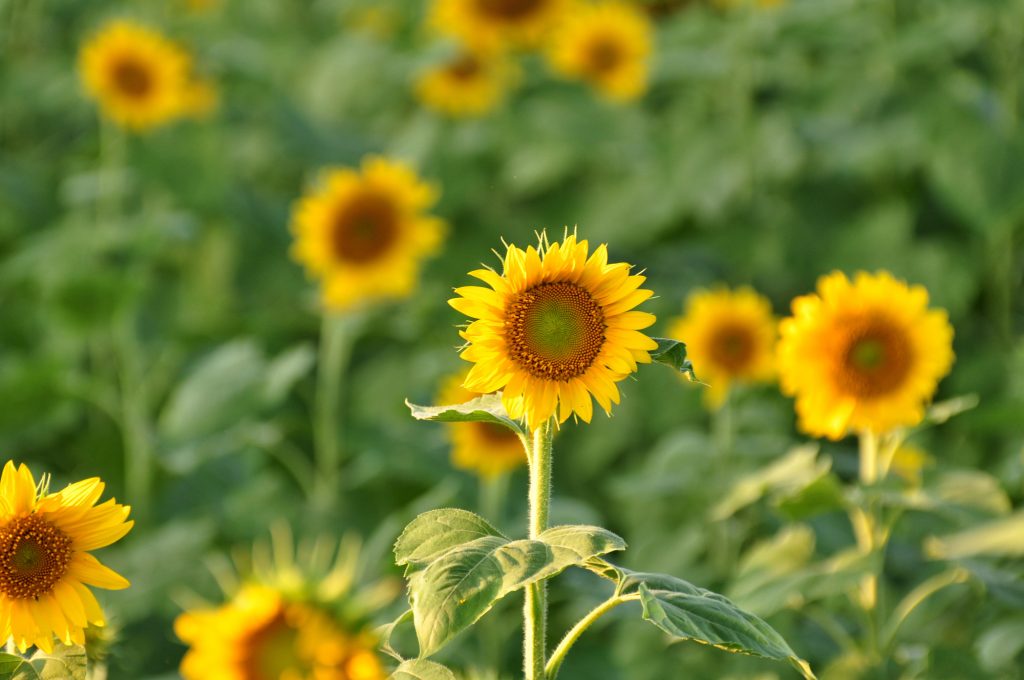
Sunflowers are native to both North and South America and are exceptionally drought-tolerant thanks to their deep root systems. Many modern varieties have been bred to resist common diseases like mildew, sclerotinia, and verticillium. They grow well across a wide range of climates, thriving in USDA zones 2 to 11.
6. Juniper (Juniperus)

Junipers are native to many regions across Asia, Africa, Europe, and North America. They grow best in USDA zones 2-7 and are adaptable to a wide range of soil types and climates.
Additionally, they are known for their deep and strong root system, which makes them drought-resistant. Some varieties of juniper can grow in coastal areas because they have salt tolerance, while others are resistant to diseases like cedar Apple rust.
7. Hibiscus (Hibiscus rosa-sinensis)

Hibiscus comes in many varieties, but its origins can be traced back to places such as China, Madagascar, India, Mauritius, Fiji, and Hawaii. It’s a tough, adaptable plant that tolerates a range of soil types, temperatures, and even heavy pruning.
Hibiscus is also naturally resistant to deer and many common plant diseases. It grows best in USDA zones 4 to 9.
8. Mirror bush (Coprosma repens)

Mirror bush, native to New Zealand, is a resilient evergreen shrub. Once established, this perennial shrub becomes drought-tolerant and can handle salty conditions, making it a good fit for coastal gardens.
It thrives in USDA zones 9-11 and adapts well to a range of climates and soil types. Mirror bush is also a smart choice for gardens dealing with deer or rabbit damage, as it’s unpalatable.
9. Pentas (Pentas lanceolata)
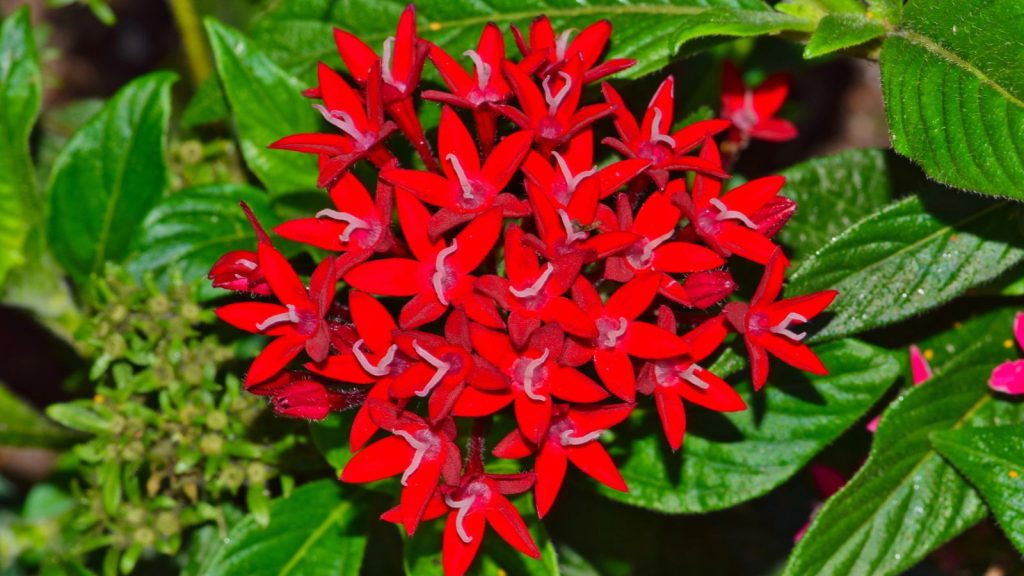
Pentas, also known as the Egyptian star cluster, is a tough, tropical plant native to East Africa. This hardy plant produces clusters of vibrant, star-shaped, purple flowers that withstand rain, heat, and even drought when properly cared for.
Pentas is naturally unappealing to deer, rabbits, and most common garden pests. It thrives in USDA zones 10-11 and grows well in a wide range of conditions with minimal maintenance.
10. Stonecrop (Sedum)

This eastern central US native will grow anywhere, including cliffs, forests, and rocky woods. They have thick succulent leaves that deter rabbits and deer. Stonecrop is highly tolerant of different climates and temperatures, and it stands up well to drought, wind, and full sun. They thrive in USDA zones 3-11.
11. Lobelia (Lobelia erinus)

Lobelias are native to regions across Australia, Asia, North and South America, and southern Africa. These colorful plants produce delicate flowers in shades of purple, white, or pink, often accented by a small white center. They’re naturally resistant to deer and some common garden pests. Lobelias grow best in USDA zones 10 to 11.
12. Crape Myrtle (Lagerstroemia)

Crape myrtle is native to parts of Australia and Asia, particularly the Philippines and Japan. It’s a great choice for low-maintenance, versatile gardens. This plant adapts well to all soil types and becomes drought-tolerant once established.
It’s also resistant to deer, pests, and even air pollution, making it ideal for urban areas. Crape myrtle grows best in USDA zones 6-10.
13. Salvia (Salvia officinalis)
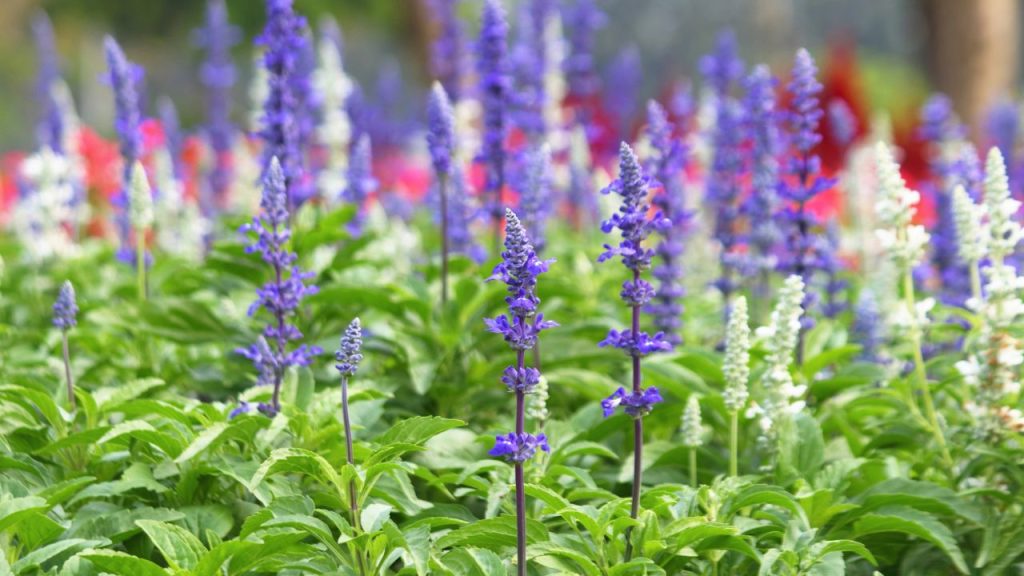
Many salvia varieties, especially those native to Mexico, are naturally resistant to pests and disease. They can withstand various garden changes without losing their red or purple colored spiky flowers.
Once established, salvia can tolerate drought well. Their scented leaves help keep deer, insects, and diseases at bay. They do best in USDA zones 8 to 10 and are one of the most reliable, long-lasting plants you can grow.
14. Begonia (Begonia)

Begonia is native to Central and South America, as well as parts of Africa and Asia. It’s well known for its resistance to slugs, rabbits, and deer, which makes it a great choice for gardens prone to animal damage. It also handles heat and drought with ease, making it ideal for dry, sunny climates in USDA zones 9 to 11.
15. Sweet Caroline (Ipomoea batatas)
Sweet Caroline is a native of Central and South America that grows best in USDA zones 9-11. Although Sweet Caroline is a resilient plant that can tolerate almost any environment, it still requires partial to full sunlight for optimal growth. Overall, this plant prefers warm, humid areas, but it can also tolerate dry climates and various well-draining soils.
16. Oakleaf Hydrangea (Hydrangea quercifolia)
Oakleaf hydrangea is a Southeastern US native and is one of the toughest varieties of hydrangeas. It’s low maintenance, thrives in shade, and handles dry or warm conditions better than most. It’s also naturally resistant to deer and common garden pests.
However, that doesn’t mean it can be neglected entirely, as oakleaf hydrangeas can still be affected by pests like spider mites and aphids if left unchecked.