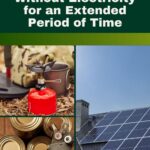

Living without electricity for an extended period can be challenging, primarily since so much of modern life relies on it. From charging your phone, tablet, or laptop to running essential household appliances, electricity is deeply integrated into our daily routines.
However, in situations where the power is out for weeks—whether due to natural disasters, grid failures, or remote living—there are practical ways to adapt and make life more manageable.
By focusing on essential needs like food, water, lighting, and communication, you can create a plan to stay safe and comfortable during prolonged outages. With the right strategies, living without electricity doesn’t have to feel impossible. This guide will provide you with actionable tips to help you navigate life off the grid and make the best of challenging circumstances.
1. Use Alternative Lighting:

Stock up on candles, solar-powered lanterns, and battery-operated lights. Rechargeable lights with hand-crank or solar features are especially useful. Head to the Dollar Store and buy the solar lights. Use them inside at night and put outside to charge in the day.
2. Cook Without Power:

Invest in a propane or butane camping stove, a portable grill, or learn to cook over an open fire. Don’t forget extra fuel and fire-starting materials. Cast iron pans are also necessary.
3. Store Non-Perishable Food:

Rely on canned goods, dried foods, and other non-perishable items that don’t require refrigeration. Rotate your stock to keep it fresh.
4. Collect and Purify Water:

Learn to collect rainwater or find alternative water sources. Use portable water filters or purification tablets to ensure your water is safe to drink.
5. Stay Warm:

Use extra blankets, sleeping bags, and warm clothing to keep yourself warm in colder months. Consider a safe indoor propane heater for emergencies. Close off a single room and huddle together.
How to Winterize Your Home To Save on Energy Costs
6. Cool Off Without AC:

Stay cool by using battery-powered fans, keeping windows open for ventilation, and using damp cloths to lower body temperature. Use foil on the windows to reflect the sun away. Keep windows covered during the day.
7. Use Manual Tools:

Keep manual versions of common household tools, like a hand-operated can opener, manual coffee grinder, screwdrivers, hand saws, and other essential tools.
8. Preserve Food Without Refrigeration:

Learn how to preserve food without electricity.
9. Set Up a Solar Power System:

Install a small solar panel system to power essential devices like phones, radios, or rechargeable batteries. These panels are relatively cheap and compact.
10. Use a Generator:

A portable generator can provide temporary power for essential items. Be sure to store extra fuel and know how to use it safely.
11. Practice Proper Hygiene:

Stock up on wet wipes, hand sanitizer, and portable toilets. Learn how to manage waste safely to prevent health issues. Learn about Navy showers that use little water but allow you to stay clean.
12. Communicate Without Electronics:

Use a battery-powered or hand-crank radio for updates. Walkie-talkies are also great for short-distance communication. Invest in quality walkie-talkies that will work over at least a couple of miles.
13. Plan for Entertainment:

Keep books, board games, and other non-electronic entertainment options to pass the time. Puzzles, Legos, crayons, and coloring books are all options.
14. Backup Power Sources:

Use power banks, solar chargers, or car chargers to keep your phone and other small electronics operational.
15. Store Heirloom Seeds:

Buy and store heirloom seeds. Learn basic gardening techniques and plant seeds immediately to get started on your renewable food source.
Best Places to Buy Garden Seeds Online
16. Have Cookbooks or Printed Recipes:

You won’t be able to Google a bread recipe. Physical Cookbooks will be invaluable.
17. Buy Survival Books:

Have a library of books that cover gardening, woodworking, and first aid. You can’t remember everything.
15 Best Homesteading Books, 2025
15 Essential Things Preppers Should Stockpile Besides Food And Water

Here’s a list of 15 things you should start stocking up on now, beyond just food and water, to stay prepared and ready for anything.
15 Essentials Things Preppers Should Stockpile Besides Food And Water
28 Ways to Live Sustainably and Reduce Dependence on Retail and Grocery Stores

Here are some ways to live more independently and cultivate a truly self-reliant lifestyle.
28 Ways to Live Sustainably and Reduce Dependence on Retail and Grocery Stores