Have you ever reached into your pantry, only to find your potatoes covered in sprouts? No matter how carefully you store them, it seems inevitable that potatoes will eventually start growing little shoots. But why does this happen, and more importantly, does it mean your potatoes are no longer safe to eat?
Potatoes naturally sprout as part of their life cycle, especially when exposed to warmth, light, or moisture. While sprouting doesn’t always mean they need to be tossed, there are some key factors to consider before cooking with them.
But why do potatoes sprout, are they safe to eat, and what can we use them for? Let’s talk about it.
Why Does a Potato Sprout?
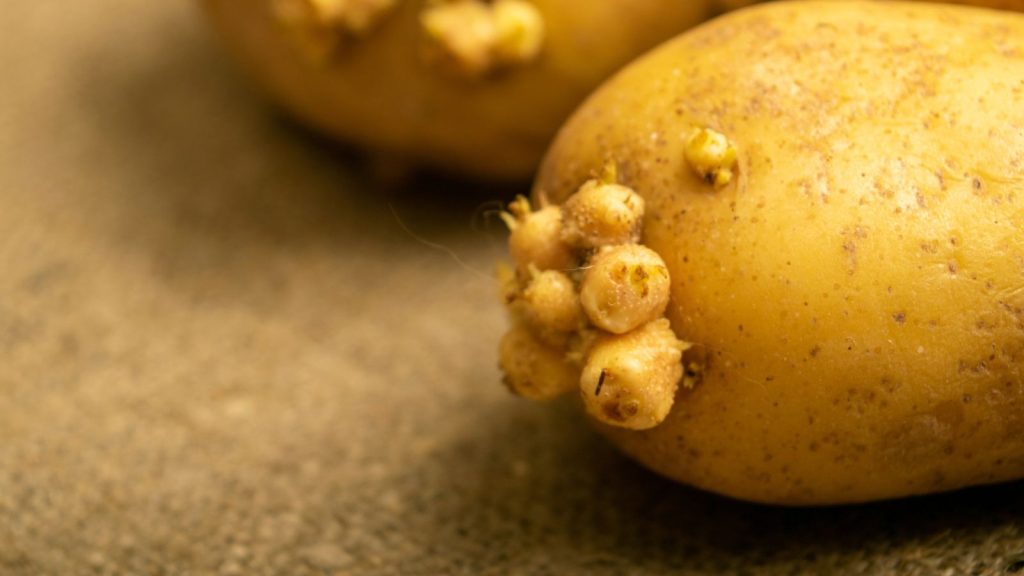
When potatoes sprout, tiny areas of new growth appear at certain points on the surface of a potato. At first, these growths just look like tiny white, yellow, or pale green nodules. If left unchecked, they’ll grow into longer, more defined shoots with a slightly purplish or pinkish hue.
This happens because potatoes are tubers – a plant structure that can sprout and grow into a new plant. So, your sprouted potatoes are simply trying to continue their natural life cycle, even though they’re sitting in your pantry and not buried in the soil!
What does it mean when potatoes sprout?
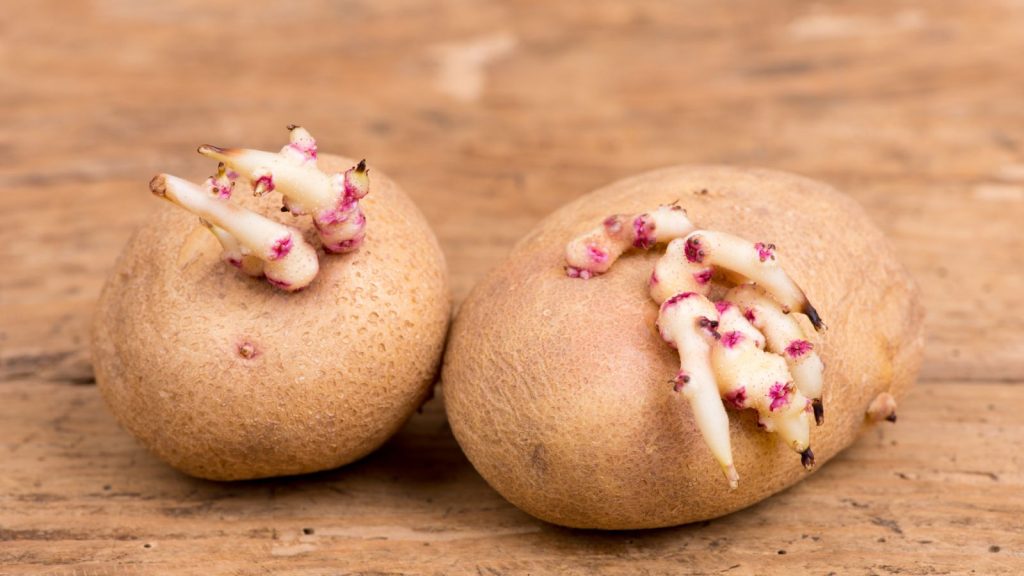
Sprouting is a natural process, but we normally halt it by storing potatoes so that they go into dormancy. But sometimes, despite our best attempts, sprouted potatoes still occur. The good news is that these potatoes don’t necessarily need to be discarded, so don’t throw them in the trash just yet!
Is It Normal for Potatoes to Sprout?
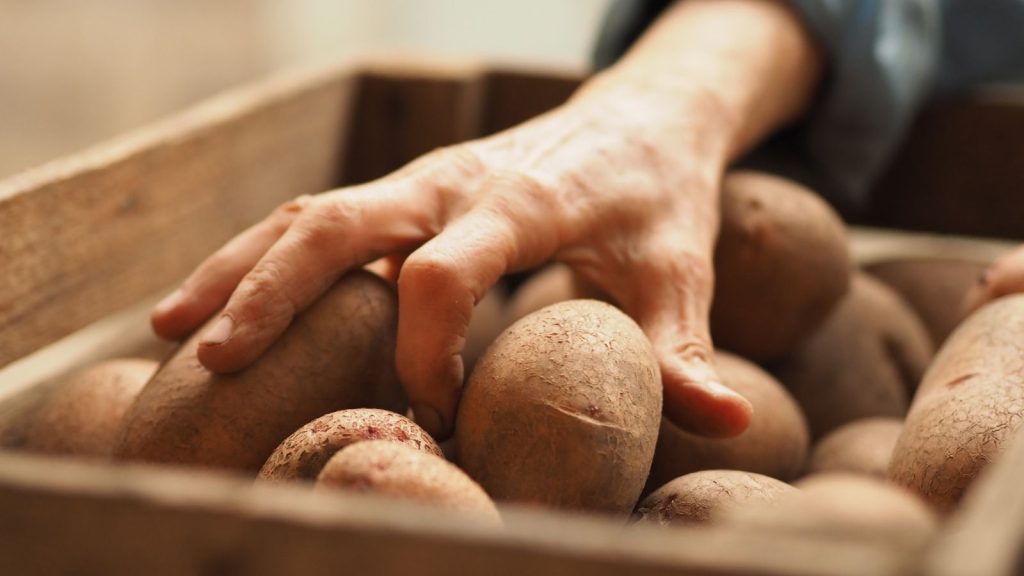
Looking at a potato, it doesn’t look like something packed full of potential growth, right? It’s just a potato – perfect for cooking up in many different ways, not a powerhouse of life! But, under the right conditions, a potato contains everything necessary to grow a strong, healthy plant.
Potatoes are tubers, a type of storage organ that grows underground on the roots of a plant.
They are packed full of starch which, when the conditions are right, provides energy to support growth in the form of shoots that emerge from the surface. These shoots develop into a new plant which produces more potatoes – one of nature’s incredible everlasting cycles!
Factors That Influence Potato Sprouting

Sprouting in potatoes is stimulated by exposure to warmth, light, and humidity. Just one of these factors can be enough to trigger sprouting, but a combination of two or all three will speed up the process:
- Temperatures above 50F (10C) wake the potato from dormancy and encourage sprouting. Even if potatoes are stored in a dark place with low humidity, increased warmth alone can lead to sprouting.
- Increased light levels signal to the potato that conditions are right for growth, leading to sprouting and greening of the skin. Light isn’t essential to trigger sprouting – potatoes can still sprout in darkness if warmth and humidity are present.
- Humidity can contribute to sprouting by keeping the potato’s skin from drying out, creating a favorable environment for growth. However, humidity alone is likely to lead to mold and rot rather than sprouting.
Another factor that increases the likelihood of sprouting in potatoes is ethylene gas. This is a natural plant hormone released by some fruits and vegetables, such as apples, bananas, and onions. If potatoes are stored near crops that produce ethylene oxide, they are likely to sprout more quickly.
How to Stop Potatoes from Sprouting
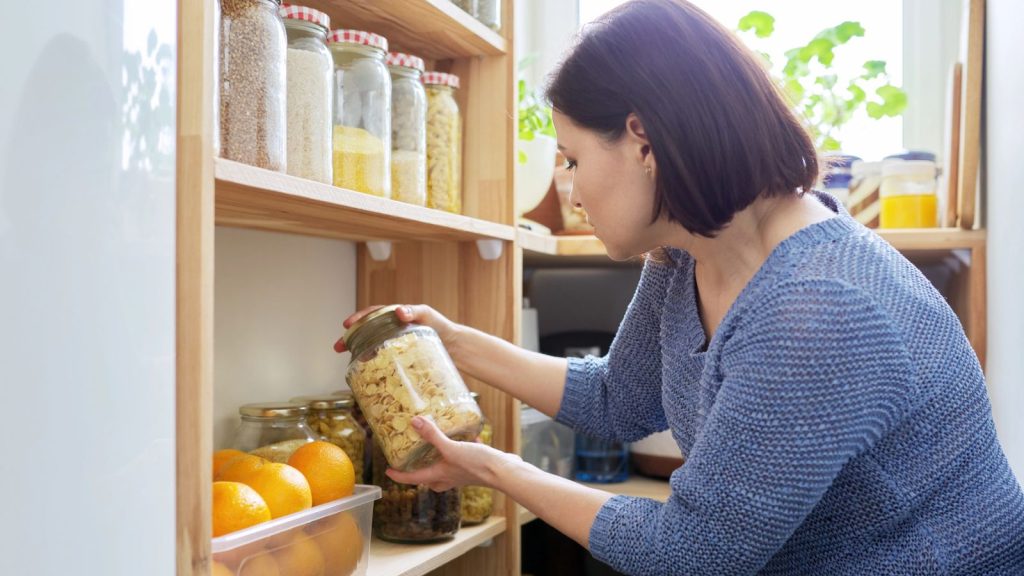
Proper storage conditions are vital to prevent potatoes from breaking dormancy and sprouting. This can be really inconvenient, as it limits what we can do with them.
We know that warmth, light, and humidity trigger sprouting in potatoes, so the key is keeping your potatoes in a cool, dark, well-ventilated space.
Good options for potato storage include:
- A dark, dry pantry or cupboard away from appliances that generate heat.
- A basement with good air circulation and stable, cool temperatures.
- A traditional root cellar.
- An insulated garage, as long as it doesn’t get too cold.
- A dark, cool closet.
Should You Store Potatoes in the Refrigerator?

You may wonder if the refrigerator is a good option, but storing your potatoes there can alter their flavor and texture. This is because starches in potatoes convert to sugars at low temperatures.
It is also important to consider what you store your potatoes in and where they are located. Plastic bags and sealed containers can lead to moisture buildup and increased humidity, so paper or mesh bags are a better option.
And finally, remember to store potatoes separately from ethylene-producing fruits and vegetables like apples, bananas, and onions.
Is it safe to eat a sprouted potato?
When potatoes start to sprout, changes occur that can make them unsafe to eat. Sprouted potatoes contain higher levels of solanine and chaconine, naturally occurring toxins in the nightshade family of plants. The sprouting process may also have depleted nutrients within the potato, causing it to become wrinkled, soft, or shriveled.
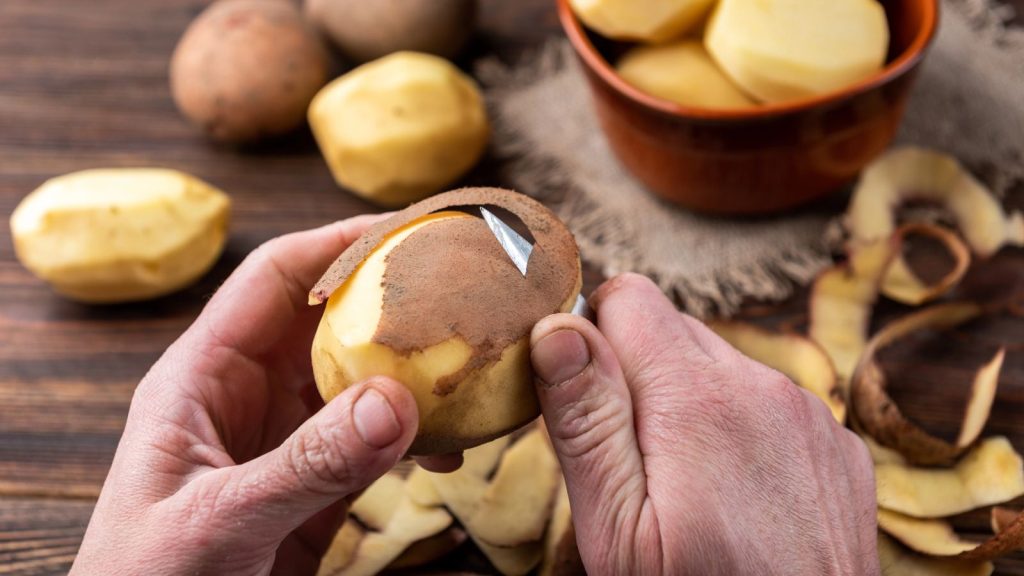
The best way to decide if a sprouted potato is safe to eat is to look at the color and texture. First, cut away any sprouts and green areas, then look at the remaining potato. It can be cooked and eaten as usual if it is firm and has no off-putting odor.
Heavily sprouting, soft, wrinkled potatoes should be discarded. Consuming them can lead to symptoms such as nausea, vomiting, headaches, and, in extreme cases, neurological issues. If in doubt, throw them out!
How to Use Potatoes that are Sprouting

If your potatoes have tiny sprouts but are still in good condition, remove the sprouts and any green areas and cook the potatoes as you normally would. Baking, boiling, or mashing works well, as long as the potato still has a firm texture.
Delightful and Delicious Breakfast Potatoes
What to Do with Sprouted Potatoes That You Can’t Eat

But what about sprouted potatoes that are no longer edible? Well, I’d suggest you try planting them! Even if you’ve got limited space, a few potatoes in a growbag can yield a decent crop.
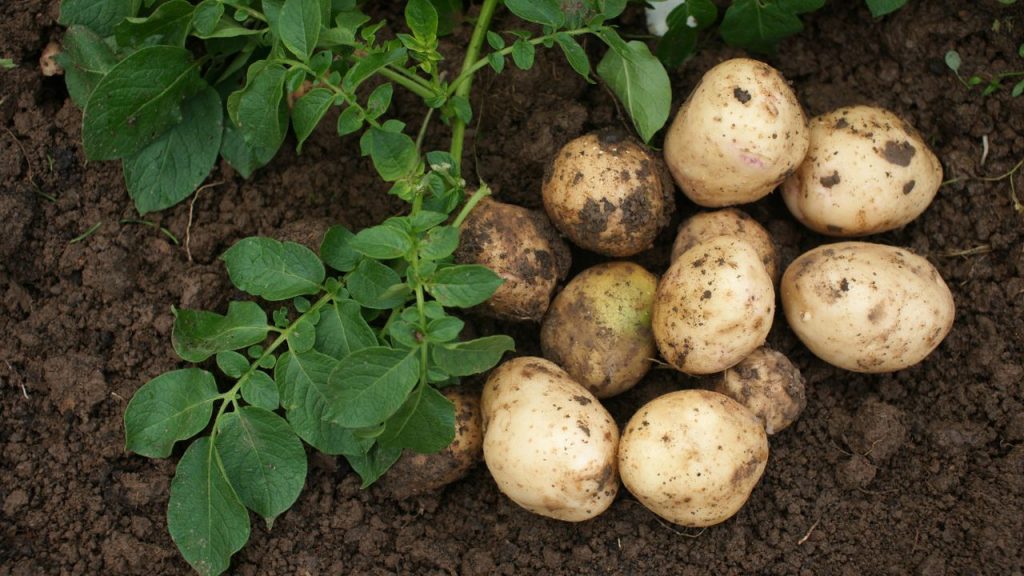
To grow sprouted potatoes, cut the potato into chunks, ensuring each piece has at least one sprout. Allow the cut pieces to dry for a day before planting them in soil. Water regularly, and harvest your potato crop when the plant turns yellow and starts to wilt.
How to Grow Potatoes: Trench or Hill Method
How to Grow Potatoes: Trench or Hill Method
How to Harvest, Cure, and Store Potatoes

How to Harvest, Cure, and Store Potatoes

Kate Chalmers
Kate is a passionate gardener who has a keen interest in all things related to homesteading and sustainability. She resides in Portugal with her husband and menagerie of animals and has over 15 years of experience in the UK veterinary industry. In 2020, Kate and her husband took on a dilapidated Portuguese house and abandoned olive grove, turning it into an abundant food forest and home for nature.
Life on the homestead is never the same from one day to the next, and Kate has mastered many skills that she is keen to pass on to anyone with an interest in becoming more self-sufficient. Kate believes that living a sustainable lifestyle is the key to happiness and fulfillment and that everyone can make simple changes that connect us back to nature and reduce our impact on the planet.