
Weeds, weeds, weeds – the bane of every gardener’s life! Weeds have a way of showing up when you least expect them. One day, your garden looks great, and the next, these unwanted plants seemingly appear from nowhere, crowding out your carefully nurtured plants and taking over.
While some of these ‘weeds’ are actually hugely beneficial to your garden ecosystem, it is a good idea to keep them in check before they spread too far. Knowing which plants to watch out for is the first step toward keeping your yard under control.
But what is that unwanted plant in your garden or lawn, and how can you get rid of it? Let’s take a look!
AdTop Rated Hotels & Resorts
Discover luxury and budget-friendly stays for your next trip.
1. Dandelion

- Location: Dandelions thrive in lawns, garden beds, and even tiny cracks in paving slabs
- Identification: Low-growing serrated leaves, bright yellow flowers on a tall stem, distinctive puffball seed heads
- How to eradicate: Hand pull, making sure to remove the long taproot. Mow regularly to prevent seeding.
2. Crabgrass

- Location: Crabgrass outcompetes lawn grasses in hot, dry conditions
- Identification: A low-growing, coarse grass with broad, spreading blades
- How to eradicate: Raise mowing heights to 3 inches to decrease crabgrass germination
3. Clover
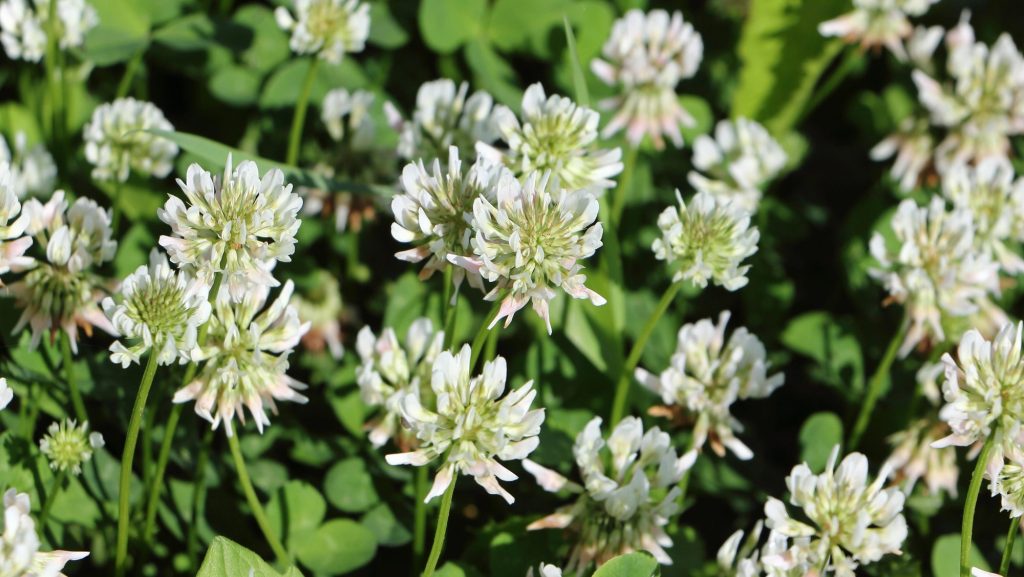
- Location: Clover quickly takes over the lawns with poor soil
- Identification: A low-growing plant with small white or purple flowers and characteristic tri-lobed leaves
- How to eradicate: Improve soil health, overseed with grass in winter
4. Chickweed

- Location: Chickweed grows well in moist, shady spots
- Identification: Sprawling stems that cover the ground with dense mats of small white flowers and leaves
- How to eradicate: Hand-pull or cover with mulch before the plants set seed
5. Thistle
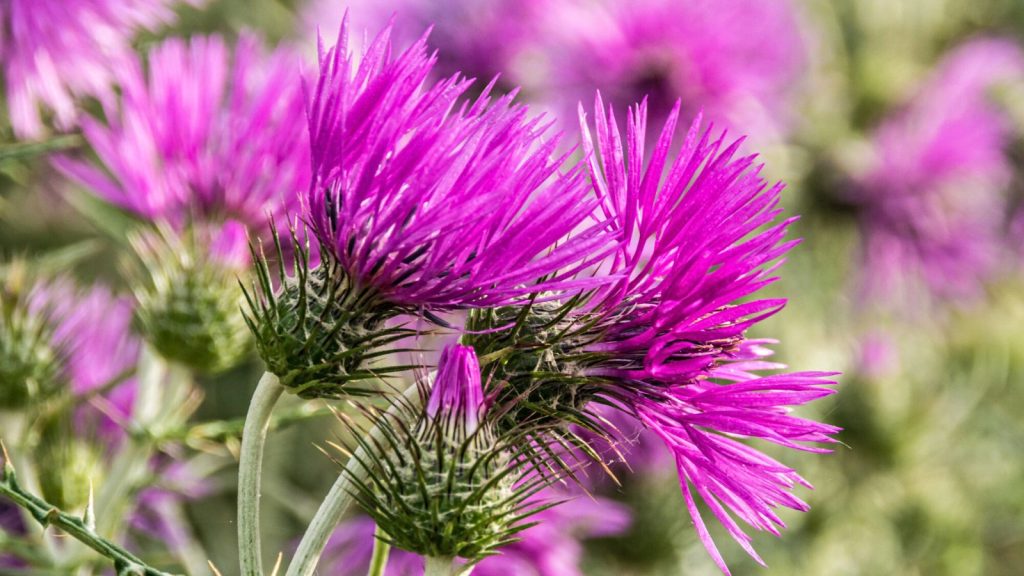
- Location: Different types of thistles all have their own preferences, from shady lawns to poor-quality dry soil
- Identification: Tall stems with spiny leaves and purple or pink flowers
- How to eradicate: Dig up the taproot, mow frequently to prevent flowering
6. Bindweed

- Location: My personal nemesis! Bindweed can and will grow anywhere it gets a chance to become established
- Identification: Fast-growing twining vines, heart-shaped leaves, white or pink flowers
- How to eradicate: Dig out the extensive root systems and use cardboard or mulch to block growth
7. Pigweed

- Location: Anywhere with disturbed soil, such as ornamental and vegetable beds
- Identification: A tall plant with thick, reddish stems, broad leaves, and small green flowers
- How to eradicate: Pull pigweed by hand before it sets seed – a single plant can produce up to 117,000 seeds!
8. Goosegrass

- Location: Lawns, compacted soil, paths
- Identification: A low-growing, thick, grayish-green grass that forms distinctive clumps
- How to eradicate: Hand pull established goosegrass, seed bare patches, and raise mower height to 3-4 inches during the spring and summer
9. Ground Ivy

- Location: Lawns, shady, moist areas
- Identification: A low-growing plant with kidney-shaped, serrated leaves and small purple flowers
- How to eradicate: Hand pull, use vinegar or saltwater spray as a natural weedkiller, and improve lawn aeration
10. Yellow Nutsedge

- Location: Lawns and garden beds, particularly in moist areas
- Identification: A grass-like plant with triangular stems and yellowish-green leaves
- How to eradicate: Dig out roots, improve drainage, and apply mulch to suppress growth
11. Plantain

- Location: Anywhere with poor, compacted soil
- Identification: Low-growing oval leaves with tall flower spikes
- How to eradicate: Improve soil health, overseed bare patches of lawn
12. Wild Violet

- Location: Lawns, shady areas, garden beds
- Identification: You’ll notice wild violet by its Heart-shaped leaves, purple or white flowers
- How to eradicate: Dig out roots, improve soil health, and drainage
13. Purslane

- Location: Newly-seeded lawns, garden beds, cracks in pavement
- Identification: Low-growing succulent with red stems and yellow flowers
- How to eradicate: Dig out taproots and mulch to prevent regrowth
14. Lambsquarter

- Location: Thrives in freshly cultivated soil
- Identification: Tall plant with triangular leaves and small green flowers
- How to eradicate: Hand pull or mow regularly to prevent seeding
15. Hairy Bittercress

- Location: Damp, shady areas
- Identification: Clusters of low-growing, rounded leaves topped with small, white flowers on branching stems
- Mow frequently in early spring to prevent seeding
16. Ragweed

- Location: Thrives in poor, freshly disturbed soil
- Identification: Tall plant with fern-like leaves and greenish flowers
- How to eradicate: Cut or pull plants before they flower
17. Common Mallow

- Location: Commonly found in bare patches on lawns and garden beds
- Identification: A low-growing, dense plant with rounded leaves and pink or purple flowers
- How to eradicate: Hand-pull plants and apply a thick layer of mulch to prevent seed germination
18. Shepherd’s Purse
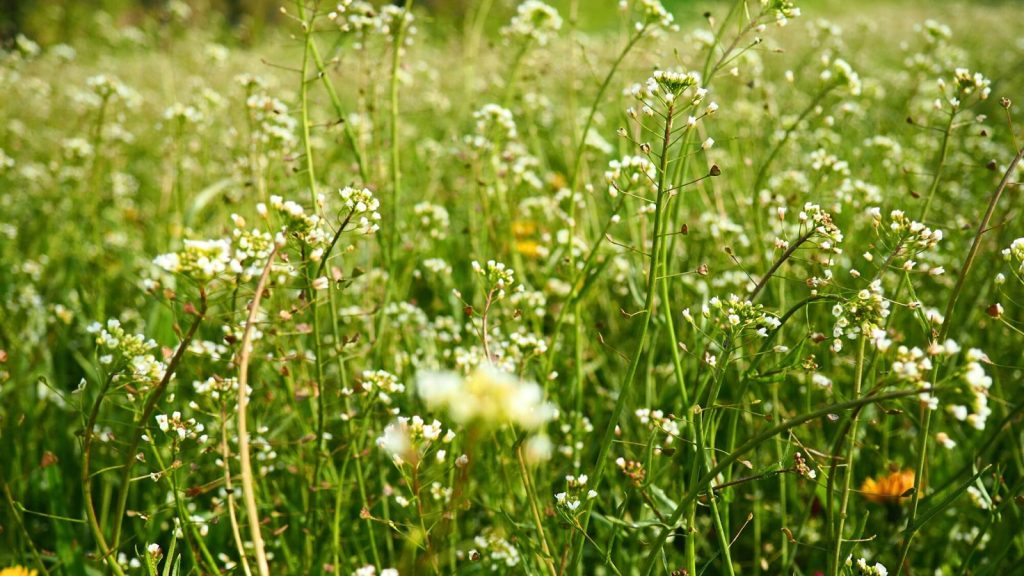
- Location: Establishes quickly in any sunny location
- Identification: Low-growing rosette of leaves topped with small white flowers
- How to eradicate: Pull small plants in spring before flowering, and use mulch to suppress seed germination
19. Wood Sorrel

- Location: Commonplace in shaded lawns and garden beds
- Identification: Forms a dense mat of heart-shaped leaves bearing small yellow or purple flowers
- How to eradicate: Dig out plants, taking care to remove as much of the root system as possible
20. Creeping Buttercup

- Location: Establishes readily in damp, shaded lawns and garden beds
- Identification: A mat of serrated glossy leaves topped with bright yellow flowers
- How to eradicate: Mow regularly and improve drainage in affected areas
21. Mugwort

- Location: Mugwort spreads through its extensive root system across lawns and garden beds
- Identification: Silvery feather-like leaves, can grow up to 4 feet tall
- How to eradicate: Cover with mulch or black plastic to prevent photosynthesis. When digging out mugwort, take care to remove every section of root possible
22. Velvetleaf

- Location: Freshly-disturbed dry soils
- Identification: A tall plant bearing large heart-shaped leaves with an unusual velvety texture
- How to eradicate: Pull plants by hand before they set seed
23. Pennywort

- Location: Establishes quickly in damp, shaded areas
- Identification: Forms a mat of round leaves topped with umbrella-like white flowers
- How to eradicate: Cover with mulch and improve drainage
24. Black Nightshade

- Location: Freshly-tilled garden beds
- Identification: A shrub-like plant with oval leaves and small, dark berries
- How to eradicate: Hand pull before flowering, cover with mulch to suppress germination
25. Groundsel

- Location: Thrives in moist, nutrient-rich soil
- Identification: Forms a mat of jagged leaves topped with small, yellow flowers
- How to eradicate: Dig out plants before they set seed

Kate Chalmers
Kate is a passionate gardener who has a keen interest in all things related to homesteading and sustainability. She resides in Portugal with her husband and menagerie of animals and has over 15 years of experience in the UK veterinary industry. In 2020, Kate and her husband took on a dilapidated Portuguese house and abandoned olive grove, turning it into an abundant food forest and home for nature.
Life on the homestead is never the same from one day to the next, and Kate has mastered many skills that she is keen to pass on to anyone with an interest in becoming more self-sufficient. Kate believes that living a sustainable lifestyle is the key to happiness and fulfillment and that everyone can make simple changes that connect us back to nature and reduce our impact on the planet.
Car Rental Discounts Abroad
Rent a car for your road trip with zero hidden fees.