Have you heard of permaculture gardening? It’s not just a trend—it’s a thoughtful way of gardening that works with nature rather than trying to control it. The beauty of permaculture is that it’s not limited to those with acres of land or years of farming know-how. In fact, it can be just as effective in a small backyard or even on a sunny apartment balcony.
It’s easy to think that permaculture is only for people with large homesteads and extensive farming experience, especially when social media showcases expansive food forests and perfectly planted orchards. But the truth is, you don’t need a large plot or a background in agriculture to start. Whether you have a backyard, a community garden bed, or a few pots on your porch, you can incorporate permaculture principles into your space.
What makes it powerful is its simplicity: observe what nature is doing, support it, and let your garden grow in a way that benefits both you and the environment. No fancy degrees or expensive equipment required—just a willingness to learn, experiment, and shift your perspective. Over time, you’ll see your garden become more abundant, more resilient, and more alive.
What is permaculture gardening?

The main focus of permaculture gardening is working with nature rather than against it. The goal is to develop a garden that requires minimal human intervention while maximizing efficiency and sustainability.
This is achieved by integrating elements such as soil regeneration, water conservation, and companion planting to create resilient and productive growing areas.
The topic of permaculture can be quite overwhelming at first, as there is a lot of theory behind it! Many resources refer to the principles of permaculture, and while these can be useful if you enjoy diving deep into a topic, for a complete beginner, the concept can become overwhelming.
So, to keep things simple, we’ve taken all the practical elements of permaculture gardening and combined them into a simple guide that even the most novice gardener will understand. Let’s take a look!
How does permaculture gardening work?
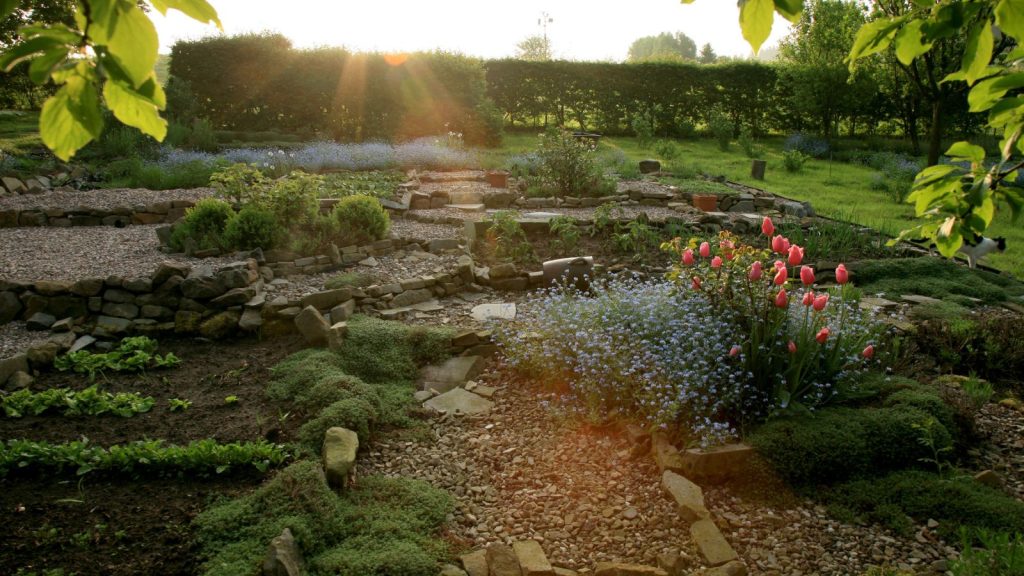
Permaculture gardening creates an interconnected system where plants, animals, soil, and water all work together. Instead of growing crops in neat, weed-free rows, permaculture aims to mimic a natural forest ecosystem.
This approach leads to improved soil fertility, natural pest control, and increased biodiversity, all of which reduce our reliance on chemical herbicides, pesticides, and fertilizers.
Techniques used in Permaculture gardening

Permaculture gardening is achieved by using techniques such as:
- Building hügelkultur beds to enhance soil fertility and water retention
- Mulching soil to reduce water evaporation, suppress weeds, and improve soil structure
- Planting a variety of compatible plant species together to reduce the risk of pests and diseases
- Harvest rainwater to ensure sustainability during dry periods
- Setting up a composting system to recycle organic waste into nutrient-rich fertilizer

Kate Chalmers
Kate is a passionate gardener who has a keen interest in all things related to homesteading and sustainability. She resides in Portugal with her husband and menagerie of animals and has over 15 years of experience in the UK veterinary industry. In 2020, Kate and her husband took on a dilapidated Portuguese house and abandoned olive grove, turning it into an abundant food forest and home for nature.
Life on the homestead is never the same from one day to the next, and Kate has mastered many skills that she is keen to pass on to anyone with an interest in becoming more self-sufficient. Kate believes that living a sustainable lifestyle is the key to happiness and fulfillment and that everyone can make simple changes that connect us back to nature and reduce our impact on the planet.