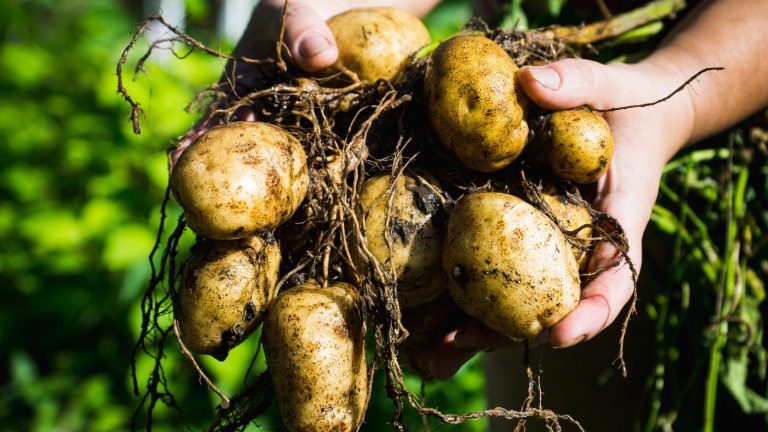
Much as I’d love to spend every waking moment tending to my garden, unfortunately, the demands of modern-day life often drag me away from my favorite pastime. So, to make the most of every available minute I get to spend outdoors, these time-saving hacks help free up my time to attend to other essential and more enjoyable gardening tasks.
Let’s take a look at how to create a thriving garden without dedicating every spare moment to its upkeep!
1. Plan carefully

Avoid wasted labor and frustration by planning ahead. Which garden jobs are best attended to right away, and what can wait until a later date? For example, hoeing tiny weed seedlings takes just minutes, whereas leaving them to grow into well-established weeds will take up a much larger chunk of your time when it comes to digging or pulling them up.
Every weekend I take a stroll around my garden and note jobs that need sorting urgently. This is incredibly helpful for directing my efforts to exactly where they are needed during the week ahead!
2. Use mulches for weed control and water retention

Mulch is a gardener’s best friend, and I can’t emphasize enough how much time you can save by mulching your garden beds. A 2–3-inch layer of organic mulch, such as bark chips, straw, or compost, will suppress weed growth, retain moisture, and improve soil health.
3. Choose low-maintenance plants
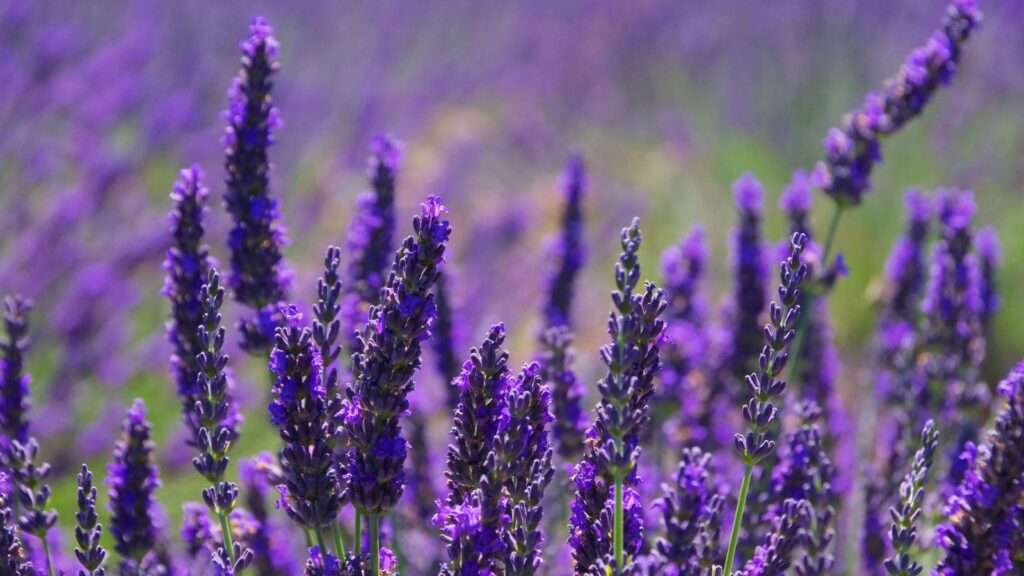
Don’t make life hard for yourself if you’re short on time – opt for plants that require minimal care to reduce time spent watering, pruning, and pest control.
In warmer climates, look for drought-resistant plants such as sedums, lavender, and coneflowers. Conversely, frost-tolerant plants like peonies and coral bells are great options for colder regions.
4. Install an irrigation system

A simple irrigation system, such as drip irrigation or a soaker hose, can be inexpensive to set up and will save hours of time over the warmer summer months. If your budget is very tight, garden hoses that are past their best can be repurposed into a DIY soaker hose system at virtually zero expense.
5. Group plants with similar needs together

Make life easy for yourself by grouping plants with similar needs together in their ideal location. For example, our summer climate is very hot, so I grow shade-loving lettuce, Swiss chard, spinach, and arugula in a bed that is shaded for most of the afternoon.
6. Start with young plants instead of seeds

While I love the thrill of growing plants from seed, some are just not worth the time and effort. Nursery-grown transplants are far cheaper than you might expect and can be planted out straight away, cutting out the time spent germinating and potting on seedlings.
7. Embrace perennials over annuals

Perennial plants return year after year, saving you the time and effort of replanting every spring. Once established, these low-maintenance plants often require little care, making them a smart choice for gardeners short on time.
8. Utilize companion planting

Cut down on time spent applying fertilizers and tackling pest problems by pairing certain plants together. This time-honored gardening method, known as companion planting, also reduces the need for chemical interventions, saving money and protecting local wildlife.
Good companion planting pairings include marigolds with tomatoes, beans with corn, and onions with carrots.
PromotedUS & Schengen Visa Guide
Get step-by-step assistance for your tourist visa approval.
9. Practice no-dig gardening

Embrace no-dig gardening and your spade will be relegated to the back of the shed! This system involves planting directly into layers of cardboard and mulch on top of the soil, eliminating the need to dig over garden beds.
No-dig gardening not only improves the structure and health of your soil but also boosts populations of beneficial microbes and earthworms.
10. Use slow-release organic fertilizers

Liquid fertilizers are only effective for a few days, so switch to slow-release alternatives that provide a steady supply of nutrients over time. A good time-saving tip is to mix organic, slow-release fertilizer granules into your potting soil to ensure consistent feeding throughout the growing season.
11. Grow self-seeding plants

Allow annual plants to naturally scatter their seeds and you’ll be graced with a new generation of plants year after year, with zero effort! This is a great way to guarantee a spectacular floral display in wildflower gardens and ornamental borders with minimal effort.
12. Set up a composting system

Worried that composting is more effort than it’s worth? A tumbling composter, which turns the compost and speeds decomposition, will rapidly convert kitchen and garden waste into nutrient-rich organic compost.
13. Plant ground covers to reduce weeds

Nature doesn’t like bare ground, which is why weeds rapidly spring to life as soon as soil is disturbed or uncovered. Plants that grow low to the ground, such as creeping thyme, clover, sedum, or creeping phlox, can create a colorful, low-maintenance carpet that saves hours of weeding.
14. Use large pots for container gardening

Did you know that small pots are far more time-consuming than their larger counterparts? Small pots dry out faster, and the low volume of soil means many plants will struggle to thrive. If container gardening is your thing, opt for larger pots that can accommodate multiple plants, reducing the need for daily watering.
15. Ditch the lawn

Don’t shoot the messenger here – lawns are not great news for the planet, and tending to them may be a waste of our precious time! Lawns require constant mowing, watering, and fertilizing, and can be difficult to maintain through periods of low rainfall or cold weather.
Consider replacing your lawn with native ground cover plants, a wildflower meadow, or covering the area with gravel, pavers, or mulch.

Kate Chalmers
Kate is a passionate gardener who has a keen interest in all things related to homesteading and sustainability. She resides in Portugal with her husband and menagerie of animals and has over 15 years of experience in the UK veterinary industry. In 2020, Kate and her husband took on a dilapidated Portuguese house and abandoned olive grove, turning it into an abundant food forest and home for nature.
Life on the homestead is never the same from one day to the next, and Kate has mastered many skills that she is keen to pass on to anyone with an interest in becoming more self-sufficient. Kate believes that living a sustainable lifestyle is the key to happiness and fulfillment and that everyone can make simple changes that connect us back to nature and reduce our impact on the planet.
Book Your Dream Vacation
Customize your itinerary for the ultimate Euro-trip or US adventure.