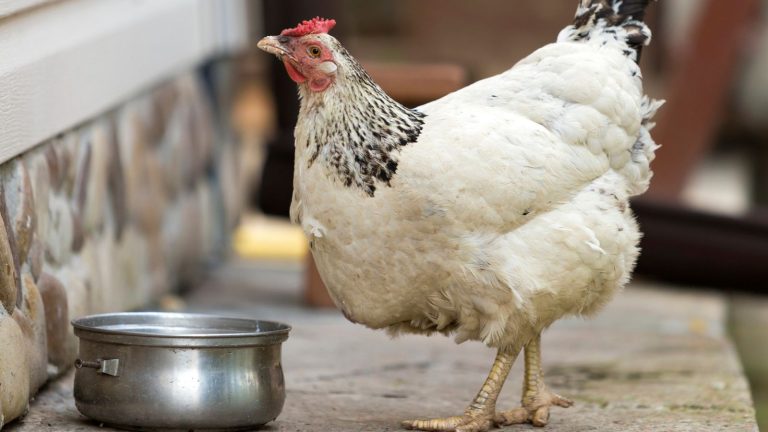
Watermelon is a great snack for chickens, and I’ve yet to meet someone who didn’t enjoy biting into this tasty treat! Watermelon contains high levels of sugar and water, making it ideal for warmer days when your flock needs extra hydration. But is it safe for chickens to eat watermelon? The short answer is yes. Chickens can eat watermelon. Here’s How:

Other Topics You Might Like
- Can Chickens Eat Pineapple?
- Chickens and Oranges: Can Chickens Eat Oranges?
- 19 Irresistible Treats Your Backyard Chickens Will Flock To
- What Can Chickens Eat? An Alphabetical Guide
- Can Chickens Eat Meat?
- 13 Superfoods To Feed Your Chickens for More Protein
- 13 Toxic Foods You Must Keep Away from Your Backyard Chickens
Can chickens eat all parts of a watermelon?
Chickens can eat all parts of a watermelon, although they may struggle to digest the tough outer rind. Chickens tend to eagerly seek out the seeds first – a prized treat! – then peck away at the flesh until only the rind is left behind. We then remove any leftover rind, which can quickly become moldy and unsafe to eat.

Health benefits of feeding watermelon to chickens
The main benefit of feeding watermelon to chickens is its high water content – at over 90%, this thirst-quenching treat is a great way to ensure your flock is well-hydrated.
Like most fruits, watermelon is also packed full of essential vitamins and antioxidants, helping to support their immune system and overall health.
How to Feed Watermelon to Chickens
Chickens enjoy pecking at the soft flesh of watermelons, so there is no need to cut them into bite-sized pieces first.
Simply slice the fruit into chunks or wedges and enjoy watching your birds tuck into a thirst-quenching feast!
Remove any uneaten watermelon after an hour or so, as rotten fruit can cause digestive problems and attract flies and vermin.

Kate Chalmers
Kate is a passionate gardener who has a keen interest in all things related to homesteading and sustainability. She resides in Portugal with her husband and menagerie of animals and has over 15 years of experience in the UK veterinary industry. In 2020, Kate and her husband took on a dilapidated Portuguese house and abandoned olive grove, turning it into an abundant food forest and home for nature.
Life on the homestead is never the same from one day to the next, and Kate has mastered many skills that she is keen to pass on to anyone with an interest in becoming more self-sufficient. Kate believes that living a sustainable lifestyle is the key to happiness and fulfillment and that everyone can make simple changes that connect us back to nature and reduce our impact on the planet.