

No matter how large or small your vegetable plot, succession planting is the key to bumper harvests all year round. Suppose you want to maximize your garden’s productivity while lowering your workload. In that case, succession planting helps to extend your harvest season, make better use of available space, and keep your garden producing continuously.
And, best of all, succession planting doesn’t need to be complicated! Following a few simple guidelines, your vegetable beds will be full of crops throughout every season, yielding delicious produce no matter what time of year.
So, to help you understand where to start, we’ve put together an easy-to-follow guide to succession planting, along with some great real-life examples that can be adapted to suit any climate.
What is succession planting?

Succession planting involves planting crops in a sequence to provide a continuous harvest throughout the growing season.
This technique has two main components: repeated plantings of one crop to generate longer harvests and replacing crops with a different plant at the end of their growing season to maximize the use of space.
An Example of Sucession Planting

For example,
How to Incorporate Succession Planting

There are several ways to incorporate succession planting into your garden plan, including:
- Staggered planting: Sowing seeds or transplanting in intervals to extend harvest times.
- Same-space succession: Planting a fast-maturing crop first, then replacing it with another crop once harvested.
- Intercropping: Growing quick-maturing crops alongside slower-growing ones to use space efficiently.
- Seasonal succession: Transitioning from cool-season to warm-season crops, then back to cool-season crops as the weather changes.
How does succession planting work?

The key to successful succession planting is planning ahead to ensure that every gap in your garden is as productive as possible. To do this, you need to understand the length of your growing season and how it impacts how many plantings you can fit into one year.
Gardeners in warmer climates can typically fit in more successions than those with shorter growing seasons. However, a longer winter gives you more scope to expand the range of cool-season crops you grow.
The main timeframe to be aware of is the gap between your typical last spring and first fall frost dates—in moderate zones, this is normally from early May to mid-October. This forms the main growing period for warm-season crops, and cool-season crops are grown before and after these.
Best Crops for Succession Planting

It is also important to note that some vegetables are better suited for succession planting than others. Look for mature crops ready to harvest as soon as possible, like
If the thought of succession planting sounds a bit complicated, use a garden planner or calendar to schedule sowing dates. This will enable you to plan so that as one crop is harvested, another is ready to take its place.
Top tips for succession planting success
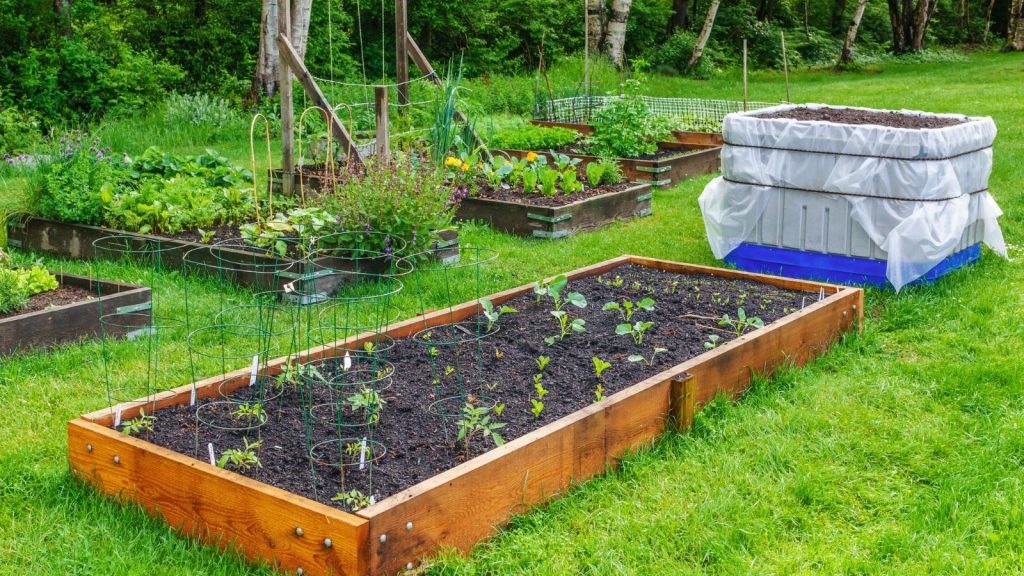
Follow these tips to guarantee your carefully planned vegetable schedule is a success:
- Regularly top up garden beds with well-rotted compost and organic matter to replenish nutrients.
- Start seeds indoors or purchase young plants to speed up the transition between crops.
- Select fast-growing crops – the quicker a plant matures, the sooner you can harvest and replant with the next crop.
- Pair compatible crops, like
radishes andcarrots , together to save space. - Make sure to have good-sized seedlings to plant out in any gaps that become available.
Month-by-month succession planting chart

Succession planting doesn’t have to be complicated. Certain groups of plants are typically grown at set times of year, making it easy to create a simple plan. Follow a schedule for your zone to make use of your garden beds all year round:
- March – April: Cool-season crops (e.g.,
lettuce ,peas ,spinach ,radishes ,carrots ) - May – June: Transitional crops (beets, green onions, beans, basil)
- July – August: Warm-season crops (cucumbers, tomatoes, squash, peppers)
- September onwards: Winter crops (kale,
spinach ,garlic )
Adjusting succession planting for different climates – Zones 8-10

Succession planting can be adapted to different climate zones by adjusting planting times, crop choices, and techniques. Here’s how to modify your approach based on your region:
Zones 8-10 (warm to hot climate, longer warm season with potential of heatwaves, milder winter months):
- Cool-season crops (lettuce,
spinach , kale, and broccoli) should be planted in late fall or winter rather than spring. - Warm-season crops (tomatoes, cucumbers, beans) can have multiple successions due to the long growing season.
- Use shade cloth or afternoon shade to protect crops in hotter months.
- Select heat-tolerant varieties and drought-resistant plants for summer successions.
Succession Planting in Zones 3 and Below

Zones 3 and below (cool to moderate climate, generally with a shorter warm season and colder winters):
- Start seeds indoors earlier to maximize the short growing window.
- Hardy crops (kale,
spinach ,carrots ) can be overwintered or started early with row covers. - Choose quick-maturing summer crop varieties to fit within the shorter frost-free period.
- Utilize horticultural fleeces, cloches, cold frames, or greenhouses to extend the growing season.
8 Best Raised Garden Beds (What to Consider Before Buying)
How to Plant Your Own Sustainable Permaculture Garden

How to Plant Your Own Sustainable Permaculture Garden
18 Herbs That Boost Soil Health and Biodiversity in a Permaculture Garden

18 Herbs That Boost Soil Health and Biodiversity in a Permaculture Garden

Kate Chalmers
Kate is a passionate gardener who has a keen interest in all things related to homesteading and sustainability. She resides in Portugal with her husband and menagerie of animals and has over 15 years of experience in the UK veterinary industry. In 2020, Kate and her husband took on a dilapidated Portuguese house and abandoned olive grove, turning it into an abundant food forest and home for nature.
Life on the homestead is never the same from one day to the next, and Kate has mastered many skills that she is keen to pass on to anyone with an interest in becoming more self-sufficient. Kate believes that living a sustainable lifestyle is the key to happiness and fulfillment and that everyone can make simple changes that connect us back to nature and reduce our impact on the planet.