Imagine this: You step outside in the morning, and your garden looks like someone went at it with a hand trowel. Little holes everywhere. A couple of seedlings knocked flat. Mulch kicked onto the path. And you never saw a thing.
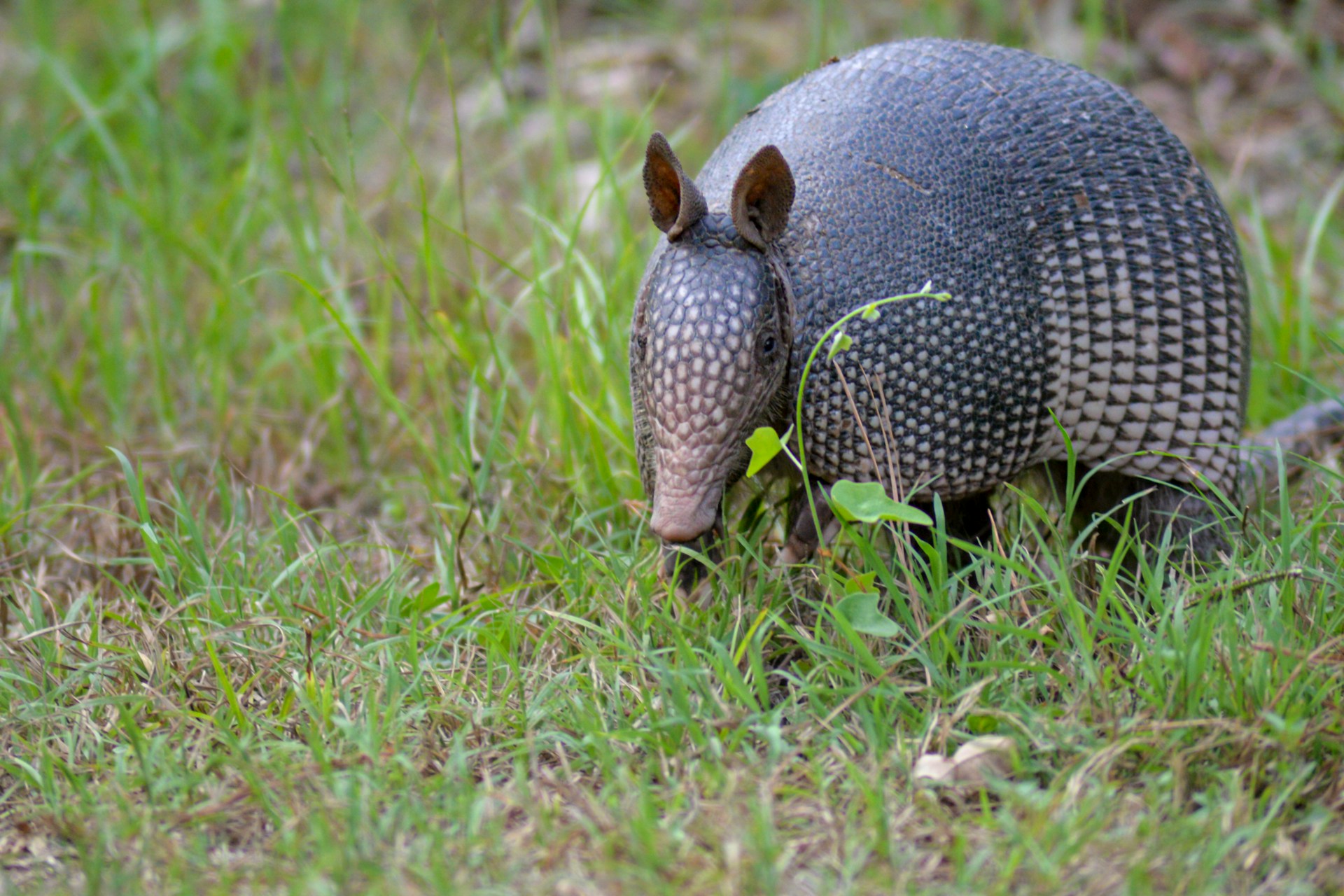
An armadillo might be responsible. These animals are most active at night and spend much of their time searching for insects and other food beneath the soil.
But armadillos aren’t the only animals that dig. Skunks, squirrels, moles, and gophers can leave similar damage, so it’s important to figure out what’s causing the problem before deciding what to do.
Here are five signs that an armadillo might be digging up your yard.
Sign 1: Lots of Small, Shallow Holes
Armadillos dig because they’re hungry, and your yard might be full of the worms, grubs and bugs they love. They don’t see well, but their noses are sharp.
Once they smell a snack underground, they dig straight down for it. That leaves small holes, usually 1 to 3 inches deep and about as wide as a coffee mug (3 to 5 inches). A few go down as far as 6 inches.
The real giveaway is how many there are. One or two holes could be anything. But if you wake up to a bunch of them scattered across the lawn or garden beds, chances are an armadillo dropped by for dinner.
Sign 2: Plants and Mulch Tossed Around
Armadillos plow through loose soil and mulch while they hunt for bugs, and anything in the way gets shoved aside. That can include the flowers or young vegetables you’ve been babying for weeks.
They don’t usually eat plants, though. They’re after what’s underneath. So if your seedlings were pulled up but the leaves weren’t chewed, look around for other signs of digging.
Sign 3: A Bigger Burrow Near Your Home or Garden
Armadillos dig burrows to rest in during the day. According to UF/IFAS Extension, these burrows are usually about 7 to 8 inches wide and can run up to 15 feet underground. The opening is about the size of a one-gallon plastic jug and often has loose dirt around it.
Good places to check:
- Old stumps, rock piles and brush piles
- Patios, driveways and foundations
- Sheds, porches and other outbuildings
- Fence lines and thick brush
Can’t find one? Don’t rule out an armadillo yet. They often have more than one burrow, and the one in use might be next door. Some say that when digging keeps happening, a burrow is often within about 100 yards, sometimes near woods or a creek.
Sign 4: Small Tracks With Sharp Claw Marks
Check muddy spots, sandy areas, or freshly turned garden soil for small footprints with clear claw marks at the tips of the toes.
Armadillos have four toes on their front feet and five on the back, but you may only see three clear toe marks in a print.
If the ground is too dry for tracks, try this. Before bed, rake a small strip of bare soil smooth near the spot where you keep finding damage. Check it first thing in the morning.
Sign 5: New Holes Show Up Overnight
Armadillos work the night shift. They’re mainly active after dark, though you might spot one during the day now and then. In the hot summer months, they’re busiest between 2 and 5 a.m.
They also like damp, loose soil, so a freshly watered lawn is an easy target. They slow down in cold weather but may still come out to feed on warm winter days.
If your yard looks fine at dusk but has fresh holes by breakfast, take a closer look for an armadillo.
Armadillo or Something Else?
A few other animals leave similar damage:
- Skunks: Skunks usually go after grubs too, and their small, shallow holes look a lot like an armadillo’s. Look for their tracks, or just sniff around. If a skunky smell hangs in the air, you’ve probably found your digger.
- Squirrels: They dig little holes to hide nuts and seeds or dig them back up. Their holes are usually smaller than an armadillo’s. Plus, squirrels work in broad daylight, so you might catch one in the act.
- Moles: See raised ridges snaking across your lawn? That’s usually a mole. Moles also leave little piles of dirt that look like tiny volcanoes.
- Gophers: Gophers leave mounds of dirt shaped like a fan or a half-moon. And instead of leaving the hole open, they usually plug it with soil.
Armadillos leave several open holes where they’ve been feeding, often with scattered mulch, uprooted plants and a burrow nearby. For a closer look at how their damage compares with other diggers, see this guide to armadillo yard damage signs and causes.
What to Do Once You Know It’s an Armadillo
Start with the easy stuff.
1. Wear gloves when you fill the holes. Armadillos can carry the germ that causes Hansen’s disease, also called leprosy. The risk is low, but gloves are cheap insurance.
2. Water and fertilize a little less. Wet, rich soil is easy to dig and packed with worms and bugs, and that’s exactly what armadillos want. Cut back on the lawn, but keep your veggies watered.
3. Fence the beds you care about most. UF/IFAS Extension suggests a fence about 24 inches tall, buried around 18 inches deep and angled outward. That’s a lot of digging, so save it for your vegetable patch or favorite flower bed.
4. Try a trap if the digging won’t stop. The University of Missouri Extension recommends setting a live trap along a fence or path near the burrow. Add a board on each side of the opening to guide the armadillo in. Some homeowners use wooden armadillo traps made just for this. Check the trap often, and know what you can do with the animal once you catch it.
5. Skip the sprays and poisons. University of Missouri Extension says no repellent or poison is approved or proven to work on armadillos.
Check Your Local Rules First
Before you set a trap, call your state wildlife agency or county extension office, because the rules vary. In Florida, you can release a trapped nuisance armadillo where you caught it, or move it only to a property in the same county that’s at least 40 connected acres, with the landowner’s written permission. Oklahoma also requires landowner permission where an armadillo is released.
A Few Clues Go a Long Way
A torn-up garden is frustrating, but you don’t have to guess. Start with the holes, then look for tossed mulch, uprooted plants, tracks and a burrow. If several of those line up, an armadillo has probably been paying you visits, and you can pick a fix that actually fits.

Joevel Faustino
Joevel Faustino works withThe Armadillo Trap, a Mississippi-based workshop that makes handmade wooden live traps for armadillos.