Kale, cabbage, broccoli, and other brassicas are staples in many home gardens. They’re great fresh in salads or cooked into simple, hearty meals.
They’re also fairly easy to grow, but that doesn’t mean they’re problem-free. Pests are usually the biggest issue; some chew through cabbage heads, while others go after young leaves and roots before plants have a chance to grow strong.
Here are 12 common problems to watch for when growing brassicas.
Aphids
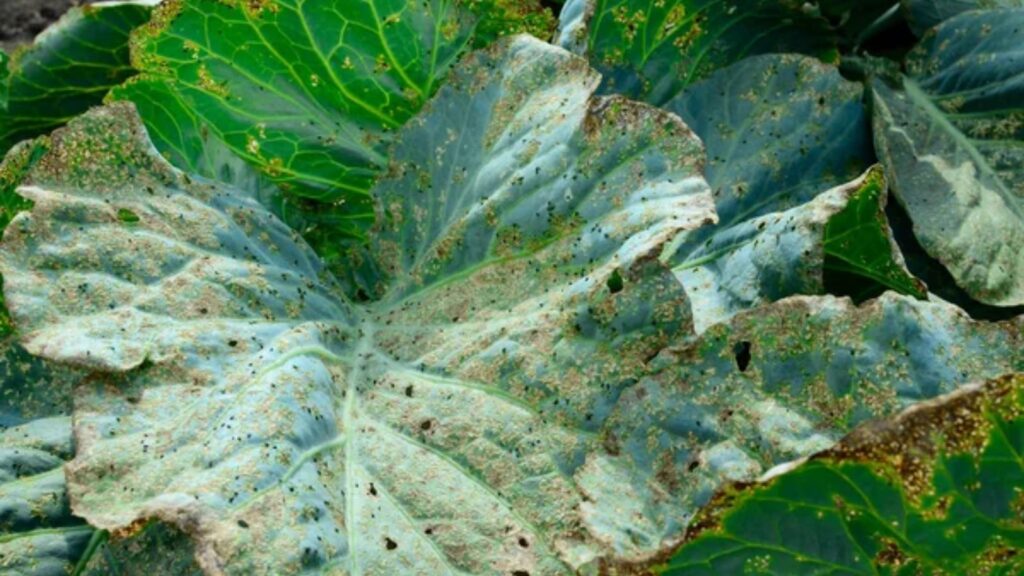
Small, sap-sucking insects that cause curled and yellowed leaves on brassica plants. Control them with insecticidal soap or by introducing beneficial insects like ladybugs.
Cabbage Worms

Cabbage worms are green caterpillars that chew large holes in the leaves of cabbage and other brassicas. Handpick them or use Bacillus thuringiensis (Bt) to control infestations.
Flea Beetles

These tiny, black beetles create small, round holes in the leaves. Use row covers or neem oil to protect young plants.
Black Rot

A bacterial infection that causes V-shaped lesions on leaves and blackened veins. Infected plants must be removed and destroyed.
Birds

As winter transitions into spring, birds become the main threat to your brassicas. With fewer food sources, hungry birds, especially pigeons, turn to our gardens for sustenance. They can quickly eat away at brassicas, tearing the leaves and leaving them ragged and bare.
Potassium Deficiency

Inadequate levels of potassium can result in weak stems and browning of leaf edges. This can be corrected with a potassium-rich fertilizer.
15 Natural Plant Fertilizers Made from Everyday Waste to Feed Your Garden
Whitefly

Whiteflies significantly impact brassicas by feeding on plant sap, which diminishes the plants’ vigor and causes leaves to yellow and wither.
Additionally, whiteflies excrete a sticky substance known as honeydew as they feed. This honeydew coats the leaves, promoting the growth of sooty mold that blocks sunlight and impairs photosynthesis, further stunting plant growth.
Harlequin Bugs

Harlequin Bugs emerge in the summer when the weather warms up, targeting brassica plants like kale. These pests are easily identifiable due to their colorful appearance.
Thrips

If the brassica leaves start showing a brownish-bronze color and a blistered appearance, this is likely caused by thrips. These insects puncture the plant’s leaf tissue and extract the sap, especially in plants like cabbage. Cover plants with mesh row covers to prevent them from harming your plants.
Clubroot

Clubroot is a fungal disease that affects the brassica family. It leads to malformed and swollen roots. When young plants are infected, they become stunted and eventually die, while older plants fail to develop heads or reasonable growth.
Fusarium Wilt

Fusarium wilt is a fungal disease that causes the plant’s leaves to turn yellow. The discoloration starts with the lower leaves and gradually moves upward, potentially killing the plant. Plants can recover if temperatures drop below 75 degrees after the plants have been infected.
Nitrogen Deficiency

Low nitrogen levels cause slow growth and yellowing of older leaves. Correct with a nitrogen-rich fertilizer.
10 Natural Ways to Add Nitrogen to Your Garden Soil
Bonus – Downy Mildew
A fungal disease that appears as yellow or white patches on kale leaves. It’s best to improve air circulation, avoid overhead watering, and apply fungicidal sprays if necessary.