
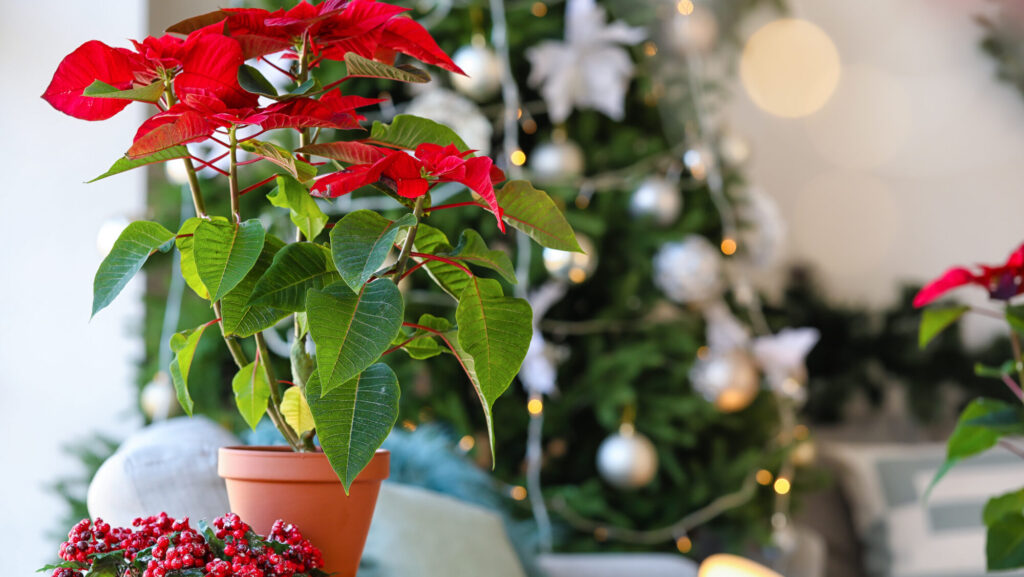
Poinsettias are the quintessential holiday plant. We all know them, we all love them, and for many of us, the season doesn’t feel complete without one on the table or by the tree.
They’re the plant we all reach for—the one that instantly says yes, the holidays are here. But here’s the truth: for so many people, keeping them looking good past the first week can be a challenge. Most poinsettias don’t die early because you “don’t have a green thumb.” They die because they were doomed long before you walked them to the checkout. The trick, though, is choosing one that won’t fade before the celebrations even begin.
Start by Checking the Flowers at the Store
Look at the small yellow-green buds in the center. They should be firm and closed. If they’re open, bright yellow, dusty with pollen, or dried out, the plant is already past its peak and won’t hold up long.
Look at the Leaves and Bracts
The colorful bracts and green leaves should look fresh and steady. Skip any plant with yellowing, curling, or missing lower leaves. Leaf drop at the bottom is a sign of stress that won’t reverse once you take it home.
Test the Soil
Press a finger into the pot. If the soil is extremely dry, the plant has been stressed for too long. If the pot is sitting in water inside a foil sleeve, that’s a sign of root-rot territory. Choose one with evenly moist—but not soggy—soil.
Pay Attention to Where It’s Displayed
If the store sets poinsettias right by the automatic doors, avoid them. Cold drafts can damage the plant in seconds. Pick one displayed well inside the store, away from temperature swings.
Protect It on the Way Home
Wrap it or place it in a bag so cold air doesn’t shock it on the way from the store to your car. Once home, give it bright, indirect light, keep it slightly moist, and avoid placing it near heaters, vents, or drafty windows.
Keep It Separate at First
Like any new houseplant, poinsettias can sometimes carry pests. Give it a little space from your other plants for a few days, just to be safe.
Want It to Last Past New Year’s?
You can keep it going—trim it back in spring, repot in fresh soil, let it grow outdoors in summer shade, and give it long nights in early fall to encourage new color for next year.