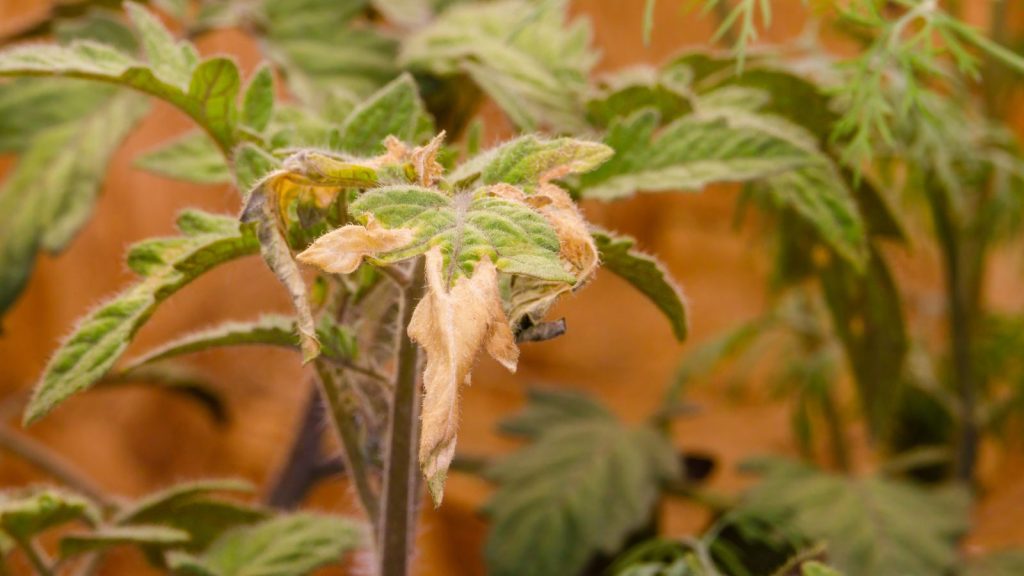
Tomatoes are one of the most rewarding crops to grow—delicious and a staple in many home gardens. But when the leaves start turning yellow, it’s usually a sign that something isn’t quite right.
After dealing with this issue a few times, I’ve learned that yellowing leaves can be caused by several common problems. Most are easy to identify and manage with the right approach. Here’s a closer look at what might be causing yellow tomato leaves and how to help your plants recover.
Lack of Potassium

A potassium deficiency can cause leaf yellowing. Poor soil (overly acidic or sandy soil) and other weather conditions worsen this deficiency. Test your soil to ensure it contains the right nutrients and has the ideal pH level for growing healthy tomatoes.
Pest Damage
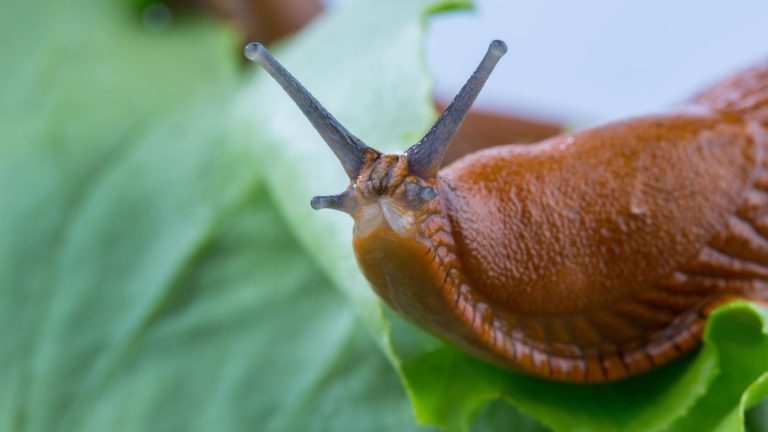
Tomato Pests, such as hornworms, slugs, aphids, and spider mites, can cause serious damage to tomato plants, often leading to yellowing leaves, stunted growth, and damaged fruit. In addition to feeding on the plants, some pests can also spread diseases.
One effective way to reduce pest pressure is through companion planting, which helps repel harmful insects while attracting beneficial ones that support a healthier garden.
Overwatering

Tomato plants need 1 to 2 inches of water weekly when their vines are growing and fruiting. However, the fruits ripen quickly if you reduce your watering schedule. Excessive water and soggy soil can lead to root rot, depriving the roots of oxygen and causing the tomato leaves to turn yellow.
To prevent waterlogged conditions, it’s important to ensure that your soil has good drainage and allow the soil to dry out slightly between waterings.
Diseases

Several diseases, such as powdery mildew, early blight, and leaf spot, can cause tomato leaves to turn yellow. These diseases affect the foliage and fruit, leading to yellowing and stunted growth. Using disease-resistant varieties, rotating crops, and maintaining good garden hygiene can help minimize the impact of these diseases.
Too much Sunlight

Tomatoes need plenty of sunlight, but too much direct exposure can cause leaf burn and yellowing. Excessive sunlight can lead to brown, crinkly leaf edges and eventually cause the leaves to die, reducing the plant’s ability to photosynthesize and protect the developing fruits. Ensure your plants get enough sun by providing afternoon shade without being overexposed.
Lack of Sunlight

Contrary to the effects of direct sunlight, Tomato leaves can turn yellow when they don’t receive sufficient sunlight. Tomatoes require at least eight hours of daylight to bloom and produce fruit, as sunlight is essential for energy production in plants. Without enough light, your tomatoes are less likely to bear fruit.
To give it enough access, relocate them to a brighter spot, especially if your tomatoes are in containers.
Lack of Pollination

Pollination is required for tomato development, and bees primarily carry out this task. Issues with pollination early in the growing season can affect fruit development, ripening, and the appearance of yellow leaves. Tomatoes may struggle to flower if they aren’t adequately pollinated. Planting flowers that attract bees can help improve pollination rates.
Transplant Shock

Tomatoes may experience transplant shock after being moved or repotted, resulting in yellowing leaves. This occurs as the young plant adjusts to changes in temperature and moisture levels. A bit of yellowing is a typical reaction during this acclimation period.
Herbicides

Exposure to herbicides can cause tomatoes to have yellowing leaves. It could even lead to damaged crops and stunted growth. To protect your tomato plants, avoid using herbicides in the area where they are located.
Nitrogen Overload

Too much nitrogen and fertilizers high in nitrogen may cause yellowing leaves. It’s important to use a balanced fertilizer with moderate nitrogen levels. Reduce fertilization once your plants start setting fruit, and consider fertilizing only two or three times during the season.
Lack of Nutrients
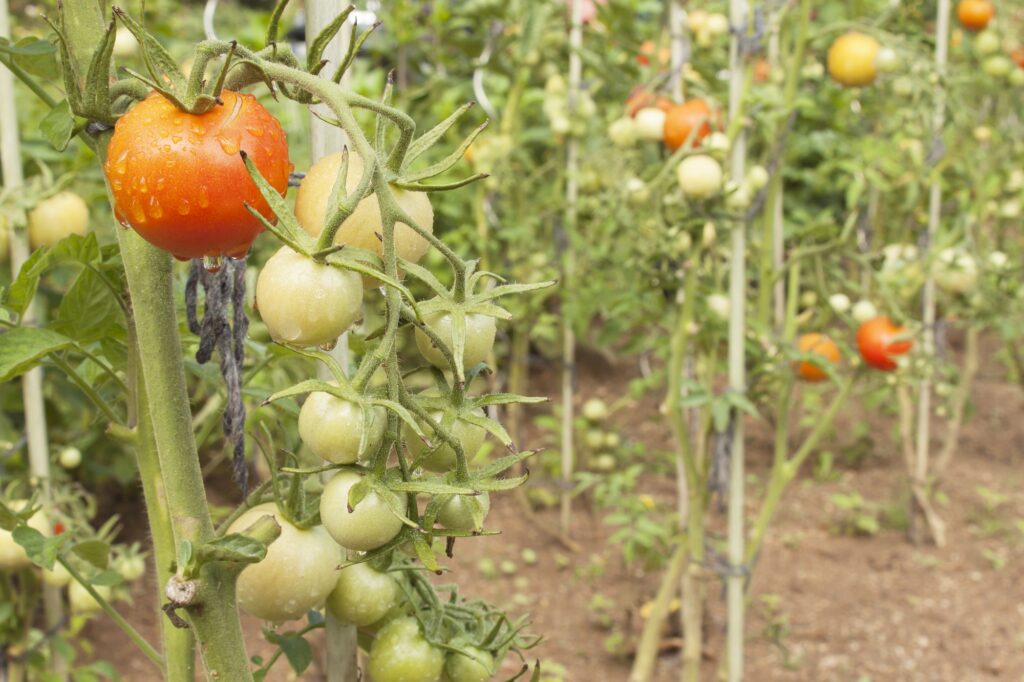
Tomatoes require a range of nutrients and micronutrients, particularly phosphorus and potassium, throughout the growing season. These elements are essential for producing lycopene in the fruits, and insufficient amounts can cause slow or uneven ripening. Lack of nutrients can also result in the yellowing of leaves.
Grow Juicier, Tastier Tomatoes with These 15 Companion Plants

Companion planting is an age-old gardening method that can help prevent common plant issues and boost crop yields. By using some of the best companion plants for tomatoes, your harvests will be better than ever. Here are the 15 best companion plants for your tomato garden.
Grow Juicier, Tastier Tomatoes with These 15 Companion
17 Colorful Plants to Grow for Fresh Flower Arrangements

For those looking to have a continuous supply of fresh flowers for stunning arrangements, consider planting these 24 colorful varieties. They will thrive in your garden and, in some cases, provide beautiful blooms year after year.
17 Colorful Plants to Grow for Fresh Flower Arrangements
How to Support Tomatoes: Tomato Stakes vs. Tomato Cages
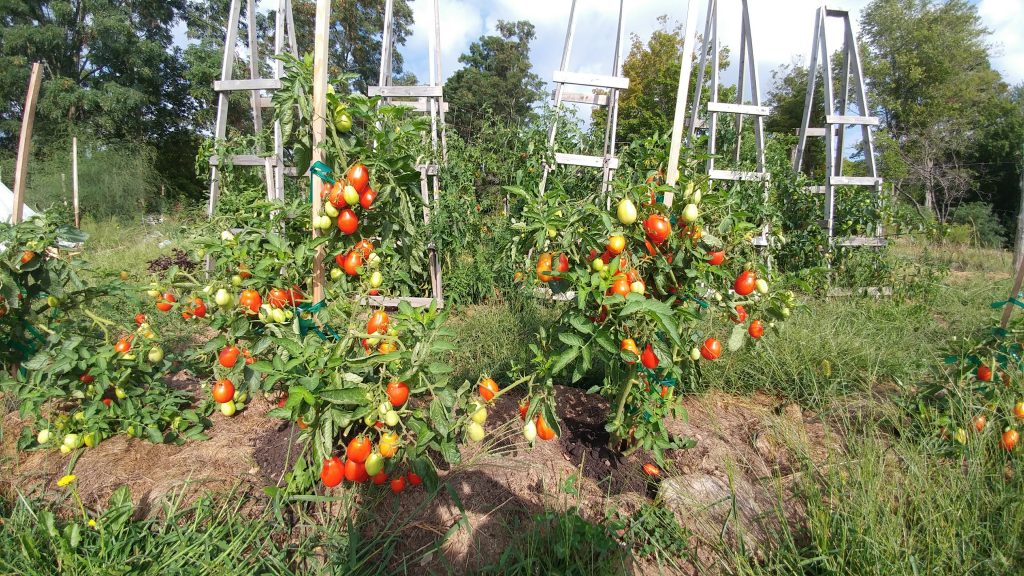
Supporting garden tomatoes with tomato stakes or cages is necessary for all but a few varieties of tomatoes. Without some form of support, your tomato plant will sprawl out over the ground. Here, we’ll share some considerations to help you make a choice that will work for your garden.