A survival garden can be one of the most useful things you grow at home. Having canned goods and other emergency food stored away is helpful, but fresh produce gives you another source of food if grocery trips become difficult or supplies become limited.
The trick is choosing crops that give you plenty of food without requiring more space, water, or work than you can manage. Some vegetables produce a large harvest from a small planting, while others grow quickly or can be stored for months after harvest.
A mix of root crops, leafy greens, alliums, and legumes can give you food at different times of the year instead of leaving you with one huge harvest all at once. Here are some of the best vegetables to include in a survival garden.
Potatoes
If you have room for just one dependable staple crop, potatoes are a strong choice. They produce a good amount of food underground and can be grown in garden beds, containers, grow bags, and other large planting spaces.
Potatoes are filling, versatile, and fairly easy to grow. Under good conditions, a single plant can produce several pounds of potatoes. You can also leave some smaller potatoes behind for planting the following season.
Related: How to Grow Potatoes: Trench or Hill Method
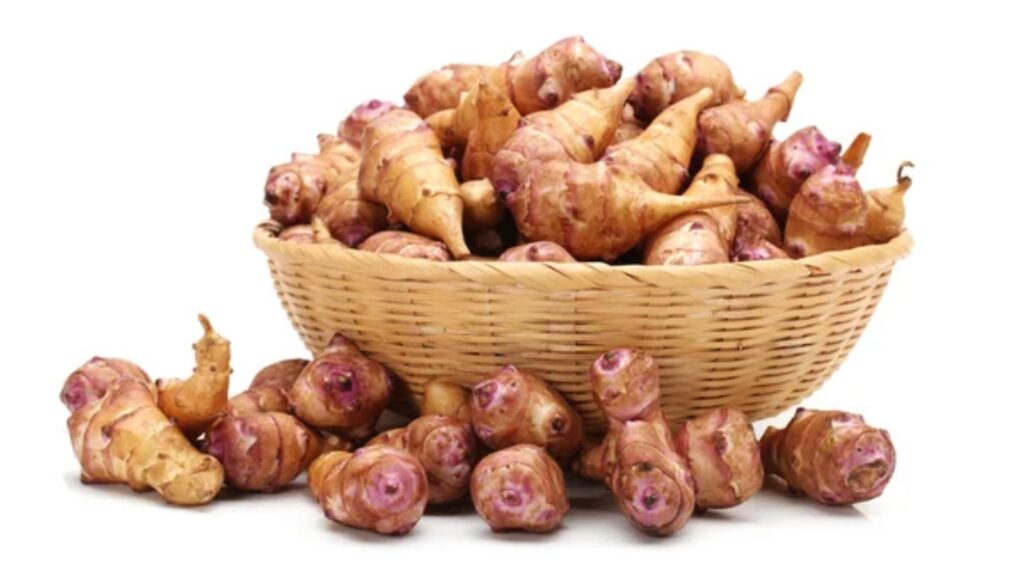
Jerusalem Artichoke (Sunchoke)
Jerusalem artichokes, also called
Once established, they can spread quite aggressively, so give them their own area where they won’t crowd other crops. The tubers can be harvested as needed, making them useful for a garden where you want food available beyond a single harvest day.
Carrots
Carrots are a handy crop for a survival garden because they don’t take up much space and can be planted more than once during the growing season.
They grow best in loose, stone-free soil that allows the roots to develop properly. Heavy or rocky soil can leave you with short, twisted
Related: How to Store Carrots | 3 Ways
Garlic
Garlic earns its place in a survival garden for several reasons. It adds flavor to meals, stores well after curing, and doesn’t require much attention once it gets established.
Most gardeners plant individual cloves in the fall and harvest the bulbs the following summer. If you leave a few bulbs in the ground,
Related: How to Grow Garlic: A Year’s Supply
Onions
It’s hard to picture a kitchen without onions, and they are just as useful in a garden. They can be started from seeds, transplants, or sets, with sets being one of the easier choices for new gardeners.
Onions need a fairly long growing season, but they don’t demand constant attention. Once the tops fall over and the bulbs mature, they can be harvested, cured, and stored for later use.
Related: How to Grow Onions: Three Ways
Beets
Beets give you two foods from one plant. The roots can be roasted, boiled, pickled, or added to salads, while the young greens can be cooked or eaten fresh.
They grow fairly quickly and don’t require a huge amount of space. Keep the soil moist while they’re getting established, and harvest smaller roots if you prefer a sweeter, more tender beet.
Radishes
Radishes are one of the fastest crops you can grow. Some varieties are ready to harvest in roughly three to four weeks, which makes them useful if you want fresh food between slower-growing crops.
Plant the seeds in cool weather and keep the soil consistently moist.
Sweet Potatoes
Sweet potatoes need warmth and a long growing season, but they can give you a generous harvest in return. The roots are filling and provide nutrients such as vitamin A.
Plant sweet potato slips after the danger of frost has passed. They prefer loose, well-drained soil and plenty of sunlight. If you live in a cooler climate, choose an early-maturing variety so the roots have enough time to develop before the growing season ends.
Turnips
Turnips are useful because both the roots and greens can be eaten. Young turnips have a mild, slightly sweet flavor, while the greens can be cooked much like other leafy vegetables.
They grow well during cool weather, so you can plant them in early spring or late summer for a fall crop. Keep the soil evenly moist and harvest some of the smaller roots while allowing the rest to continue growing.
Kale
Kale is a great crop for anyone who wants a steady supply of greens rather than one large harvest. Once the plants are established, you can pick the outer leaves while allowing the plant to continue producing.
It also handles cooler weather well, which can give you fresh greens after some warm-season vegetables have stopped producing. Depending on the variety and growing conditions, young kale leaves can be ready for harvest within a few weeks.
Arugula
Arugula grows quickly and can give you several harvests from the same planting. Its peppery leaves work well in salads, sandwiches, wraps, and cooked dishes.
Sow seeds in fertile soil and keep them watered during dry periods. You can start harvesting young leaves fairly soon, then continue picking from the plants as they grow.
Spinach
Spinach is another useful cool-season crop. It grows quickly during mild spring and fall weather and can provide plenty of tender leaves from a relatively small area.
Keep the soil consistently moist and harvest the outer leaves as needed. Raised beds can be particularly convenient for
Lettuce
Lettuce is a good choice if you want something that can go from seed to harvest fairly quickly. It has shallow roots, so it works well in garden beds, containers, and raised beds.
It prefers cooler temperatures and consistent moisture. Some varieties can be ready to harvest in less than a month, especially when picked as baby greens.
Related: How to Store Lettuce
Green Onions
Green onions are easy to grow and don’t require much space. They can be planted in garden beds, containers, or tucked into open areas around larger crops.
They grow quickly and can be harvested while the stems are still young. Cut what you need and leave the rest growing for another harvest. Their mild onion flavor also makes them useful in everything from soups and eggs to salads and stir-fries.
Beans and Peas
Beans and
Green beans, black-eyed
With succession planting, you can keep a steady supply coming instead of harvesting everything at once.
Related: How to Harvest Green Beans
A good survival garden doesn’t have to be huge. Start with crops your family actually eats, then add varieties that store well, grow quickly, or produce food over a long period. Growing a mix of vegetables also spreads out your harvest, so you’re less likely to end up with too much of one crop and nothing ready to eat afterward.