



California Grey chickens are a good example of a breed that was designed with practicality in mind. They were developed in the United States during the 1930s by crossing White Leghorns with Barred Plymouth Rocks. The goal was simple: create a chicken that laid a large number of white eggs while staying calmer and more adaptable than many traditional white egg layers.
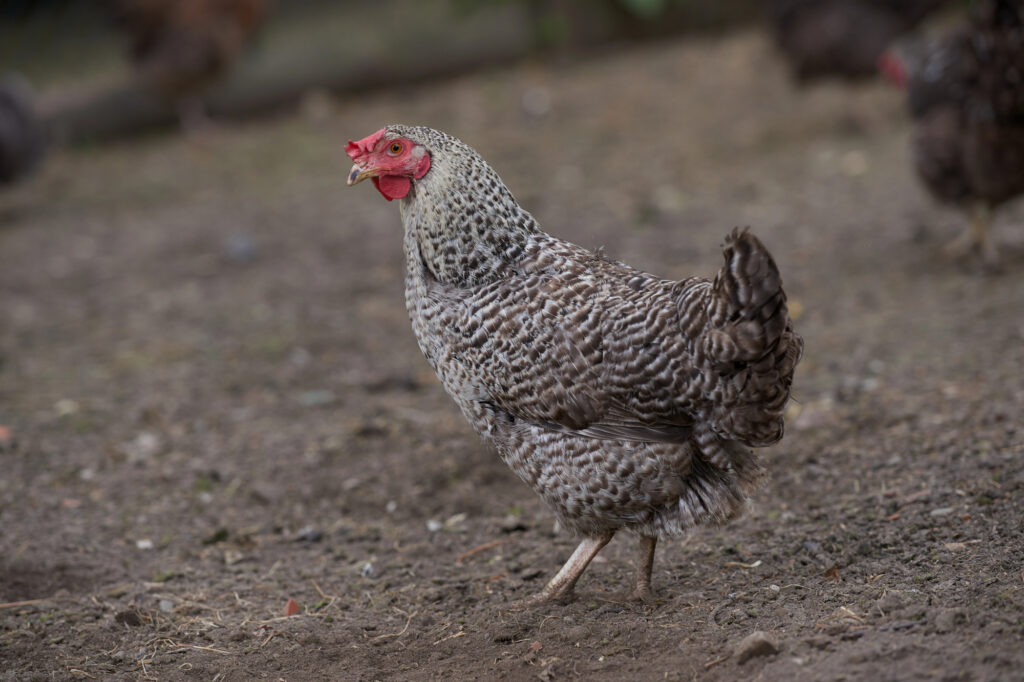
The result is a bird that blends efficiency with balance. California Greys inherited excellent egg production and smaller body size from the Leghorn, along with the barred, or “cuckoo,” coloring and steadier temperament of the Barred Rock.
Size and Purpose
California Greys are considered a dual-purpose breed, suitable for both eggs and meat, though they are best known for their laying ability. Hens average about 4.5 pounds, while roosters reach around 5.5 pounds. Meat production is moderate, making them useful but not heavy-bodied birds.
Their real strength is egg production. California Greys are among the most efficient white-egg producers among breeds that are not primarily white. Hens can lay 260–300 large white eggs per year, making them a dependable choice for families who value a consistent egg supply.
Temperament and Behavior
One reason California Greys stand out is their temperament. Unlike some white egg layers that are known for being nervous or flighty, this breed is generally less flighty and more manageable. They are active and alert but not difficult to handle, which makes them a good fit for backyard flocks.
Broodiness is uncommon, so they tend to stay focused on laying rather than sitting on eggs. They are friendly, social birds with low to moderate aggression toward flock members and a moderate noise level.

Grab Your Chicken Record Keeping Planner
Take the guesswork out of managing your flock with this all-in-one Planner! This 45-page printable bundle helps you track egg production, maintain bird health, organize coop chores, and stay on top of your poultry finances—all in one place.
$17
Climate and Living Conditions
California Greys adapt well to most climates. They tolerate heat well and can handle colder conditions with proper care, though cold tolerance may vary depending on comb size. Their single comb and clean legs mean winter protection is helpful in colder regions.
They are good foragers and aware of predators, which makes them a strong choice for free-range or semi-free-range setups. Confinement tolerance is moderate—they do best with some space to move, but adjust well to typical backyard environments.
Other Posts You Might Like
- 12 Exotic Chicken Breeds That Bring Variety to Your Flock
- ISA Brown Chicken Breed: The Ultimate Guide
- Rhode Island Red Chicken Breed – A Comprehensive Guide
- Serama Chickens: Small in Size, Big in Personality
- A Guide to Bantam Chicken Breeds
A Practical Choice for Backyard Keepers
While California Greys are still considered a relatively rare breed, they are well-suited to both urban backyards and larger homesteads. They are friendly, productive, adaptable, and long-lived, with an average lifespan of 6–10 years.
If you’re looking for a chicken that quietly does its job without special demands, California Greys are worth considering. They may not be flashy, but they are dependable, efficient, and easy to live with—qualities that matter most in a hardworking backyard flock.


