Would you like to learn how to use an egg candler? If so, this article is meant for you. Farmers typically use an egg candler, a device designed to test eggs from backyard chickens during the incubation period, to determine if the eggs are viable or not.
A viable egg has already been fertilized, and an embryo is capable of growing inside and hatching. Nowadays, light bulbs are used for egg candling by directing the light inside the egg to see if the egg is developing into a chick, and one of the essential tools if you want to hatch chicks.
Candling only indicates whether an egg is viable on the fourth day after incubation, when the blood vessels of the embryo begin to develop.
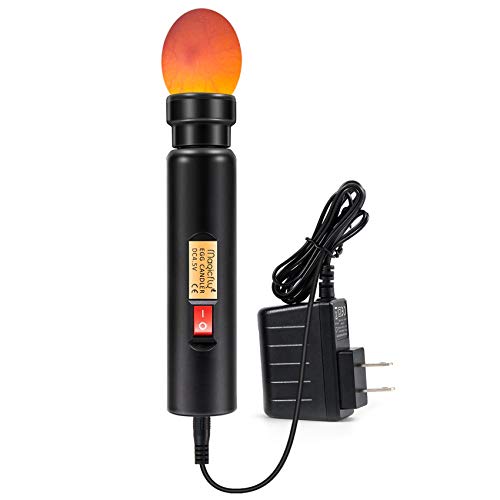
This brand-new egg candler is powered by a standard power supply (not rechargeable) and features a bright, cool LED light that makes it easy, safe, and effective to use. The long electric cord with a durable American plug and simple on/off switch adds convenience during use. It's perfect for monitoring the development of fertilized eggs by revealing dark spots and veins, and it's also a fun and educational tool for students learning about incubation in the classroom or lab.
Here are the steps to follow while using the egg Candler

- Setting the candling equipment in an appropriate position near the
incubator . - Hold the eggs and place them with the larger side of the egg (air sac side) facing the light. Ensure you tilt the egg to all sides until you have a clear view.
- Mark each egg with a different number so that you can compare your results after the second candling process.
- Check if the eggs are viable. This can be observed by noting the spread of blood vessels from the center of the egg towards the outside. With a good light source, you may also be able to see the embryo outline at the center of the egg, or even see the embryo moving if you are lucky enough. Check also if the egg is not viable. You can use egg candling to determine whether an egg is feasible by observing the development of a blood ring or blood spot inside the egg.
- Discard the non-viable eggs to prevent them from exploding or going bad inside the
incubator . - Gently place the eggs back in the
incubator or nest after observing them. Ensure you don’t keep the eggs from theincubator for more than 20-30 minutes.
Some eggs can also be Yorker. A Yorker is an egg that was not fertilized and thus cannot develop an embryo. The inside of the eggs has no blood vessels, blood spots, or even dark spots; it is just clear.
It’s thus crucial for you to observe the eggs carefully and clearly. It’s advice if one is not sure whether the eggs are viable or not to leave them and keep observing. It’s challenging to candle speckled or brown eggs since they do not become transparent under the light; thus, a high-intensity light is required.