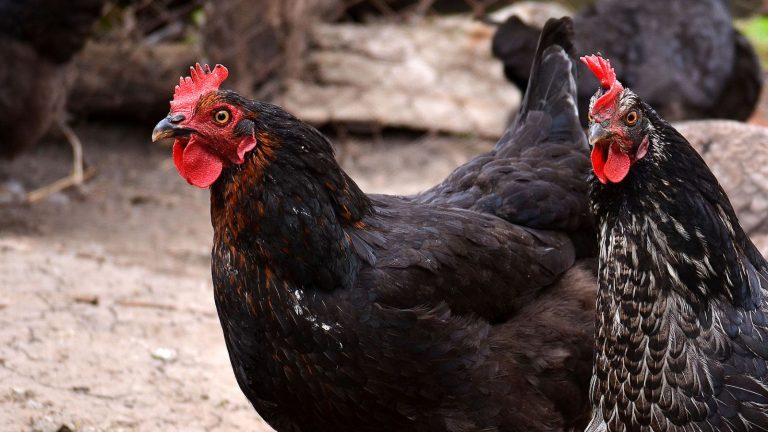






Keeping bantam chickens has become popular with those who desire to have a small, friendly, low-maintenance backyard pet. These tiny layers grace farms worldwide and are also well-loved as show chickens.
There are almost 350 different breeds of bantam and miniature chickens. The word “bantam” is generally used to describe any small chicken.
Historical records indicate bantam chickens originated in the Orient. Japanese breeders have spent years improving the form of bantam chickens.
Some true bantam breeds date back 4,000 years. The popular Silkie bantam originated in Tibet in the 13th century and soon became common throughout China.

What are Bantam Chickens?
True bantams are naturally small chicken breeds that have no full-size counterpart. Adult bantams generally weigh only between 16 and 30 oz. They are known for their charming personalities, unique appearances, and suitability for backyard flocks. Here are some of the most popular true bantam breeds:
Silkie
The Silkie is one of the most recognizable bantam breeds, famous for its fluffy, fur-like feathers that lack the typical barbs found in other chickens. This breed also has black skin, blue earlobes, and an extra toe on each foot.
Silkies are known for their gentle and friendly nature, making them excellent pets and brooders for hatching eggs.
A Beginner’s Guide to Raising Silkie Chickens

Sebright
Sebrights are a stunning ornamental bantam breed that comes in two striking color varieties: gold-laced and silver-laced. Their intricate feather patterns, combined with their compact size, make them a favorite among poultry enthusiasts.
Unlike many other breeds, both hens and roosters have the same feather pattern, creating a strikingly uniform look.
Belgian Bantams (D’Anver & D’Uccle)
Belgian bantams include several breeds, but two of the most well-known are the Belgian D’Anver and Belgian D’Uccle.
- Belgian D’Anver: This bearded, tailless breed is small yet bold, with an upright stance and a curious personality. They are great for small spaces and do well in confinement.
- Belgian D’Uccle: Known for their feathered feet and muffs, D’Uccles are a docile and friendly breed. They come in several color varieties, including Mille Fleur, which is a striking combination of white, black, and reddish-brown speckles.
Serama
Originating from Malaysia, the Serama is the smallest chicken breed in the world, with some birds weighing less than a pound.
These tiny bantams are often kept as house pets due to their affectionate nature and ability to adapt to small spaces. They come in a variety of colors and feather types, including smooth, frizzle, and silkie-feathered.

The Dutch Bantam
The Dutch Bantam is one of the oldest true bantam breeds, originally discovered on Bantam Island in the Dutch East Indies (now Indonesia).
Dutch sailors brought these small birds back to Europe in the 17th century, where they became especially popular in Holland and England. Known for their alert and active nature, Dutch Bantams are excellent foragers and thrive in free-range environments.
Other Bantams: Miniature Versions of Large Breeds
While true bantams have no large counterpart, many other bantams are simply miniaturized versions of standard breeds.
Most large chicken breeds now have a bantam variety, offering keepers the benefits of a smaller bird without sacrificing the breed’s characteristics. Some popular examples include:
- Bantam Orpington – A compact yet robust version of the Orpington, with the same friendly disposition.
- Bantam Rhode Island Red – A smaller version of the hardy, egg-laying Rhode Island Red.
- Bantam Cochin – A fluffy, round chicken known for its feathered feet and gentle personality.
Rate of Growth
Although different breeds of bantams grow at various rates, they generally mature in six to nine months. However, they tend to gain some additional weight and bulk during their second year of life.
Bantams are considered sexually mature at about five to six months of age. They can range in weight from less than 20 ounces to just over 2 pounds, depending on the breed.
Egg Production
Bantams are not top egg producers, but they can be satisfactory ones. Their eggs are smaller than that of a larger breed. The color of the egg shell will also vary from white to light brown according to the breed.
Brooding
In order for the eggs to hatch, the hen must sit on them to keep them warm. This is called brooding. Some breeds of bantam hens are not known to be good brooders.
Make Excellent Pets
In addition to being kept for egg production, bantams are often kept simply as pets. They can be tamed easily and are content in small areas.