Planting flowers with impressively large blooms is an easy way to create a garden that immediately commands attention. Large flowers create dramatic focal points that can transform even the most basic gardens into something straight from a magazine cover. Don’t know where to start? Check out these 15 plants with massive blooming flowers.
1. Dinner Plate Dahlia (Dahlia spp.)
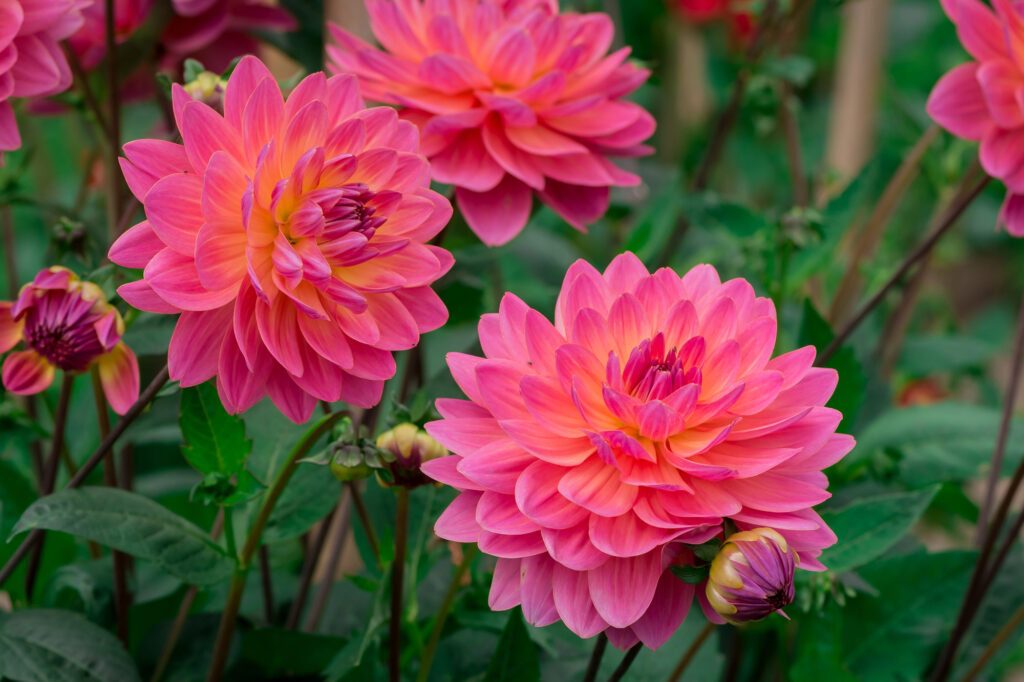
The dinner plate dahlia earns its name (and a spot on this list) by producing blooms that can be as large as dinner plates. These flowers can be as wide as 10-12 inches, especially in varieties like Café au Lait and Labyrinth.
These massive flowers come in nearly every color except true blue, with petals arranged in perfect geometric patterns that look almost artificial in their precision.
Growing dinner plate dahlias requires staking because of their sheer size and weight. These tender perennials thrive in USDA zones 8-11 but can be grown as annuals in colder regions. They need full sun and rich, well-draining soil with consistent moisture.
2. Herbaceous Peony (Paeonia)
Some varieties of
Peonies are hardy in USDA zones 3-8, prefer full sun to partial shade, and well-draining soil enriched with compost.
3. Amaryllis (Hippeastrum)
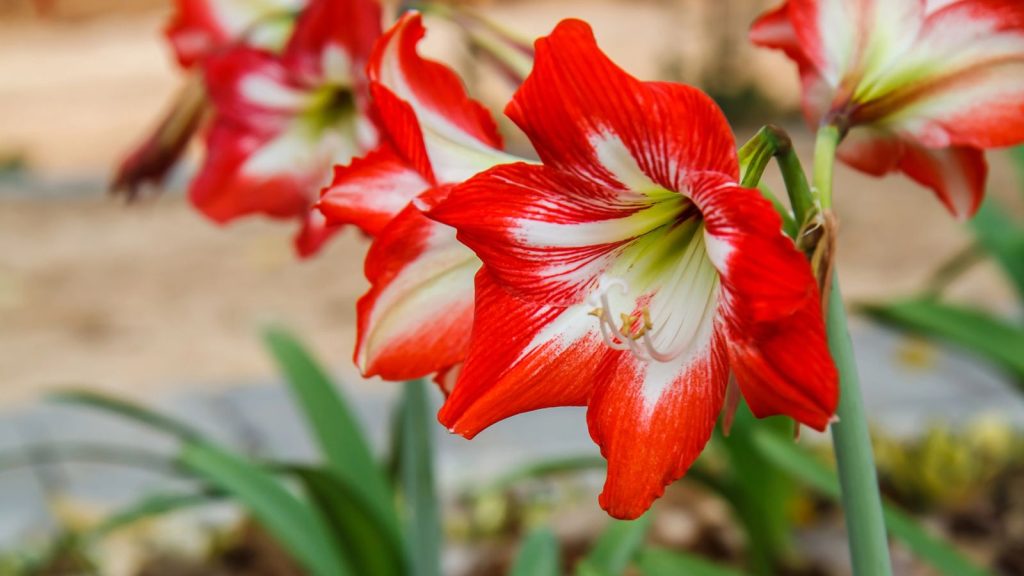
Amaryllis bulbs produce some of the most dramatic large flowers you can grow. Each individual bloom can be as wide as 6-8 inches. However, what makes amaryllis particularly striking is how these massive flowers appear on tall, sturdy stems with minimal leaves, creating a clean look that emphasizes its size.
Amaryllis are hardy outdoors only in USDA zones 9-11, but everywhere else, they’re commonly grown as houseplants. They need bright, indirect light and a well-draining potting mix to grow well.
4. Tree Peony (Paeonia suffruticosa)
Tree
Tree
5. Hibiscus (Hibiscus)

Both tropical and hardy hibiscus varieties produce enormous flowers. These flowers have a distinctive trumpet shape and prominent stamens, which add to their dramatic appearance.
However, the truly remarkable thing about hibiscus is how it produces these massive blooms continuously throughout the growing season, not just for a brief period like many large-flowered plants.
Tropical hibiscus grow well in USDA zones 9-11, needing warm temperatures and bright light, while hardy hibiscus thrive in USDA zones 4-9. Both types of hibiscus plants prefer full sun and consistently moist, well-draining soil.
6. Magnolia (Magnolia grandiflora)
Varieties like the Southern magnolia can produce flowers that are 8-12 inches wide, while others, like star magnolias and saucer magnolias, offer similar large blooms on smaller trees suitable for more modest spaces. These creamy white flowers have thick, waxy petals that feel luxurious to touch.
Hardiness varies by species, with most magnolias growing well in USDA zones 4-9. However, all magnolias prefer slightly acidic, well-draining soil that’s rich in organic matter. They have shallow root systems, so avoid cultivating around the base and mulch well.
7. Lotus (Nelumbo nucifera)

Lotus produces large flowers that rise majestically above the water surface on sturdy stems. They open in the morning and close in the afternoon over several days, with each flower lasting about a week.
Lotus is hardy in USDA zones 4-10 and requires full sun and still or slow-moving water that’s at least 18 inches deep to grow well.
8. Water Lily (Nymphaea)
Water lilies produce large flowers that float directly on the water’s surface. Hardy varieties like Attraction and tropical types like Victoria produce large blooms in stunning colors from pure white to deep burgundy.
Hardy water lilies survive in USDA zones 3-11, while tropical types are hardy only in USDA zones 9-11. Both need full sun and still water that’s 12-36 inches deep.
12 Herb Plants to Grow in Water
9. Angel’s Trumpet (Brugmansia)

Angel’s trumpet produces enormous pendant flowers that are 6-10 inches long and hang like elegant bells from the branches. While technically long rather than wide, these flowers are visually compelling because of their dramatic drooping form and substantial size.
Angel’s trumpet is hardy in USDA zones 9-12 but can be grown in containers and overwintered indoors in colder regions. They need full sun to partial shade and rich, consistently moist soil.
10. Sunflower (Helianthus annuus)
Giant sunflower varieties like Mammoth and Russian Giant are among the largest flowers you can possibly grow; these flower heads can span 12-24 inches across. Annual
Sunflowers are drought-tolerant once established but benefit from regular watering, especially during flower development. Stake tall varieties to prevent wind damage.
11. Oriental Lily (Lilium orientalis)
Some oriental lily hybrids like Casa Blanca and Stargazer can produce flowers as wide as 8-10 inches.
These flowers appear in clusters at the top of tall stems and produce an intense fragrance that can be overwhelming in enclosed spaces. Oriental lilies are hardy in USDA zones 3-8 and prefer full sun to partial shade and well-draining, slightly acidic soil.
12. Clematis
Large-flowered clematis hybrids like Jackmanii and Nelly Moser produce blooms 6-8 inches across that cover vines in spectacular displays. While the individual flowers are already impressive, clematis makes this list for the way its large blooms appear in massive quantities, creating walls of giant flowers.
Most large-flowered varieties grow well in USDA zones 4-8 and prefer full sun on their flowers with cool, shaded roots. Plant in well-draining, compost-rich soil and provide sturdy support structures. Be careful, as clematis is considered poisonous.
13. Giant Allium (Allium giganteum)
Giant alliums produce perfectly spherical flower heads on tall, sturdy stems. These colorful clusters contain hundreds of tiny star-shaped flowers arranged in perfect geometric patterns, making them stand out in gardens, especially when planted in groups.
Giant allium grows well in USDA zones 4-8 in full sun and well-draining soil. They’re drought-tolerant once established and naturalize well in suitable conditions.
14. Passionflower (Passiflora incarnata)
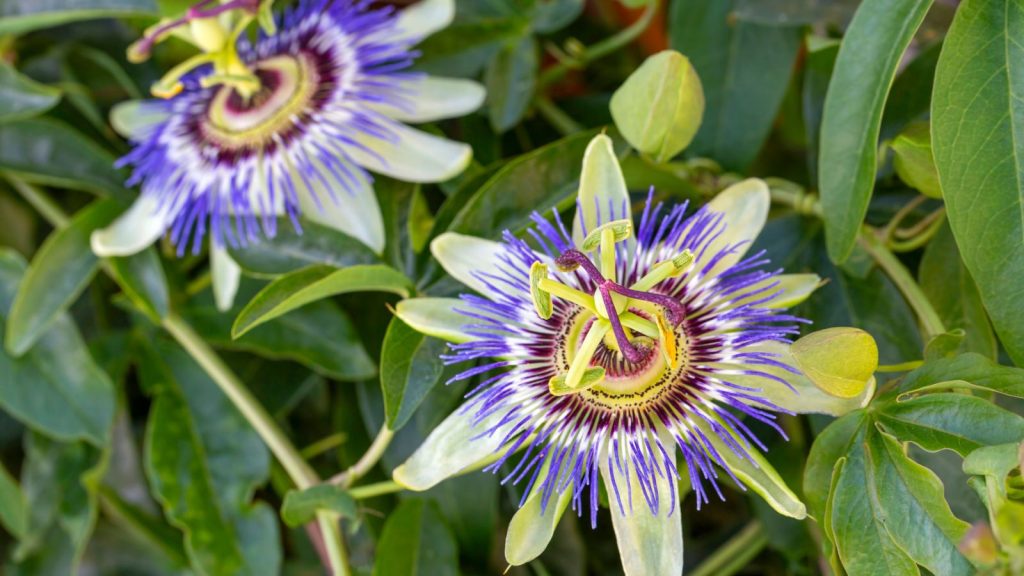
Passionflowers produce intricate blooms with complex structures that include prominent coronas and unusual arrangements of stamens and pistils. Hardy varieties of this exotic-looking flower thrive in USDA zones 5-9, while tropical varieties grow well in USDA zones 9-11 or containers.
Passionflowers prefer full sun and well-draining soil, and need sturdy supports for their tendrils to climb on. In cold climates, mulch heavily or grow in containers that can be moved indoors.
15 Runner Plants That Spill, Spread, and Creep
15. Camellia (Camellia japonica)
Camellias produce impressively sized flowers with layers of perfectly arranged petals that are almost rose-like. Varieties like Debutante and Professor Charles S. Sargent produce flowers so full and large they seem almost artificial.
Camellias thrive in USDA zones 7-9 and need partial shade and acidic, well-draining soil rich in organic matter to grow well.
Other Posts You Might Like
- 20 Strikingly Bold Red Perennials That Bloom Year After Year
- 16 Purple Perennials That Will Bring Your Garden to Life Year and Year
- 18 Shade Loving Perennials to Brighten Your Garden
- These 12 Fall Blooming Perennials Will Be Everywhere This Season
- 38 Perennial Flowers That Deliver Gorgeous Blooms Every Blooming Season