

If you’re drawn to gardens that feel a little unexpected, these uncommon perennials are a great way to break from the ordinary. With bold forms, striking colors, or just an unusual presence, each of these plants adds character and contrast that make a garden feel more thoughtful and one of a kind. Here are 14 head-turning perennials worth adding to your space.
Hellebore, New York Night

Black Lenten Rose, often called Hellebore, is one of the first perennials to bloom in late winter or early spring. Its dark flowers—ranging from deep purple to nearly black—bring a striking contrast to shaded garden areas.
This plant thrives in zones 4 through 10 and is a reliable, low-maintenance choice for gardeners who want something that returns each year. Its long-lasting blooms and ability to handle cooler temperatures make it a valuable addition to any perennial bed with partial to full shade.
Petunia, Black Cat

Petunias, also known as Black Cat, Black Velvet, and Black Mamba, are fast-growing plants that add a burst of color to any sunny spot, whether planted in garden beds, hanging baskets, or containers.
While they come in a wide range of shades, the black varieties stand out for their dramatic, velvety blooms that create a bold contrast against green foliage or lighter-colored flowers nearby. These striking black petunias can add a unique, modern touch to your garden.
Petunias prefer well-draining, fertile soil and need regular—but not excessive—watering to stay healthy. They perform best during mild weather, producing waves of blooms throughout the growing season.
Kniphofia (Red Hot Poker)

Red hot pokers (Kniphofia), also known as torch lilies, are eye-catching herbaceous perennials that stand out for their tall flower spikes, blooming in vibrant shades of red, orange, and yellow during spring and summer.
Native to Africa, these plants typically take around four years to reach full maturity. Their bright blooms are a magnet for pollinators, such as bees and butterflies. Red hot pokers thrive in full sun and well-drained soil and are hardy in USDA Zones 5-9.
Bearded Iris, Blackwater

Black iris varieties bring a dramatic touch to the garden with their dark, velvety petals and elegant form. These perennials are eye-catching when in bloom. They grow best in full sun and well-drained soil, making them great for garden borders or mixed perennial beds. Hardy in zones 3 through 9.
Chocolate Cosmos

Chocolate
Black Pansy
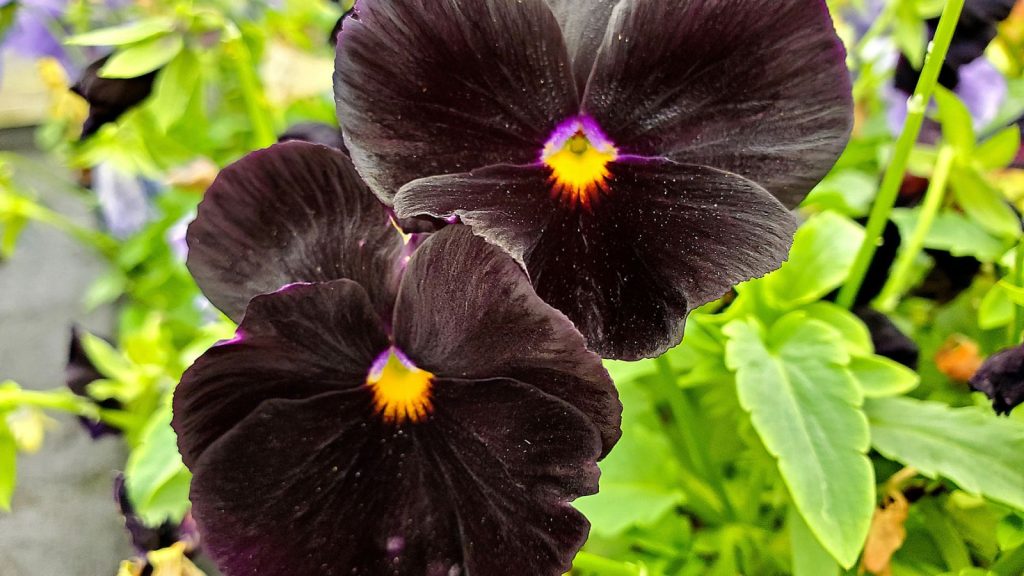
Pansies are fast-growing, vibrant flowers that work well in containers or garden beds. These black pansies will add the perfect amount of moodiness to your garden. They flourish in full morning sunlight and well-drained, fertile soil.
Black Bat Flower

The Black Bat Flower is a one-of-a-kind plant known for its unusual shape and deep, almost black blooms. The Black Bat Flower will add an exotic, mysterious vibe to any garden.
Its bat-like appearance comes from large, wing-like bracts that make it look as though it’s ready to take flight, giving the plant its fitting name. Native to subtropical regions, it thrives in warm, humid environments with plenty of shade.
Tulip Fringed Purple Circus (Crispa tulips)

Tulip ‘Fringed Purple Circus’ is a dazzling crispa variety with ruffled white edges that frame its deep plum petals like fine lace. The blooms have a layered, almost sculptural quality, shifting from green at the base to velvety purple as they open.
Plant the bulbs in the fall to enjoy a stunning spring show—especially when paired with buttery daffodils and fragrant hyacinths, creating a garden full of contrast and charm.
Persian lily (Fritillaria persica)

Fritillaries, with their unique bell-shaped and checkered patterned flowers, thrive in cool, well-drained soil and partial shade.
They are ideal for woodland gardens or other shaded spots and are noted for their ability to deter squirrels and other rodents. Although gardeners often grow Fritillaria imperialis as an annual, these bulbs can rebloom as perennials under the right conditions.
Black Prince Echeveria

Black Prince Echeveria is a striking succulent with rosettes that range from deep red to almost black, adding bold color and contrast to any plant arrangement. It’s drought-tolerant and does well in containers and rock gardens.
The more sun it gets, the darker and more vibrant its foliage becomes. This low-maintenance plant blooms in fall or winter and thrives in warm climates, particularly in USDA zones 9 to 11.
Black Calla Lily

Black Calla lilies bring a sleek, refined look to the garden with their smooth, trumpet-shaped flowers and deep, dark coloring. These unique bulbs should be planted in early spring, and with the right conditions, they’ll reward you with blooms that appear from late spring into early summer.
Suited for USDA zones 8 to 10, Black Callas thrive in warm regions and add bold contrast to more traditional flower displays.
Queen of the Night Tulip

The Black Queen of the Night tulip is known for its dark, rich color that ranges from deep maroon to almost black. It’s one of the darkest tulip varieties and adds a bold touch to spring gardens.
The cup-shaped blooms stand against green leaves and work well as cut flowers for simple home arrangements. They grow best in full sun to partial shade, need about 4 to 6 inches of space between bulbs, and can reach a height of 8 to 28 inches.
Black Hollyhock

This striking black hollyhock variety (Alcea) is known for its deep chocolate-mahogany flowers that bloom from mid-summer into fall, adding rich, dramatic color to the garden.
Towering on stalks that can reach up to 8 feet tall, it creates a stunning vertical element and easily becomes a focal point wherever it’s planted. Hardy in zones 2 through 10, this hollyhock grows best in full sun and prefers rich, moist, well-drained soil.
Himalayan Blue Poppy (Meconopsis betonicifolia)

A true showstopper, the Himalayan blue poppy boasts rare, vivid blue petals with golden centers. It requires cool, damp, and partially shaded conditions, along with acidic, rich soil. A bit fussy to grow, but worth it in Zones 5–8.