
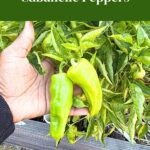
Cubanelle peppers are a type of sweet pepper (Capsicum annuum) also known as Cuban peppers or Italian frying peppers. They grow longer and more tapered than a traditional bell pepper and have thinner walls. They’re also quite mild, making them a good pepper to grow if you want lots of flavor without much heat.
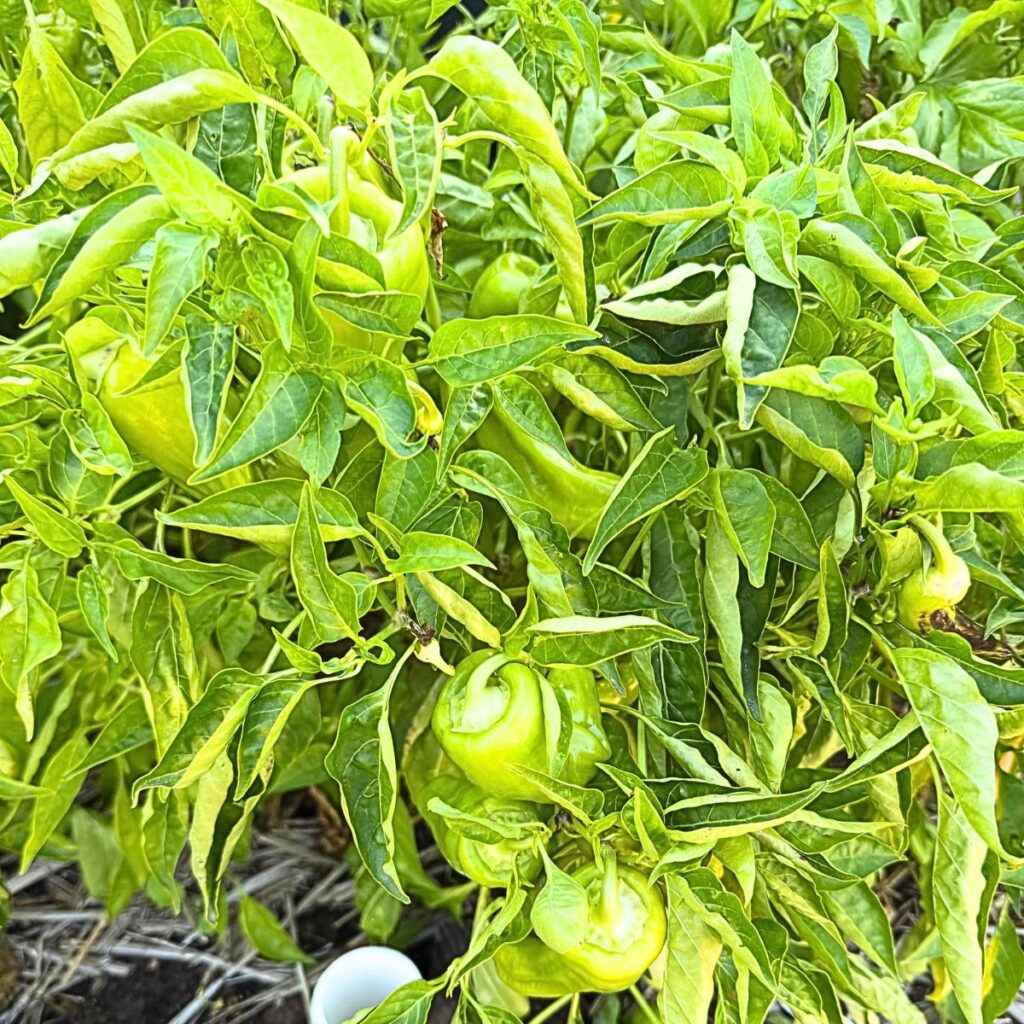
Once the plant really got going, it became full and bushy, with long peppers tucked underneath the leaves. Ours developed this beautiful glossy yellow-green color, and as more peppers appeared, one of the biggest questions became figuring out exactly when they were ready to pick.
When Are Cubanelle Peppers Ready to Harvest?
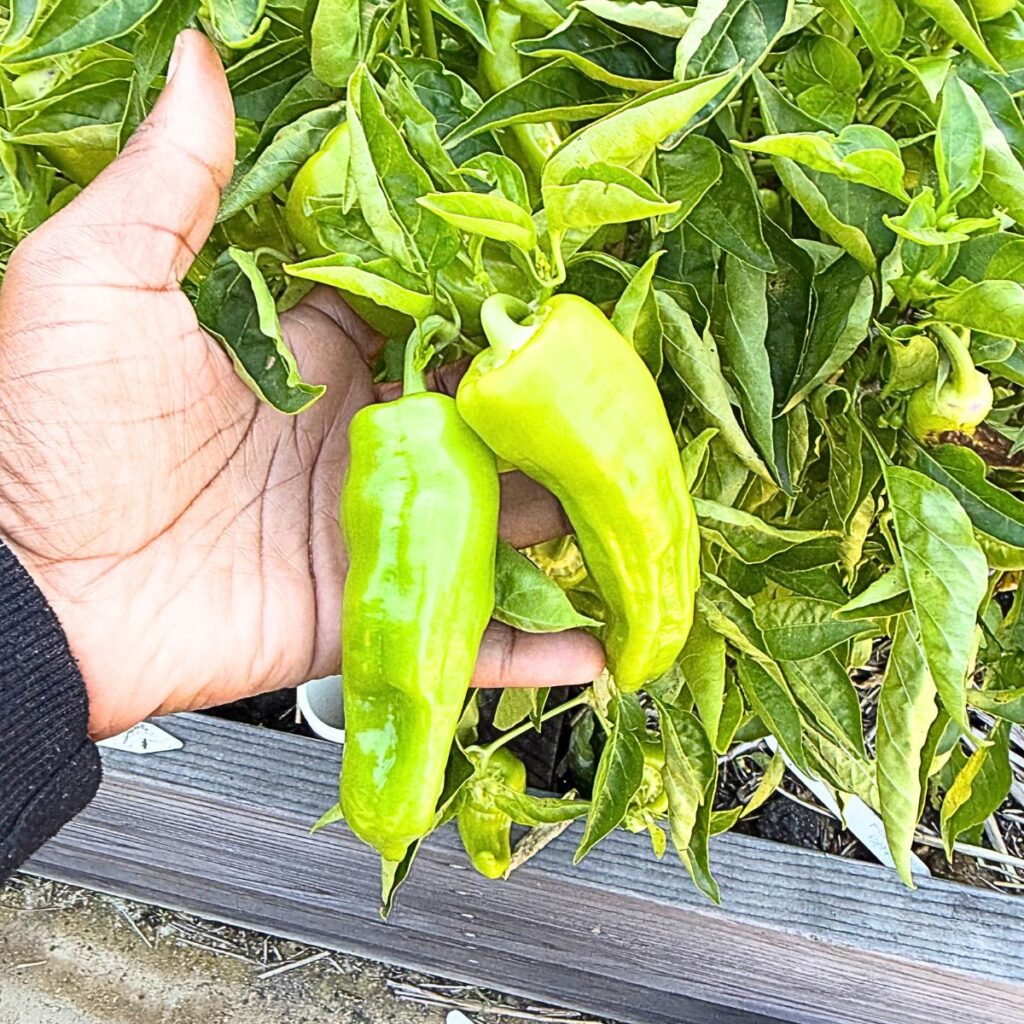
You can harvest Cubanelle peppers while they’re still pale green or yellow-green. You don’t need to wait for them to fully change color.
With ours, I looked for peppers that had reached a good size and felt firm. The skin was also smooth and glossy, which made them look noticeably different from the smaller peppers that were still developing.
I wouldn’t get too caught up in an exact measurement, either. Some of ours grew longer, while others were slightly shorter or more curved. I found it more helpful to look at the pepper as a whole.
If it looks filled out, feels firm, and has that glossy yellow-green skin, it’s probably getting close.
How to Harvest Cubanelle Peppers
Once your Cubanelle peppers have reached a good size, feel firm, and have smooth, glossy skin, they’re ready to harvest. We harvested many of ours while they were a beautiful pale yellow-green color.
You can harvest Cubanelle peppers in two ways. The traditional method is to use clean garden scissors or
But I’ve found there’s an even easier method with ours: give the pepper a gentle pull.
When our Cubanelles were ready, they usually released from the plant pretty easily. I would hold the pepper near the top and gently pull it away from the plant. No need to yank, twist aggressively, or wrestle with the stem.
I’ve actually found this to be another helpful way to judge whether they’re ready. If I gently pull on a pepper and it doesn’t want to come off, I leave it on the plant and give it more time. When I come back later, a mature pepper often comes off much more easily.
The biggest thing is not to force it. Pepper branches can break, especially when they’re carrying several fruits. If you feel any resistance or are concerned about damaging the plant, grab your pruners and cut the pepper instead.
So my basic harvesting process is pretty simple:
- Look for a full-sized pepper with firm, glossy skin.
- Don’t wait for it to turn red. Yellow-green Cubanelles can be perfectly ready to harvest.
- Give it a gentle pull. If it releases easily, pick it.
- If it resists, leave it longer or use clean pruners to cut the stem.
- Check underneath the leaves for more peppers—you may have quite a few hiding there.
That’s essentially how we harvested ours at the community garden. Once I knew what I was looking for, it became much easier to tell which peppers were ready and which ones needed a little more time.
How Big Should Cubanelle Peppers Be?
Cubanelle peppers are naturally long and tapered, not short and blocky like bell peppers. A mature pepper is commonly around 4 to 6 inches long, although the peppers on the same plant won’t necessarily all be identical.
Some peppers became quite long and slender, while others were wider toward the stem or had more of a curve.
I don’t think homegrown peppers need to reach one exact size before you can harvest them. I pay more attention to whether they’ve filled out and look mature.
If you’re growing Cubanelles for the first time, watching the plant regularly makes this much easier. You’ll start to recognize the difference between a small developing pepper and one that has reached a good harvestable size.
Don’t Forget to Look Under the Leaves
This sounds obvious, but our Cubanelle plant made me realize how easy it is to miss peppers.
Once the plant became full and leafy, peppers were tucked throughout the foliage at different growth stages. Some of the larger ones were easy to see, while smaller peppers were almost completely hidden.
Once harvesting begins, I recommend checking the entire plant every few days. Lift the leaves and look toward the center and lower portions of the plant rather than only picking what you can immediately see.
It was actually surprising how many peppers could be hiding underneath all that foliage.
Do Cubanelle Peppers Turn Red?
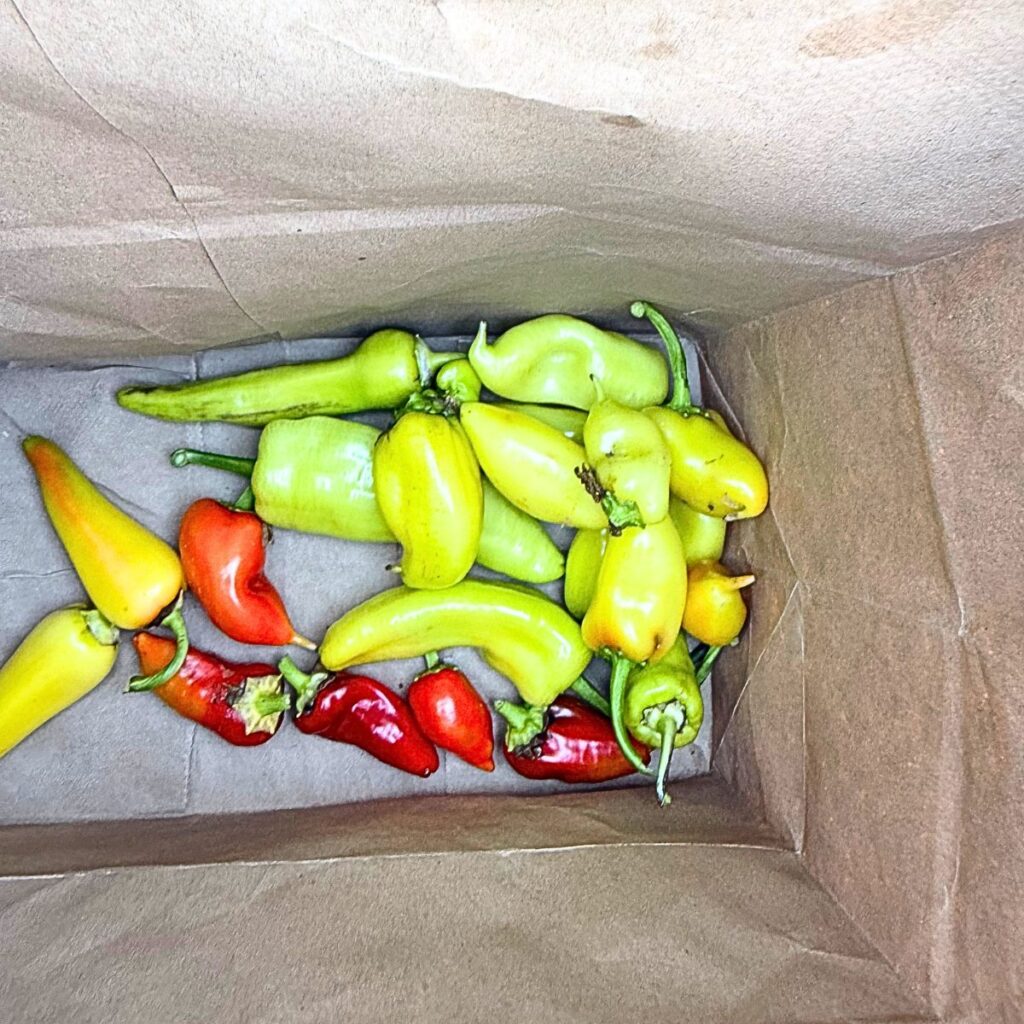
Yes. If you leave Cubanelle peppers on the plant, they can continue ripening beyond the pale green or yellow-green stage and eventually develop orange to red coloring.
But a red Cubanelle isn’t necessarily “more ready” than a green one. They’re simply different stages of maturity.
We harvested ours at the gorgeous yellow-green stage shown in the garden. At that point, they were already full-sized, glossy, firm, and ready to eat.
If you prefer a sweeter pepper, leave a few on the plant longer and see how the flavor and color change. Growing them yourself lets you harvest at whichever stage you prefer.
Keep Checking the Plant Once Harvesting Starts
Once we started finding mature peppers, I knew to keep going back and checking the plant.
Not every Cubanelle develops at exactly the same rate. You might have a large pepper ready to pick sitting right beside a much smaller one that still needs time.
Harvest the ones that are ready and leave the smaller peppers alone.
And because so many of ours were hidden underneath the leaves, I wouldn’t assume a plant is finished producing just because you don’t immediately see another large pepper.
How to Prepare Cubanelle Peppers
Cubanelle peppers are especially great for cooking. Wash them, remove the stem and seeds, and slice or chop them depending on what you’re making.
They’re excellent sautéed or fried with onions, but you can also roast or grill them until they’re soft and slightly charred. Cubanelles are commonly used in Caribbean and Latin cooking and work well in sofrito, sauces, rice dishes, sandwiches, and other recipes where you want pepper flavor without much heat.
Their long shape also makes them good for stuffing. Fill them with rice, beans, vegetables, cheese, or another savory filling, then bake until tender.
How to Store Cubanelle Peppers After Harvesting
If you’re not using your freshly harvested peppers right away, keep them in the fridge until you’re ready.
Don’t wash the entire harvest before storing it. Extra moisture can make peppers deteriorate faster, so I prefer to wash them when I’m ready to cook.
And if your plants are producing faster than you can eat the peppers, you can also freeze them for later. Slice or chop the peppers, remove the seeds, and freeze them in portions that are easy to grab for cooked dishes.


