Tomatillos aren’t nearly as common in backyard gardens as tomatoes, peppers, or cucumbers, but they’re such a fun plant to grow if you have the space. The small green fruits look a little like tomatoes, except each one grows inside its own papery husk that looks almost like a tiny lantern.
Also known as husk tomatoes or tomate verde, tomatillos have a bright, slightly tart flavor and are probably best known as the main ingredient in salsa verde. They’re also delicious roasted and can be used in enchilada sauces, soups, stews, tacos, and plenty of other Mexican-inspired dishes.
But growing tomatillos is only half the fun. Harvesting them can be a little confusing the first time because, unlike a tomato, you can’t simply wait for the fruit to turn red.
Instead, the husk tells you most of what you need to know. Here’s how we knew our tomatillos were ready to pick, along with a few things I learned while harvesting them.
What Does a Ripe Tomatillo Look Like?
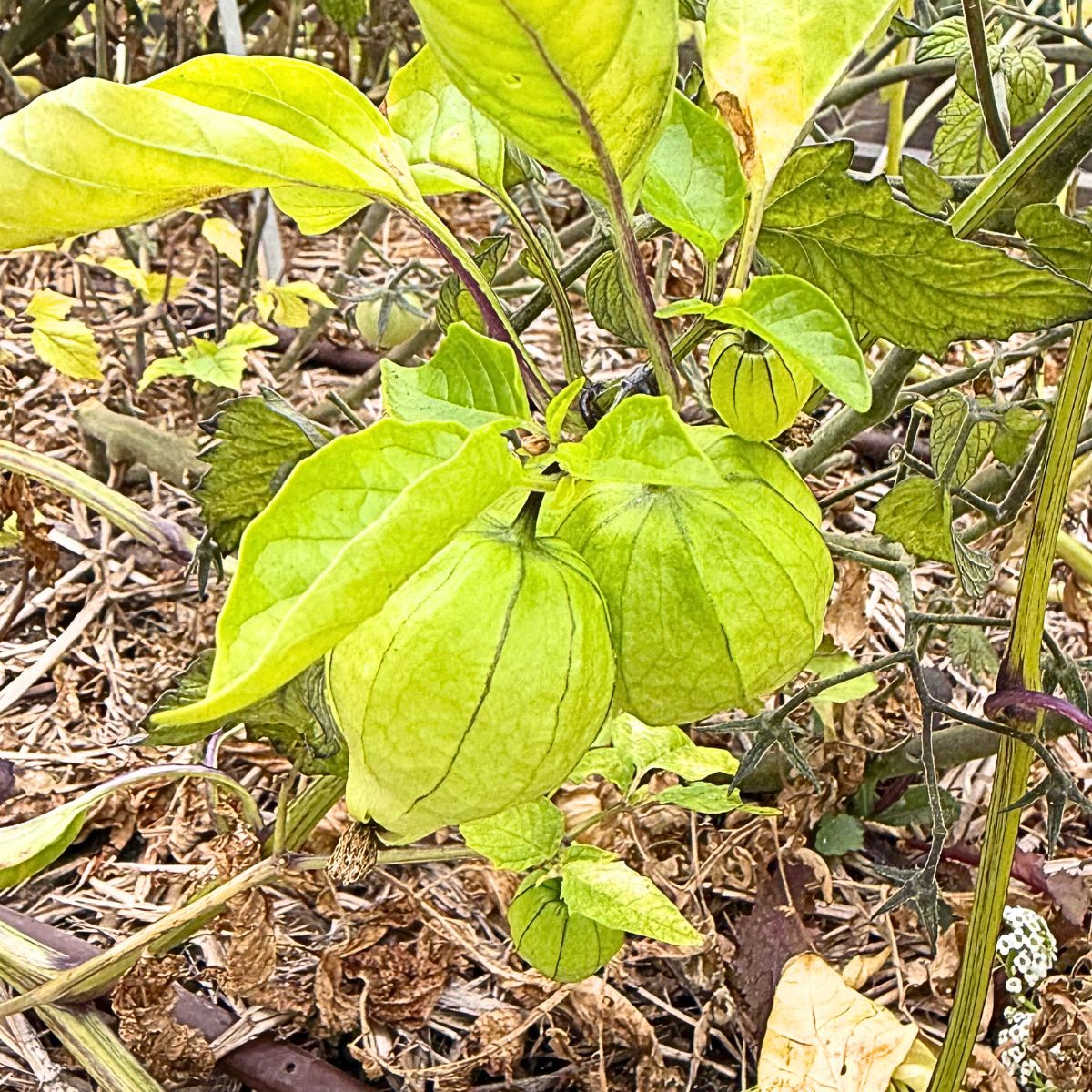
The easiest way I’ve found to tell whether a tomatillo is ready is to look at and feel the husk. When tomatillos first begin developing, the papery husk is much larger than the tiny fruit growing inside. As the tomatillo matures, it gradually gets bigger until it fills most or all of that empty space.
Once the fruit feels firm and has filled out the husk, it’s generally ready to harvest. You may also notice the papery husk starting to dry out or even split open as the fruit gets bigger. It’s almost like the Hulk when his clothes get too tight; the tomatillo simply outgrows its covering.
That’s usually a pretty good sign that it’s time to pick.
How to Harvest Tomatillos
Harvesting tomatillos is incredibly simple once you know what you’re looking for.
We grew tomatillos at our community garden in Oakland, California, where the weather tends to stay fairly warm. Oakland is in USDA Hardiness Zone 10, and our plants seemed to love the conditions. Once they got going, they grew quickly, spread out quite a bit, and produced plenty of fruit without much maintenance.
The best way to harvest tomatillos is to gently feel the fruit through the husk. If the tomatillo has filled out the husk and feels firm, I give it a gentle tug. A mature tomatillo should come away from the plant fairly easily. Some of ours practically fell into my hand with barely any effort.
If I’m tugging at one and the stem doesn’t want to release, I don’t force it. I usually leave it on the plant and check again later.
That’s one of the easiest harvesting lessons I’ve learned with tomatillos: if you have to fight with the plant to get the fruit off, give it a little more time.
Don’t Wait for Green Tomatillos to Change Color
This is where harvesting tomatillos can feel strange if you’re accustomed to growing tomatoes. You aren’t necessarily waiting for a dramatic color change.
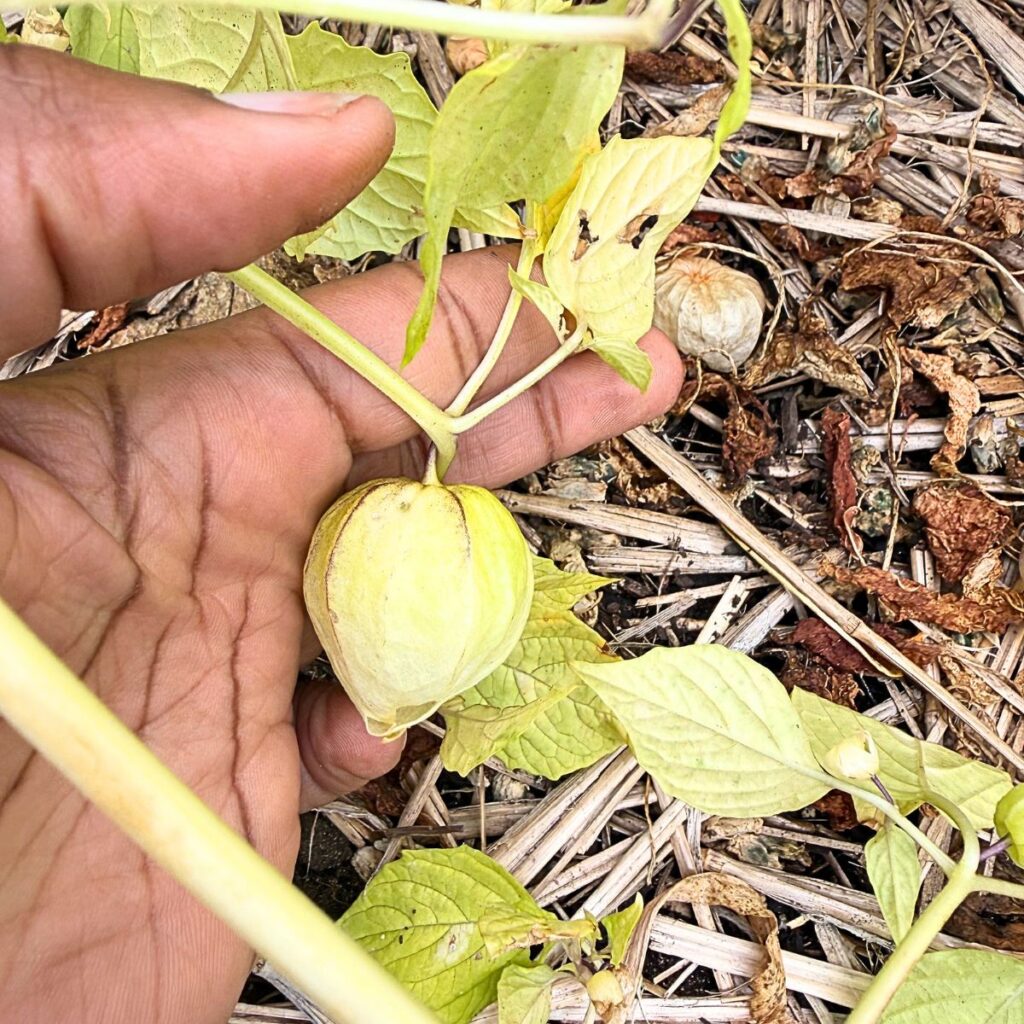
With most green varieties, the tomatillo should still be green when you harvest it. You’re looking for a firm fruit that has grown large enough to fill its husk.
If a green tomatillo remains on the plant long enough to turn yellow and become soft, you’ve probably waited too long. The flavor can become less bright and distinctive as the fruit becomes overripe.
Purple varieties are a little different. Depending on the variety you’re growing, the fruit will develop more of its purple coloring as it matures.
There are several varieties of tomatillos, including Verde, Green Husk, Purple de Milpa, and other green, yellow, and purple types, so don’t rely on color alone. The size of the fruit relative to the husk, and how easily it comes off the plant, are often better indicators.
Check Underneath the Plant Too
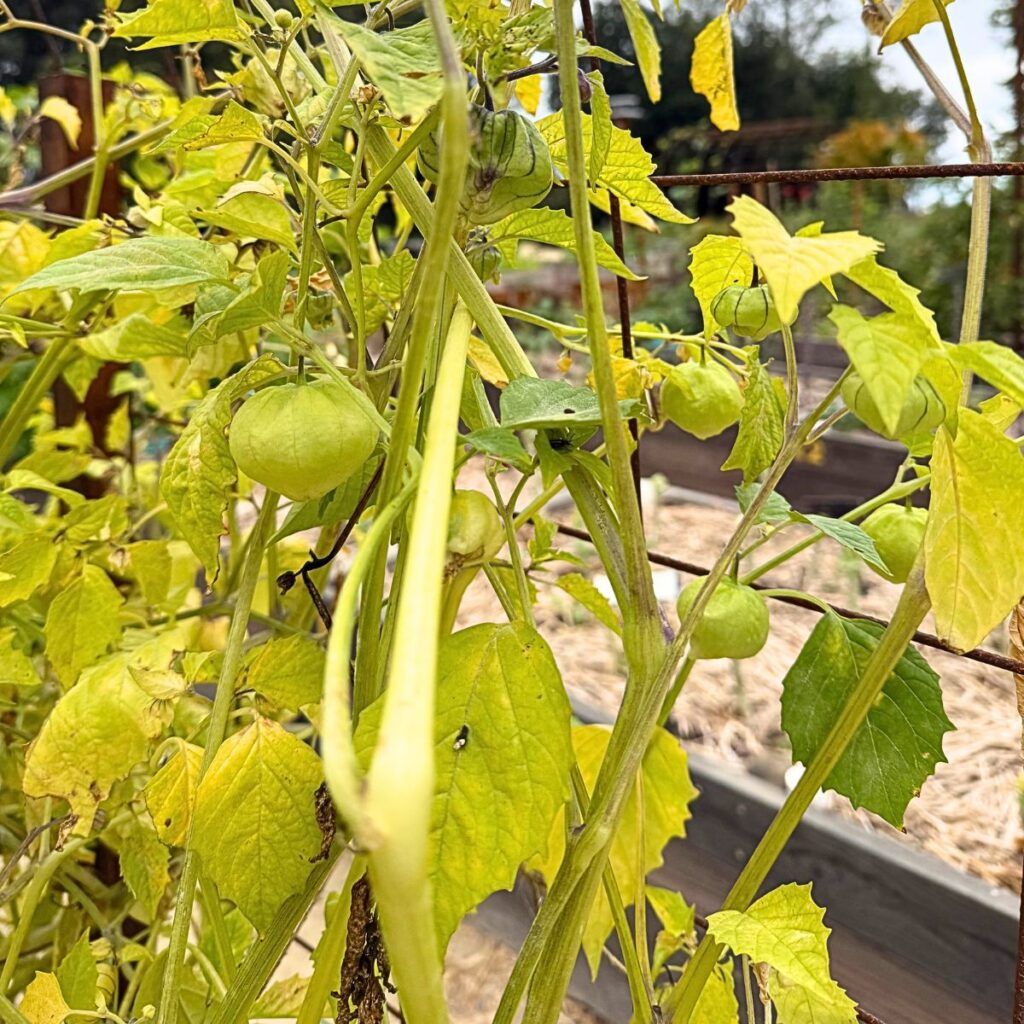
Don’t limit your tomatillo harvest to what’s still hanging from the branches. Once ours started maturing, I learned that it’s worth checking underneath the plants regularly because ripe tomatillos can fall to the ground on their own.
And because these plants can get pretty large and sprawling, it’s easy to overlook fruit hiding underneath all that growth. If you find a fallen tomatillo, inspect it before tossing it aside. As long as the fruit is firm, healthy, and hasn’t started rotting, it may still be perfectly usable.
I would make checking underneath the plants part of your regular harvesting routine once you notice the first few tomatillos are ready.
How Big Do Tomatillo Plants Get?
One thing that surprised me about growing tomatillos was just how much space the plants can take up. Tomatillos can grow several feet tall and spread several feet wide, and ours definitely weren’t shy about stretching out in the community garden. They have a sprawling growth habit that can make them look a little unruly as the season progresses.
Giving the plants some support can make harvesting much easier. A cage, stake, or other support system keeps branches and fruit off the ground and makes it easier to see what’s ready to pick.
Tomatillos are also indeterminate, meaning they don’t produce one crop and call it quits. They’ll continue flowering and setting new fruit as long as growing conditions allow, which means harvesting can continue for quite a while.
In Oakland’s warm Zone 10 climate, that can make for a particularly productive growing season.
Can You Pick Tomatillos Too Early?
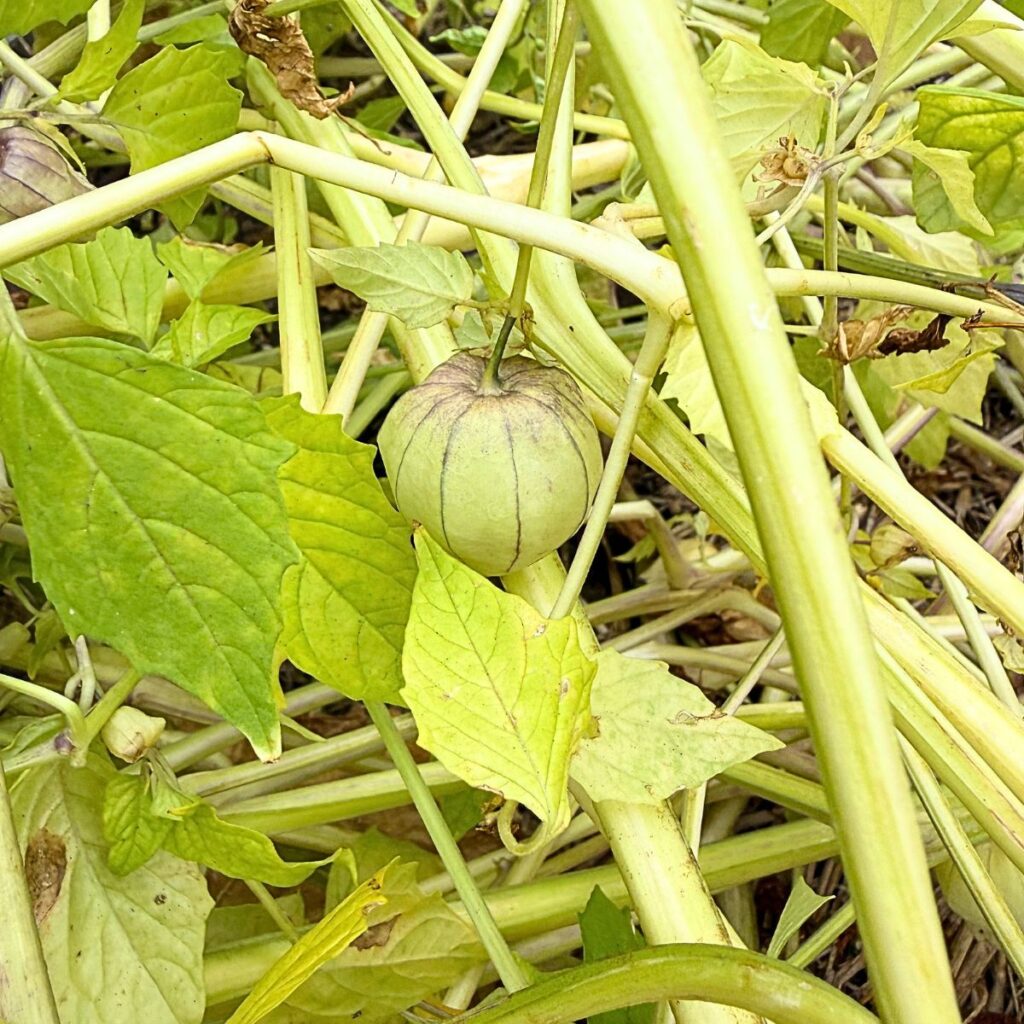
Technically, you can pick a tomatillo before it has completely matured, but I wouldn’t rush it. An immature tomatillo won’t have the same developed flavor or texture you’re looking for. If there’s still a lot of empty room inside the husk, that’s usually my cue to leave it alone.
Instead, wait until the fruit has noticeably filled out its papery covering and feels firm. The nice thing is that you don’t have to guess based on an exact size. Some varieties naturally produce larger or smaller fruits, so judging the relationship between the fruit and its husk is much more useful than measuring individual tomatillos.
What to Do After Harvesting Tomatillos
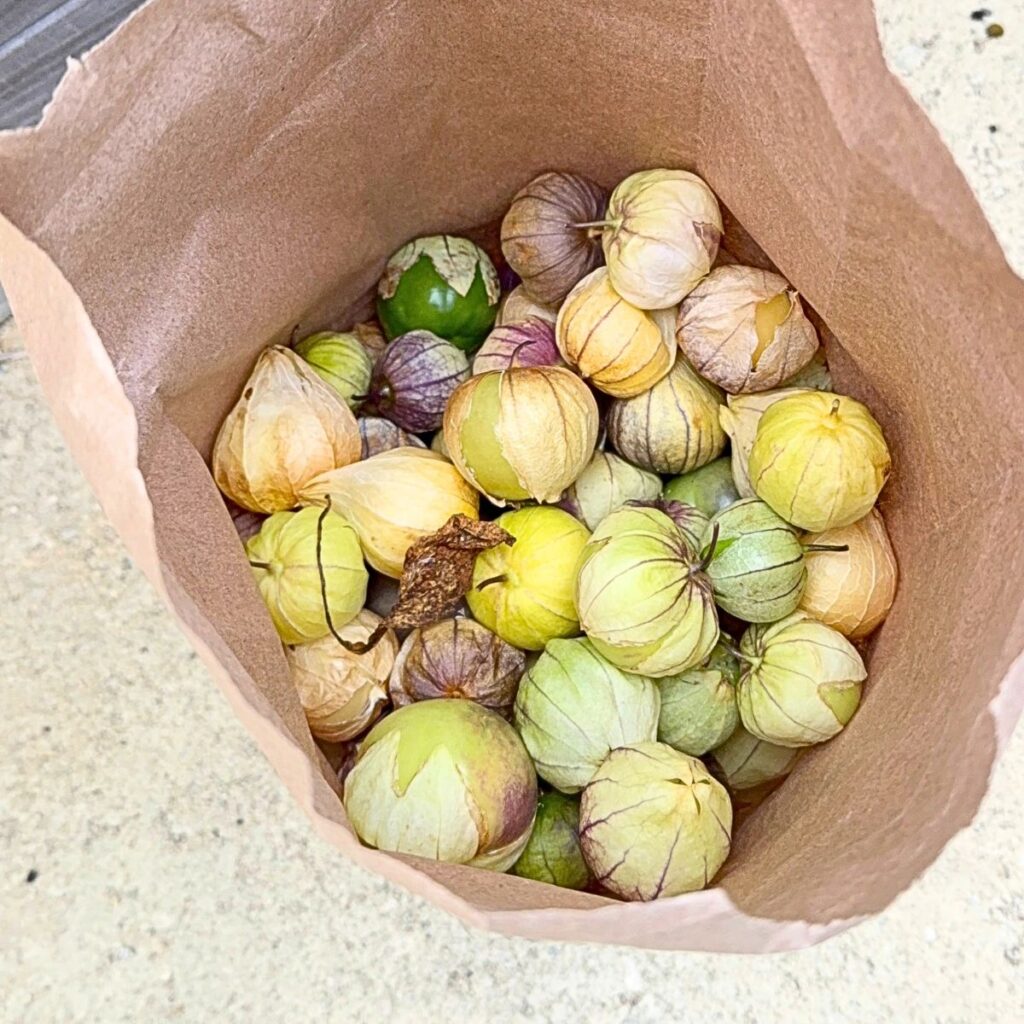
Once you bring your tomatillos inside, the first thing you’ll need to do is remove those little paper husks. They usually peel away easily.
Don’t be alarmed when the fruit underneath feels sticky. That’s completely normal for tomatillos. I rinse them well under water and gently rub the surface until the sticky residue is removed. Once they’re washed, they need very little prep. You don’t have to peel, core, or remove all the tiny seeds before using them. From there, they’re ready to roast, chop, cook, or preserve.
How to Store Fresh Tomatillos
If you’re not planning to use your tomatillos right away, leave the husks on while storing them.
For short-term storage, keep them in a cool, dry location. For longer storage, I prefer keeping them refrigerated in a paper bag, where they can generally last for a couple of weeks if they’re in good condition.
I also inspect them before putting them away. Any fruit that’s damaged, split, or becoming unusually soft gets separated from the rest.
And if your plants give you more tomatillos than you know what to do with, freezing is another option. Remove the husks, wash away the sticky coating, dry the fruit thoroughly, and freeze it for future recipes.
Keep Harvesting as the Season Continues
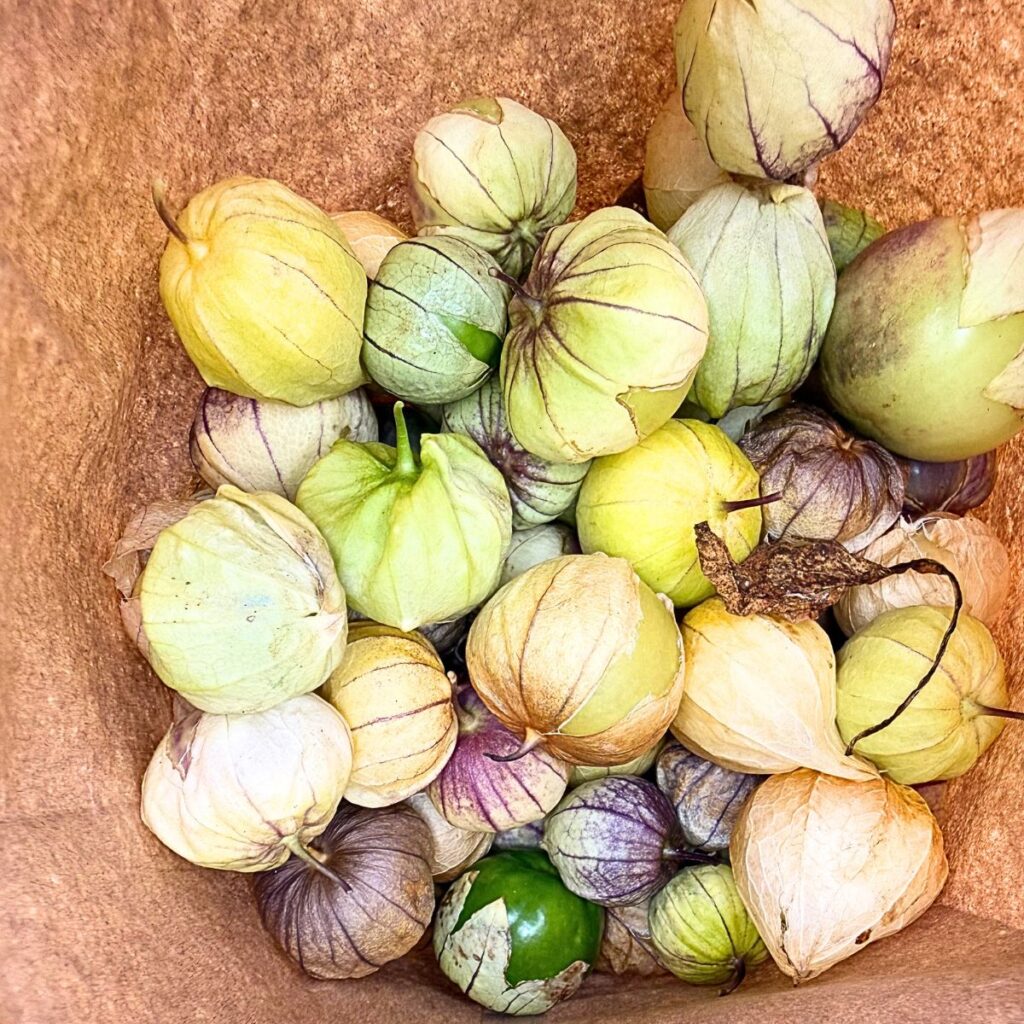
Don’t pull your tomatillo plants just because you’ve picked your first big batch. They can continue flowering and producing fruit throughout the growing season, so I like to go back every few days and see what’s ready.
You’ll probably notice fruits at several different stages on the same plant. One tomatillo may have completely filled and split its husk while the one growing right beside it still has plenty of room left.
Pick what’s ready and leave the rest. That’s one of the things I enjoyed about growing them. Instead of getting everything at once, we could harvest them gradually as individual fruits matured.
When to Pull Your Tomatillo Plants
Eventually, even the most productive plant reaches the end of its season. Before pulling ours, I like to give the entire plant one final inspection. Check underneath branches, look inside the foliage, and gather any remaining mature fruit you can use.
Then check the soil underneath for anything that has fallen.
Gardeners in colder climates will generally see production end as temperatures drop and frost arrives. Here in Oakland, our Zone 10 growing conditions are much milder, so our experience and timing can be quite different from someone growing tomatillos in a colder part of the country.
That’s why I wouldn’t get too caught up in harvesting during a particular month. Let the plant and the fruit tell you when it’s time.