If you own a chicken coop, blood on the chicken feeder or in the water can be a cause for concern. You may immediately think that one of your pet chickens may have been harmed in some way. We are going to take a look at reasons why blood may be present on your chicken feeder and what you can do about it.

Blood On The Chicken Feeder
If you notice blood on the chicken feeder, the first thing to do is assess the amount of blood present. Do you see one or two drops of blood or does it look like a lot? You can check the hook or any other metal parts on the feeder to ensure the birds have not accidentally cut themselves on them.
Check your pets for any injuries. If you see blood on their feet or any other part of their body, check those areas carefully after gently cleaning off the blood. Don’t make assumptions about where the blood is coming from. A powdered clotting agent should always be kept at the ready if you have pet chickens, and this can be applied to any injuries they sustain on their beak or comb during a fight.
Reasons for Blood On The Chicken Feeder
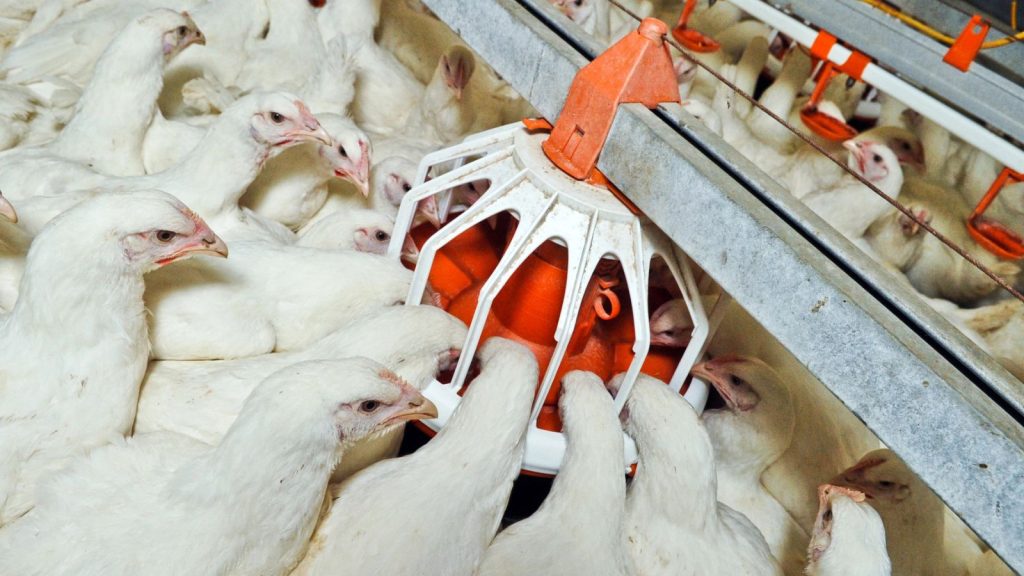
There are different reasons why you could be seeing blood. In some cases, it could be due to fighting. Sometimes, if you have young birds, they could be trying to figure out their pecking order. When they get to the feeder, there could be a bit of fighting and in a fight, the comb of a chicken is one of the easiest parts of the body for another chicken to grab.
A rooster that’s trying to show he’s the boss could also be pecking at the other chickens when they get to the feeder. You don’t usually need to interfere with the pecking order. This is something that your pet chickens will need to sort out on their own.
The strongest chickens will be on top and the weaker ones will be at the bottom, getting beat up. You’ll also observe this in other areas of life, such as which chickens take the treats and take up their positions on the roost.
Chicken with Bloody Beak

A chicken with a bloody beak may be injured as a result of direct trauma to the beak or have caused injuries to other chickens. If you notice that one chicken is bleeding from their beak, there may be others injured if they were in a fight. Check the others for signs such as bleeding combs or missing feathers, which may have been dragged out during a fight.
Even the legs of other chickens may be used to cause injuries to the beak of the one that’s bleeding. If you only have one chicken in your yard, examine the other animals in your household, which may also have gotten into a fight with your chicken. Ensure that your chicken is protected from wild animals that may live in the environment around your home, such as raccoons.
Occasionally, your chicken may also have suffered blunt force trauma to its beak after impact with an inanimate object. They may have fallen off their favorite tree or crashed into a wall while running. They may have even bruised their beak while reaching for something exciting in the dirt. If there are stones in your yard, particularly in the area where your chickens like to forage, this could be a possibility.
Treating A Chicken with A Bloody Beak
Birds that have been in a fight may also have part of their comb ripped away. Vetericyn can be applied to the damaged areas to help with healing. This or any other antimicrobial spray designed for poultry will help prevent the injured areas from becoming infected. You can also use this for pecking sores on other parts of your chicken’s face. While it is antimicrobial, Vetericyn does not rely on antibiotics.
A chicken’s beak may also be bloody because they have been picking at the feathers of younger birds for other reasons. They may not try to do this with older, more established birds that can defend themselves, but you may notice that the younger birds in your flock have feathers missing.
In that case, you could try separating the picker from the other young birds. They may curtail their behavior if they are among only the older birds. You could also give them an activity to relieve boredom. This may help if they are picking out the feathers solely because they are bored.
After you have dressed the beak and your bird’s comb, give them some time to rest. You can separate them from the other birds so that if they are being attacked, they have time to recuperate.
The next day, check that they can use their beak properly. You can do this by observing them as they attempt to eat a small amount of food. If they seem to be having problems, you can carry them to their vet to be checked for any underlying injuries that you may not have observed.
Monitor A Chicken with A Bloody Beak
Your chicken’s beak contains a lot of blood vessels. This means that sometimes you will see a fair amount of blood if their beak is injured. Beak injuries can sometimes make it difficult or uncomfortable for your chicken to eat, so it’s essential to observe your chicken closely for a few days after this type of injury occurs, to ensure they are eating as they should.
Ensure that your chicken’s beak is only bleeding and that dislocation has not occurred. If your pet’s beak is obviously broken, take them to the vet immediately. If there is a large open wound on their beak or comb, take them to the vet to have it treated. It is better to address those problems as quickly as possible, so try to keep essential supplies on hand at home in case of an emergency.
Sometimes, blood may have an abnormal appearance. In this situation, you may have an underlying issue, such as liver disease or even cancer. You may notice that the beak seems misshapen, and this may cause concern. Take your pet to the veterinarian for a thorough check-up. Fungal infections can also cause overgrowth and bleeding.
Blood from Chicken Comb
Blood from a chicken’s comb will usually be evident in roosters that are fighting to determine who is on top. They may be your little babies to you, but to each other, they are competitors who need to be vanquished. They are unlikely to get along automatically and may sometimes become vicious in their attacks as one tries to assert dominance over the others.
As with bleeding from the wattles and other areas that are sustained during a fight, these injuries should be treated to prevent infection. You can briefly separate your birds as needed if they are badly injured. Use an antimicrobial spray that is designed for chickens to help the comb heal.
If some of your chickens appear bruised, you can separate them for a while to let their combs heal. You can also apply Blue-Kote to the area to help the comb heal. You can also use any other protective wound dressing that does not limit your bird’s mobility, so it can move freely and recover quickly.
Blood from Chicken Wattles
Blood from chicken wattles can be a cause for concern, especially if you are seeing more than a few drops of blood. If the wattles are torn, it may be that another chicken grabbed them during a fight. Your chicken may also have torn their wattles while doing their regular activities around your yard.
Several factors can trigger fights. Most of the time, fights are over food or establishing the pecking order in your yard. If your birds don’t usually fight but you suddenly see signs of bleeding among several chickens, something may have changed. For example, you may have had to keep them cooped up for longer than usual due to bad weather, and that could have caused them to get irritated and annoyed with each other.
If the wattles were injured during a fight, you may see blood on the feet or beaks of other chickens in the yard. Both roosters and hens have chickens, so while it is more likely that the roosters will fight than the hens, you may also see your female chickens with bleeding from their wattles.
Wattles Damage Can Cause Overheating
If the bleeding is significant or the wattles are severely torn, you may need to take your chicken to the veterinarian. The wattles play a crucial role in temperature regulation, helping to keep your chicken cool in hot weather.
If the wattles are injured and cannot perform the role they were designed to, your chicken won’t only feel uncomfortable due to the bleeding and injuries. But also, they will feel hotter than usual. It is a good idea to give them water with little electrolytes and keep them separated from the other chickens for a while until they heal.
There’s an additional factor to consider. The size of a rooster’s wattles and their firmness can make them more attractive to the hens in your yard. Cleaning bruised or bleeding wattles and ensuring they are correctly cared for will help your rooster maintain a positive sense of his appearance and standing in the pecking order.
If the bleeding wattles exhibit other signs, such as excessive scabs or bluish discoloration, the bleeding may be caused by another factor. The same applies to wattles that have lesions or warts. Chickens that display such signs should be taken to the veterinarian, as the bleeding may not be the result of fighting.
Always check your chicken’s wattles regularly, as any discolouration or paleness can be a sign of illness. The wattles should not be pale, shrunken, or have signs of blemishes or bleeding. Scabs, hardened skin, and discoloration should be taken as a sign of illness, and if you see those signs in several birds, you should take them to the veterinarian immediately. These could be signs of illness that could spread to your other birds if left untreated.
Blood from Chicken Earlobes
Scabs may accompany blood from chicken earlobes. If this is severe, some chickens may keep on picking at your injured chicken because the sight of blood triggers some of them. Other chickens may have picked at your bird if they were recently introduced to the flock, as the birds try to figure out the new pecking order.
If several of your chickens only appear to have injuries around their ear lobes, there could be another problem, such as ear mites or lice. If the chickens are scratching at their ears, this could cause bleeding. Carry them to the vet if you suspect this may be the case, and treat it promptly so that your entire flock does not end up scratching constantly.
You can gently wipe away the blood and apply a small amount of Neosporin to the earlobes to help them heal. If necessary, you can also separate your chicken from the other birds during this time. If the bleeding is caused when the bird scratches their own lobes, you’ll need to address the cause of the itching, as recommended by your veterinarian.
If you suspect that the earlobes, comb, beak, or wattles on your chicken are bleeding because of an encounter with larger pets in your home, you should take precautions to ensure that your chickens are kept away from those pets. Sometimes you may have had a pet that didn’t display a hunting drive towards your chicken. When you get a new cat or another pet, they may see your chickens as food, and you’ll need to take steps to keep them separated from the chickens.