
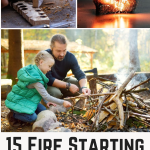
Starting a fire when you need it most isn’t as simple as tossing a match and hoping for flames. If you’ve ever watched a survival show, you’ve likely seen just how tough it can be, even for experienced survivalists. Fire is essential—it provides warmth, protection, and the means to cook food. Without it, survival becomes much harder.
Like any important skill, building a fire takes practice and patience. It’s better to learn and master this now while you have the chance rather than waiting until your life depends on it.
Tree Sap

Tree sap acts like a natural lighter fluid. If you can gather sap, it burns hot and fast, making it a useful fire accelerant when starting a blaze.
Dry Bark

Dry bark, particularly from birch or cedar trees, is excellent for starting fires. It burns hot and fast, and cedar bark’s fibrous texture makes it perfect for creating a tinder bundle.
Bow Drill

A bow drill creates fire from friction, much like rubbing two sticks together but with the added help of a bow and handhold. Though it makes the process slightly easier, this method is still quite challenging. It requires both hard and soft wood, as well as the right tinder to ignite the flame.
Hand Drill

A hand drill works similarly to a bow drill but requires more effort since you must manually rub a stick between your palms repeatedly to create enough friction for a spark. This method can tear up your hands, so it’s essential to have hand protection.
Magnesium Stick

Magnesium sticks are a popular choice for starting fires. By scraping flakes of magnesium into a tinder pile and striking the stick, you can create a flame. While easier than some other methods, using a magnesium stick still takes practice to perfect.
Ferro Rod

A ferro rod is like a magnesium stick but comes with its own striker. The key is angling the striker just right to produce a spark. With some skill and practice, this tool becomes an efficient fire starter.
Fire Teepee/Pyramid

Building a fire teepee involves arranging twigs in a pyramid shape, with your tinder burning underneath, protected from the breeze. This method is excellent for progressing from a small flame to a roaring fire.
Dried Moss

Dried moss is one of the best natural tinders. It easily catches a spark and quickly blooms into a flame, making it a reliable material for starting a fire.
Fire Ring

A fire ring is made from large rocks arranged in a circle to contain the fire. The rocks heat up and radiate warmth long after the flames die down, making this a useful addition to any campfire setup.
Cotton Balls and Vaseline

Combining cotton balls with Vaseline creates a slow-burning tinder that gives you more time to build up your fire. This is a simple and effective fire starting method and can be easily prepared in advance.
Char Cloth

Char cloth is made by heating fabric until it blackens but doesn’t burn. It catches a spark easily and can be used to ignite a fire, making it an essential fire-starting tool.
Battery and Steel Wool

Even a battery with a little charge can help start a fire. Touching steel wool to the battery terminals creates a spark, which can then be used to ignite tinder.
Natural Materials

Look for natural materials like dry grass, twigs, and leaves when foraging for tinder. Anything dry and brittle will be highly flammable and ideal for starting a fire.
Wind Protection

A fire needs oxygen but not too much wind. Building windbreaks using rocks, shelters, or even a tarp can protect your fire from being blown out while still allowing it to breathe.
Pine Needles

Pine needles make excellent tinder, although they aren’t the best for catching a spark on their own. Combining dry moss with pine needles creates an ideal tinder bundle.
18 Survival Skills Our Great-Grandparents Knew That Most Of Us Today Don’t

Many activities were once essential survival skills, but today, they’ve been forgotten by many. While technology has certainly made life easier, previous generations didn’t have these systems, making them far more self-sufficient. Here are 18 basic skills they mastered that many people today have no idea how to do.
18 Survival Skills Our Great-Grandparents Knew
15 Essential Things Preppers Should Stockpile Besides Food And Water

Here’s a list of 15 things you should start stocking up on now, beyond just food and water, to stay prepared and ready for anything.
15 Essentials Things Preppers Should Stockpile Besides Food And Water
28 Ways to Live Sustainably and Reduce Dependence on Retail and Grocery Stores

Here are some ways to live more independently and cultivate a truly self-reliant lifestyle.
28 Ways to Live Sustainably and Reduce Dependence on Retail and Grocery Stores