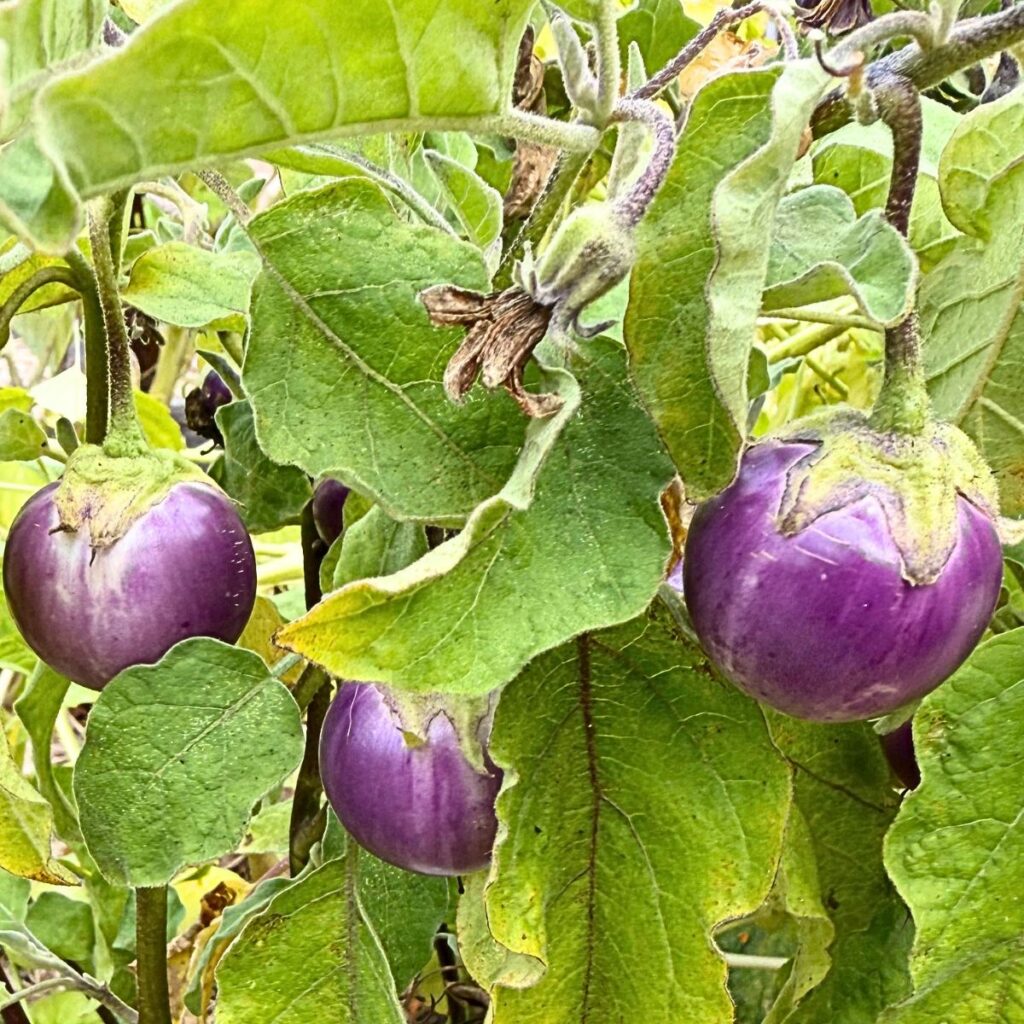
Thai Lavender Frog Egg may be one of the most unusual eggplant varieties we’ve grown. Unlike the large, dark purple eggplants most of us are familiar with, this rare heirloom eggplant variety produces small, round fruits with beautiful pale lavender and creamy white coloring.
The fruits are considerably smaller than traditional eggplants and even smaller than Rosa Bianca, another lavender colored variety we’ve grown in the garden. But don’t let the size of the fruit fool you; the plants themselves can get surprisingly large and bushy and produce quite a few eggplants.
The key is picking them at the right time. When harvested young, Thai Lavender Frog Egg eggplants have tender skin, soft immature seeds, and a mild flavor. They’re best picked while the fruit is still pale lavender and white with smooth, glossy skin.
This isn’t an eggplant you want to leave on the plant hoping it will get bigger. Once the skin starts looking dull or the fruit begins turning yellow, you’ve waited too long, and the skin can become tougher and the flavor more bitter.
Here’s how to harvest Thai Lavender Frog Egg at the right time for the best flavor.
When Is Thai Lavender Frog Egg Ready to Harvest?
We grew our Thai Lavender Frog Egg at our community garden in Oakland, California, where the warm Zone 10 growing conditions gave the plants plenty of heat. Despite producing such small fruit, the plants became surprisingly large and bushy, spreading nearly as wide as they were tall. Once they started producing, we found little eggplants tucked throughout the foliage.
When deciding which ones are ready to harvest, I pay the most attention to color and shine. The fruit should still be pale lavender and creamy white with smooth, glossy skin. Since this is naturally a small eggplant variety, don’t wait for the fruit to get much larger before picking it.
The glossy skin is one of the easiest signs that the fruit is still young and tender. As the eggplant matures, that shine gradually fades, and the skin becomes duller. If the fruit begins turning yellow, it has stayed on the plant longer than ideal.
So if you’re looking at a small, plump, shiny lavender eggplant and wondering whether you should give it more time to grow, it’s probably better to pick it. With this variety, harvesting a little younger will give you the best flavor and texture.
Don’t Wait Until They Turn Yellow
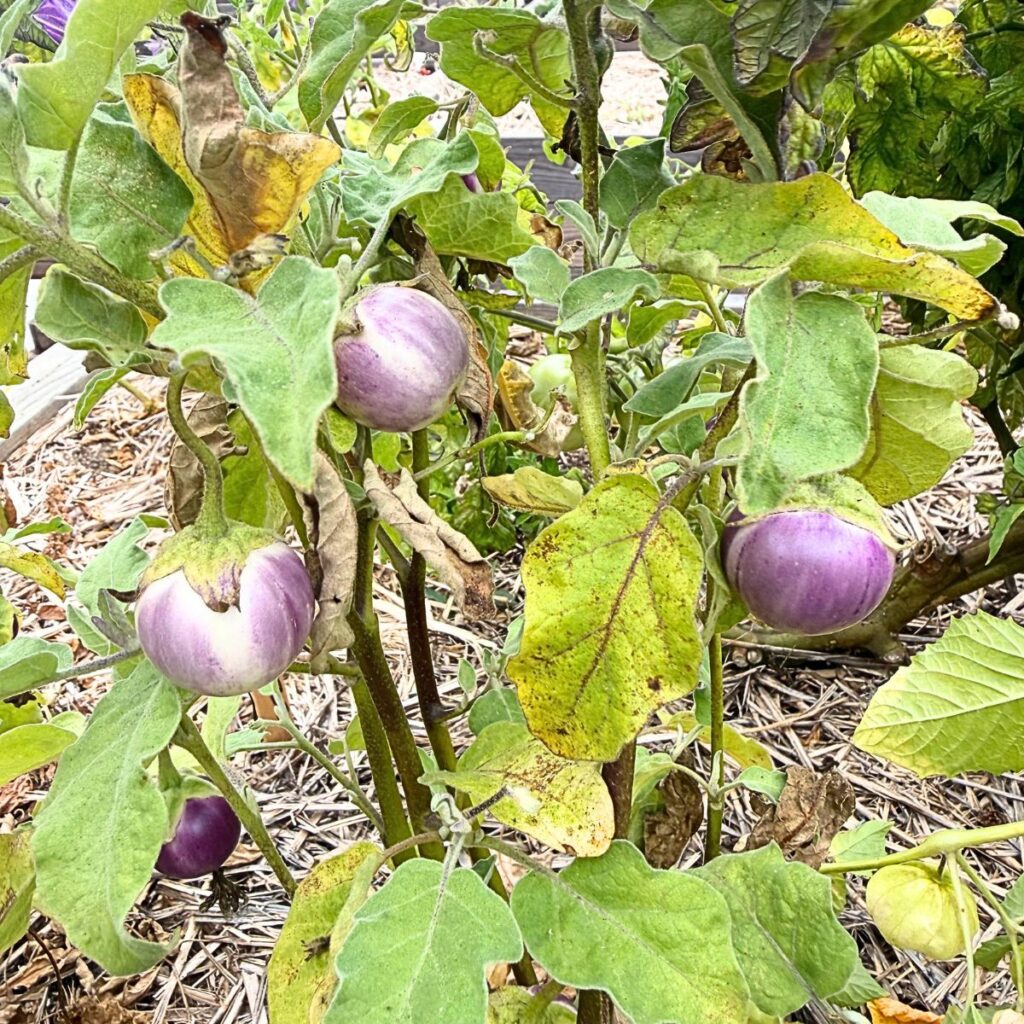
One of the clearest signs that a Thai Lavender Frog Egg eggplant has stayed on the plant too long is a change in color.
You want that beautiful pale lavender and white coloring. If the fruit begins turning yellow, it has become overmature, and the skin can become tougher, the seeds more developed, and the flavor more bitter.
This is also why size isn’t the best indicator of readiness. Smaller fruits can remain quite firm, so don’t assume a hard little eggplant automatically needs more time. Look at the color, shine, and overall appearance instead.
Once you’ve harvested a few at the right stage, recognizing them becomes much easier.
How to Harvest Thai Lavender Frog Egg
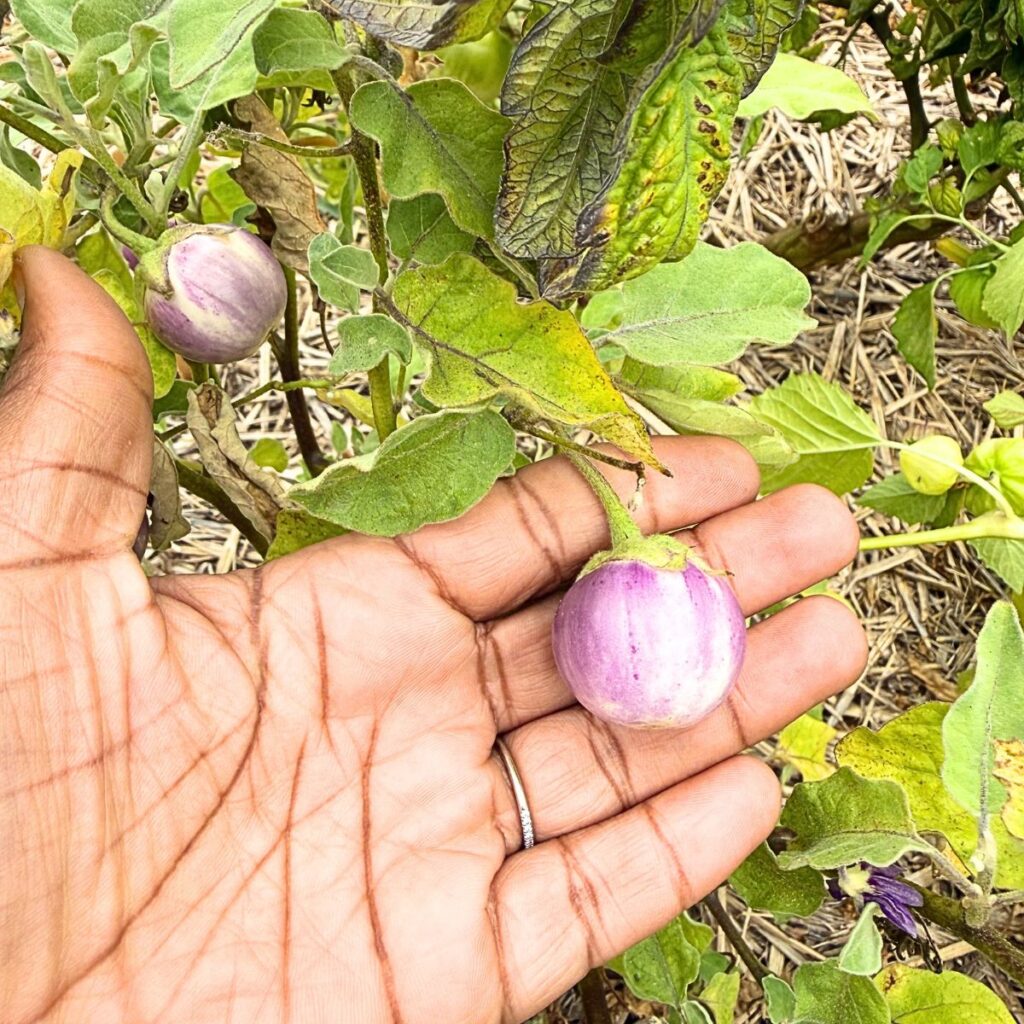
Just like the Rosa Bianca eggplants we grew, I use clean garden pruners or scissors rather than pulling the fruit from the plant. Gently support the eggplant with one hand and cut through the stem with the other, leaving a small portion of stem attached. This helps prevent unnecessary damage to the plant, especially when other flowers and developing fruits are nearby.
Once the plants start producing heavily, check underneath the foliage every few days. Because the plants are so bushy and the eggplants are small, it’s surprisingly easy to overlook one until it has already started turning yellow.
Why It’s Better to Harvest Them Young
With this variety, harvesting young makes a noticeable difference in both flavor and texture. The skin is more tender, the flesh is pleasant to eat, and the seeds inside are still small and soft. If you leave the fruit on the plant too long, the skin becomes tougher, the seeds continue developing, and bitterness can become more noticeable.
It’s a good reminder that bigger isn’t always better in the vegetable garden. In this case, I’d much rather harvest a fruit slightly early than discover an oversized, dull, yellowing one several days later.
How to Prepare Thai Lavender Frog Egg
Thai Lavender Frog Egg eggplants require very little preparation. Simply wash them, trim the stems, and cook the smaller fruits whole or cut larger ones in half. When harvested young, the skin is tender enough that there’s no need to peel it. You can grill, roast, saute, or add them to curries and stir-fries; their small size lets them hold their shape while soaking up plenty of flavor.
They’re especially well suited for kebabs because they’re already close to the perfect size for skewers. Thread them whole or halved with mushrooms, cherry tomatoes, peppers, and small onions, brush everything with seasoned olive oil or your favorite marinade, and grill until tender and lightly charred. You can also roast them with garlic and herbs or sauté them with other vegetables for an easy way to use a larger harvest.
How to Tell When Thai Lavender Frog Egg Is Ready
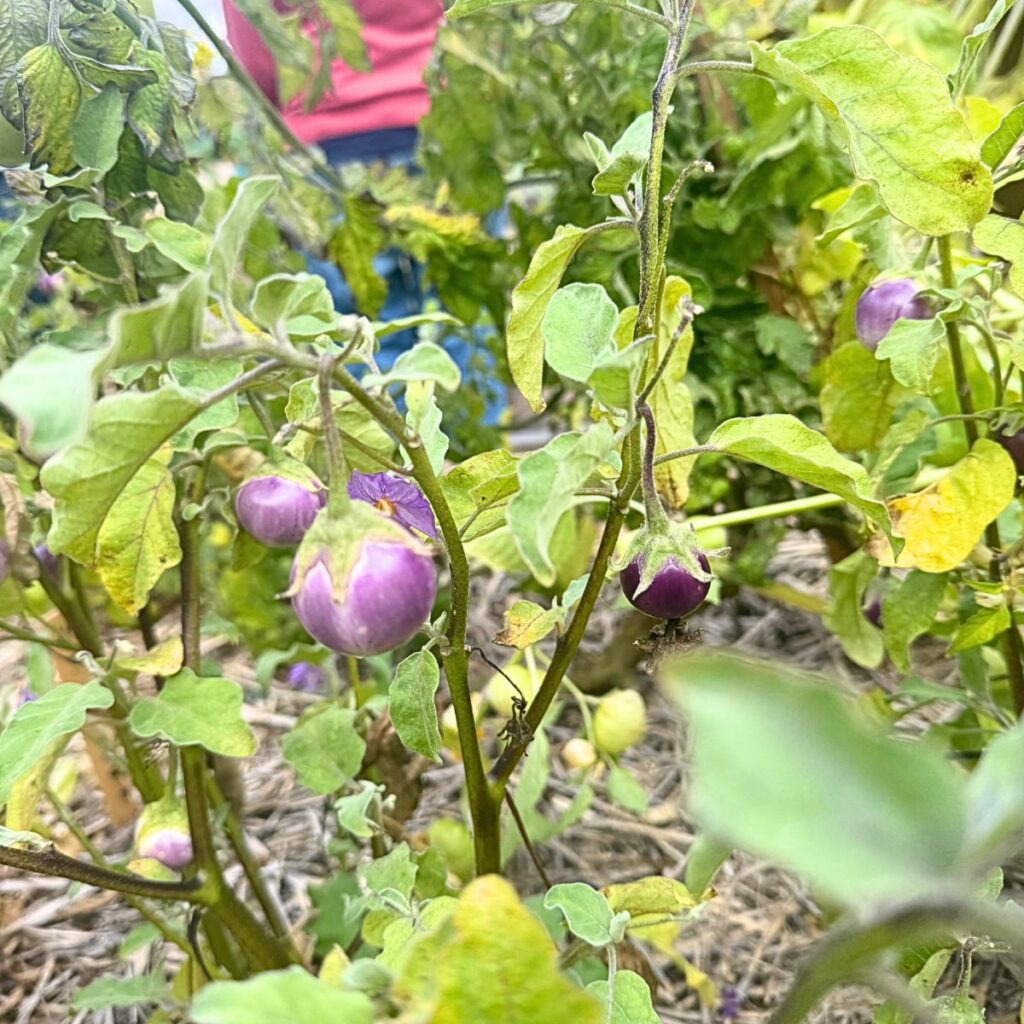
When I’m checking the plants, these are the main signs I look for:
- The fruit is small and plump.
- The skin is pale lavender and creamy white.
- The skin is smooth and noticeably glossy.
- The fruit hasn’t started turning yellow.
- The skin hasn’t become dull.
- The fruit is still young enough that the seeds haven’t fully matured.
You don’t need to wait for every fruit to reach exactly the same size. Small, lavender, and shiny is what you’re looking for.