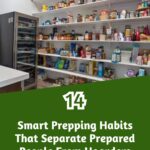
People often use the words prepper and hoarder as if they mean the same thing, but they describe two very different behaviors. Both may have shelves stocked with food and supplies, yet that’s where the similarities largely end.
A prepper plans ahead with a purpose. Supplies are chosen carefully, stored properly, and rotated so they’re ready to use if they’re ever needed. A hoarder, by contrast, tends to collect things without much planning or organization, often holding onto far more than can realistically be used.
The goal of prepping isn’t to fill every corner of your home with supplies. It’s to be ready for unexpected situations without creating unnecessary waste or clutter. If you’re wondering where the line is, these habits are good signs you’re preparing wisely rather than simply collecting more stuff.

You Prepare for Realistic Situations
Smart preppers think about events that are actually possible where they live. That could mean hurricanes, winter storms, power outages, job loss, wildfires, or supply chain problems.
Instead of preparing for every worst-case scenario imaginable, they focus on the situations they’re most likely to face and build their plans around those.
You Build Your Stockpile Gradually
A well-stocked pantry usually isn’t created in a single shopping trip.
Many experienced preppers add a few extra items each week or buy additional supplies when they’re on sale. This spreads out the cost and avoids emptying store shelves during emergencies.
You Rotate Your Food
Food isn’t meant to sit untouched for years.
Smart preppers regularly use older items and replace them with fresh ones. Following a “first in, first out” system keeps the pantry current and prevents expired food from piling up.
You Store Supplies Properly
Buying food is only half the job. Keeping it in good condition matters just as much.
Dry goods are stored in airtight containers when needed, shelves stay clean, and supplies are protected from moisture, heat, rodents, and insects. A stockpile isn’t much help if it’s been ruined before you ever need it.
You Keep an Inventory
It’s easy to forget what you already own if everything disappears into boxes and shelves.
Many preppers keep a simple list of what’s in storage, how much they have, and when it should be replaced. That makes shopping easier and helps prevent buying duplicates you don’t need.
Related: 15 Essential Things Preppers Should Stockpile Besides Food And Water
You Focus on Skills, Not Just Supplies
Food storage is only one part of preparedness.
Learning how to garden, preserve food, purify water, repair equipment, cook from scratch, or give basic first aid can be just as valuable as anything sitting on a shelf. Skills stay with you long after supplies are gone.
You Stay Within Your Budget
Preparedness shouldn’t leave you struggling to pay your bills.
Smart preppers build their supplies over time without taking on unnecessary debt or sacrificing everyday financial responsibilities. A stockpile should provide peace of mind, not financial stress.
You Don’t Buy More Than You Can Use
Buying twenty jars of peanut butter because they’re on sale doesn’t always make sense if they’ll expire before your family can finish them.
Experienced preppers stock amounts that fit their household’s needs and storage space. Every item has a purpose.
You Look for Long-Term Solutions
Many preppers invest in things that continue providing value instead of relying only on stored goods.
A vegetable garden, rain barrels, fruit trees, solar panels, pressure canners, or backyard chickens can help reduce dependence on grocery stores over time.
Related: 28 Ways to Live Sustainably and Reduce Dependence on Retail and Grocery Stores
You Regularly Remove What You No Longer Need
Preparedness isn’t about keeping everything forever.
From time to time, smart preppers sort through their supplies, donate usable items they no longer need, throw away damaged goods, and make room for things they’ll actually use.
Your Home Stays Safe and Functional
A prepared home should still be comfortable to live in.
Walkways remain clear, exits stay accessible, and supplies are organized instead of stacked in unsafe piles. Storage supports everyday life rather than taking it over.
You Think About Helping Others
Many preppers include extra supplies for family members, neighbors, or friends who may need help during an emergency.
Preparing ahead often means there’s enough to share without putting your own household at risk.
You See Prepping as Everyday Responsibility
For many people, prepping is no different than carrying insurance, keeping a first-aid kit in the car, or maintaining a savings account.
It’s simply another way of preparing for life’s unexpected problems instead of hoping they never happen.
You Buy With a Plan, Not Out of Panic
Perhaps the biggest difference between prepping and hoarding comes down to intention.
Smart preppers shop calmly throughout the year. They avoid panic buying during emergencies because they’ve already prepared. Their decisions are guided by a plan rather than fear.
So, Are Preppers Hoarders?
For most people who prepare responsibly, the answer is no.
A prepper stores useful supplies, keeps them organized, rotates food, and builds practical skills alongside a stockpile. Every purchase has a purpose, and everything is meant to be used if the need ever arises.
Hoarding looks very different. It often involves collecting items without a clear reason, letting supplies pile up without organization, and keeping far more than can realistically be used. Food may expire, storage areas become cluttered, and replacing items becomes difficult because there’s no system in place.
A thoughtful stockpile isn’t about fear. It’s about planning ahead so your household is better prepared if everyday life is interrupted.
Common Signs of Hoarding
- Buying large amounts of supplies impulsively, especially during emergencies.
- Accumulating more than can realistically be used.
- Having little or no organization for stored items.
- Letting food expire or become damaged by moisture, pests, or poor storage.
- Purchasing duplicates because there’s no inventory.
- Holding onto unnecessary items instead of clearing space.
- Allowing clutter to interfere with daily life or create safety hazards.
- Collecting things without a clear purpose or plan.