Most people think of maple trees when they hear about tapping trees for syrup, but maples aren’t the only trees that produce usable sap. Depending on the species, you can turn tree sap into syrup and other homemade products, giving you another way to use the trees on your property.
For homesteaders, learning to tap trees can be a rewarding spring activity that returns year after year when done with care. Sugar maple remains the classic choice, but several other trees are worth learning about if you’d like to try a different kind of homemade syrup.
Sugar Maple (Acer saccharum)
Sugar maple is the tree most people associate with syrup making because its sap usually contains more sugar than sap from many other species. The finished syrup has a rich, sweet taste with caramel-like notes, and a mature, healthy tree can provide a useful amount of sap during the season.
Related Article: 10 Small Trees With Big Curb Appeal
Butternut (Juglans cinerea)
Butternut, also called white walnut, belongs to the walnut family and can produce sap for syrup making. Its nuts are edible, and the tree has also been used as a source of natural dye, though butternut trees face serious disease pressures in many areas.
River Birch (Betula nigra)
River birch produces sap that can be collected in spring and boiled down into syrup, though the process takes more sap than making maple syrup. Birch syrup often has a deeper, tangier taste than maple syrup, making it an interesting choice for glazes, sauces, and other recipes.
Related Article: 22 Trees You Should Never Grow In Your Yard
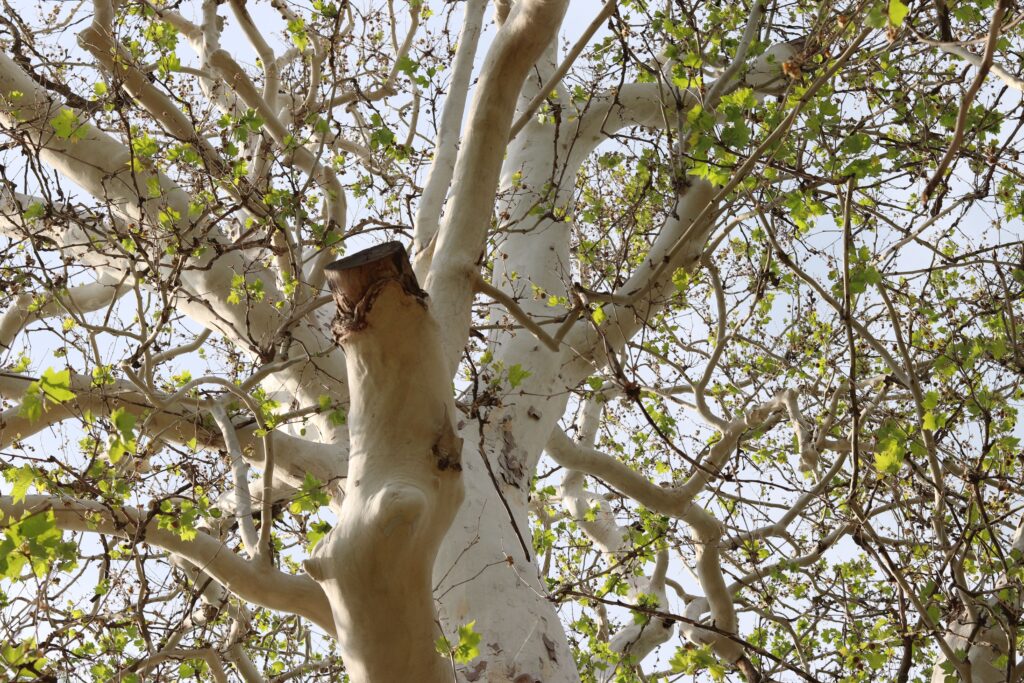
Sycamore (Platanus occidentalis)
American sycamore is another tree you can tap for sap, giving home syrup makers an option beyond maples and birches. Its sap contains less sugar than sugar maple sap, so making syrup takes more time and requires more sap.
Red Maple (Acer rubrum)
Red maple grows across much of eastern North America and can be tapped for syrup during the late-winter or early-spring sap season. Its sap usually has less sugar than sugar maple sap, but it can still produce a pleasant syrup for pancakes, waffles, and baking.
Black Walnut (Juglans nigra)
Black walnut trees are best known for their flavorful nuts, but their sap can also be boiled down into syrup with a nutty, caramel-like taste. The sap can be harder to process because of its pectin content, so filtering and careful cooking help when making a batch.
White Birch (Betula pubescens)
White birch is found across parts of northern Europe and other cool regions, and its sap can be collected for drinking or syrup making. Birch syrup tends to be darker and tangier than maple syrup, with a taste that can resemble molasses or caramel.
Related Article: 21 Problematic Trees You Should Never Grow in Your Yard
Boxelder (Acer negundo)
Boxelder belongs to the maple family and can be tapped in areas where it grows, making it another option for homemade syrup. Its sap usually has lower sugar content than sugar maple sap, so you may need more to produce the same amount of finished syrup.
Yellow Birch (Betula alleghaniensis)
Yellow birch produces sap that can be boiled into syrup with a deeper taste than the familiar maple variety. The finished syrup may have caramel and molasses-like notes, making it a good match for glazes, roasted foods, and desserts.
Bigleaf Maple (Acer macrophyllum)
Bigleaf maple grows across the Pacific Northwest and can be tapped for syrup where conditions are suitable. Its sap typically has less sugar than sugar maple sap, so making a batch takes more time and boiling.
Related: 15 Trees Every Survivalist Should Consider Planting for Long-Term Preparedness
Silver Maple (Acer saccharinum)
Silver maple is another tappable maple species and can begin producing sap early in the spring under suitable weather conditions. Its syrup can taste lighter than sugar maple syrup, offering another option for home syrup makers in areas where silver maples are common.