I love having plants around the house, but I tend to stick with ones that don’t need too much attention. I don’t always remember to water them on schedule, so anything that can handle a little neglect is a plus. That’s one of the reasons I’ve come to love my ponytail palm.
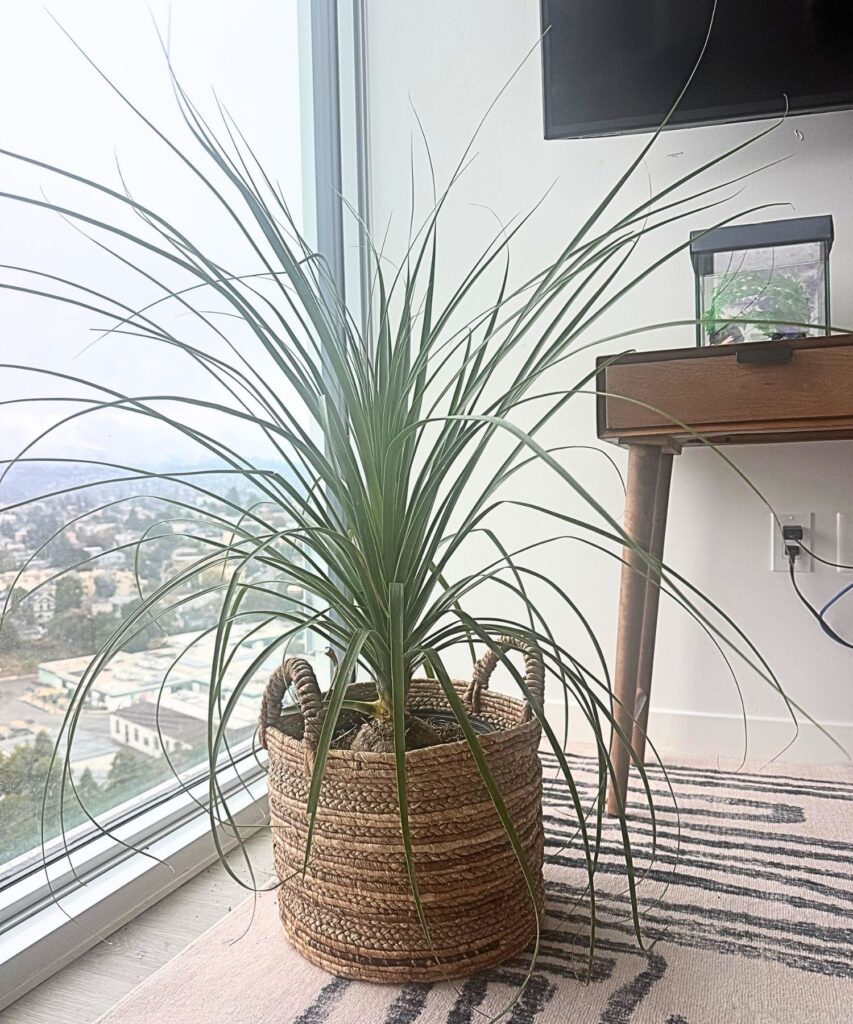
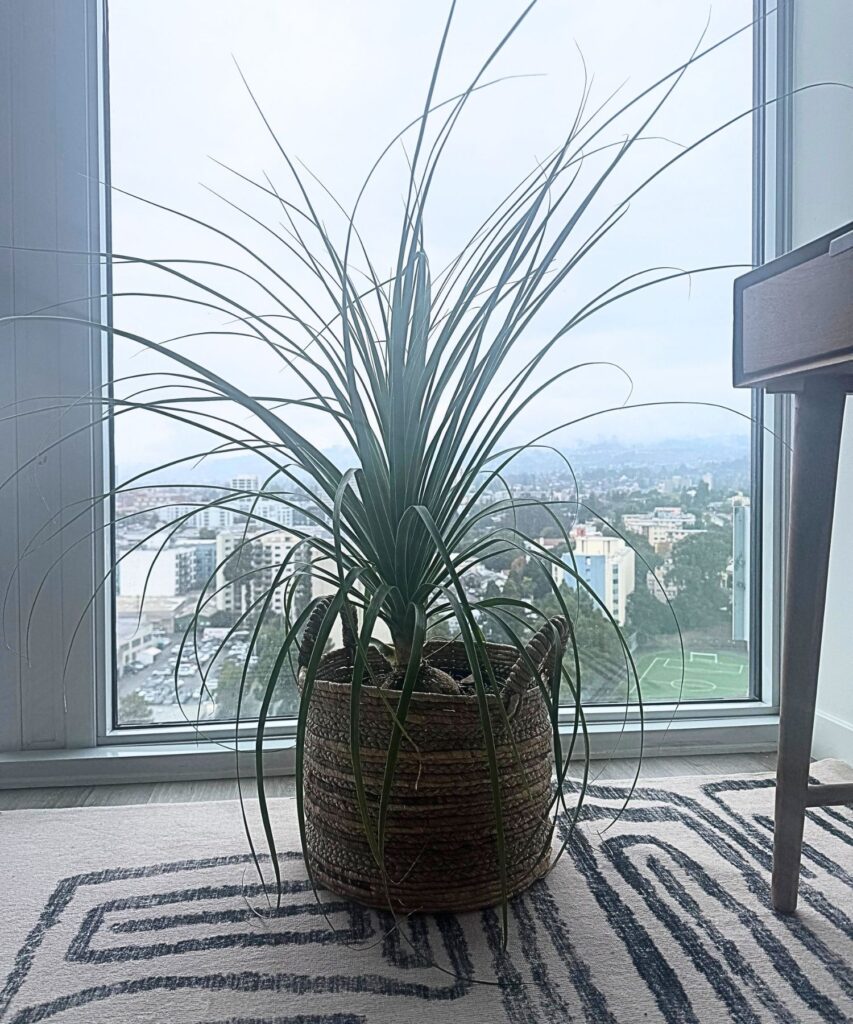
I keep mine near a window where it gets plenty of natural light, and it’s such a nice addition to the space. It has a thick trunk with long, green leaves that fall over the sides, almost like a little palm tree. One thing I especially like is that it stores water in its trunk, so I don’t have to worry about watering it as often as some of my other houseplants.
I got mine from Trees.com, and I was really happy with how it arrived. The leaves were healthy and green, and the plant looked great right out of the box.
If you’re looking for a houseplant that’s a little different, easy to care for, and doesn’t need constant attention, the ponytail palm is definitely one I’d recommend.
It’s not actually a palm tree
Despite its name, the ponytail palm (Beaucarnea recurvata) isn’t really a palm tree. It’s actually more closely related to succulents, which explains why it doesn’t need nearly as much water as some other houseplants.
One of its most noticeable features is the thick, rounded base of its trunk. It’s sometimes called the elephant foot palm because the bottom looks a little like an elephant’s foot. That thick base also stores water, helping the plant get through long stretches without being watered.
I also love the way the leaves grow. They’re long, thin, and fall over the sides of the trunk, giving the plant a full, almost fountain-like appearance.
Another nice thing about ponytail palms is that they grow slowly, so you don’t have to worry about them quickly outgrowing their space.
It doesn’t need constant watering
If you’re someone who occasionally forgets to water your plants, you’ll probably appreciate this one.
Ponytail palms don’t like sitting in wet soil. In fact, they do better when the soil has a chance to dry out between waterings. Depending on the size of your plant, the pot, and how much light it gets, you may only need to water it every couple of weeks or even less often.
The biggest thing to avoid is overwatering. Too much moisture can cause the roots to rot, which is one of the more common problems with this plant.
Rather than sticking to a watering schedule, I prefer to check the soil first. Once it’s mostly dry, I give the plant a good watering and let the extra water drain out.
It’s a pretty simple routine, and that’s exactly what I like about it.
Give it plenty of natural light
Ponytail palms are fairly easygoing, but they do need a good amount of light to grow well.
Mine sits near a window where it gets plenty of natural light throughout the day. A bright room or sunny window is usually a good place to keep one. Just be careful about moving a plant that’s used to indirect light straight into intense sunlight, since the leaves can get scorched.
You’ll also want to make sure the pot has drainage holes and that you’re using soil that drains well. A cactus or succulent potting mix is a good option because it doesn’t hold onto moisture for too long.
As far as maintenance goes, there’s really not much else to do. You can trim away dead or damaged leaves when needed, but regular pruning isn’t necessary.
You can even move your ponytail palm outside during warmer months if you have a patio or porch. Just get it used to the outdoor sunlight gradually and bring it back inside before temperatures get too cold.
Where to buy a ponytail palm
If you’re thinking about getting one, I found mine through Trees.com, and I had a really good experience.
The plant arrived in great condition, with healthy green leaves, and I didn’t have to do much of anything to get it settled into its new spot. I also liked being able to order it online instead of visiting several garden centers hoping to find one.
Trees.com offers nursery-grown plants in different sizes, so you can choose one that works for your space.
I think a ponytail palm would also make a nice gift for someone who loves houseplants, especially if they prefer plants that don’t need a lot of attention.
It’s easy to care for, looks a little different from the usual houseplants, and can stay with you for years. For me, that’s a pretty good combination.