

With their fresh, juicy taste, tomatoes are a favorite crop in vegetable home gardens. Yet, the wait for them to ripen can feel endless—and sometimes, despite your best efforts, they don’t ripen at all.
There are several reasons why this might happen. Tomato fruits generally mature in six to eight weeks from pollination, but this duration varies with the tomato variety and the weather conditions.
So, what do you do when your tomato fruits stubbornly remain green and refuse to ripen? Here are some factors that may slow the ripening process.

Grow a vibrant rainbow of heirloom tomatoes with this Organic Tomato Seeds Variety Pack! Featuring 10 individual seed packets, including favorites like Roma, Black Krim, Green Zebra, and Yellow Pear. With fresh 2025 season seeds and high germination rates, your garden will thrive indoors or outdoors. The packaging includes planting instructions and a resealable zipper for easy storage. Excellent germination rates.
Extreme Temperatures

Tomatoes ripen best between 70 to 75F. Temperatures above 85°F or below 50°F can significantly slow or stop ripening.
When temperatures rise above 85°F, the heat can stress the plants and interfere with the enzymes responsible for ripening. Conversely, temperatures below 50°F can impede ripening by reducing the plant’s metabolic activity. Maintaining this ideal temperature range ensures that tomatoes develop their full flavor and color.
Direct Sunlight

Tomatoes need a lot of light to ripen, but too much sunlight can be a problem. That’s right, too much direct sun can slow ripening. Heat matters more than light for ripening, and very bright, hot sunlight can make temperatures too high, stopping the production of lycopene, which turns tomatoes red.
Lack of Sunlight

Contrary to the effects of direct sunlight, insufficient sunlight can also hinder tomato ripening, particularly in shaded garden areas or when growing indoors.
Tomatoes require at least eight hours of daylight to bloom and produce fruit, as sunlight is essential for energy production in plants. Without enough light, your tomatoes are less likely to bear fruit.
Nitrogen Overload

Too much nitrogen promotes lush foliage at the expense of fruit development and ripening. Fertilizers high in nitrogen may cause plants to prioritize leaf growth over fruit ripening.
It’s important to use a balanced fertilizer with moderate nitrogen levels. Reduce fertilization once your plants start setting fruit, and consider fertilizing only two or three times during the season.
Overcrowding

Crowded tomato plants prioritize survival over fruit ripening because limited space and airflow can stress them. Proper spacing is crucial to prevent competition for nutrients, light, and water, which can hinder fruit development.
Providing enough room between plants is important to ensure they receive the resources for optimal fruit production.
Lack of Nutrients
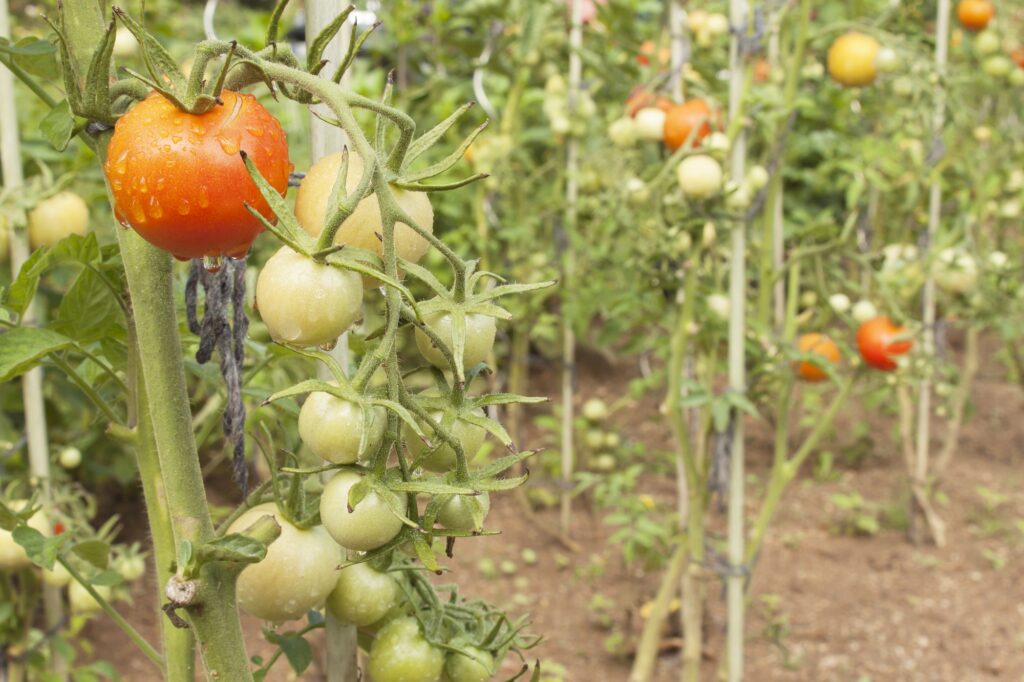
Tomatoes require a range of nutrients and micronutrients, particularly phosphorus and potassium, throughout the growing season. These elements are essential for producing lycopene in the fruits, and insufficient amounts can cause slow or uneven ripening.
Tomato Type

Sometimes, a tomato’s slow ripening is simply natural for its variety. Some tomatoes, especially heirlooms or larger types, ripen later than smaller or hybrid varieties. For instance, cherry tomatoes ripen faster than large heirloom tomatoes. In these cases, patience is often the key.
Poor Pollination

Issues with pollination early in the growing season can affect fruit development and ripening. Tomatoes may struggle to flower if they aren’t adequately pollinated.
While tomato flowers can self-pollinate, bees enhance this process by dislodging pollen when they visit. Thus, indoor tomato plants may face pollination challenges without bees to help release the pollen.
The Wrong Climate Zone

You may have selected a tomato variety that doesn’t suit your region’s climate. In areas with short growing seasons, choose tomato varieties that mature quickly. If you plant tomatoes that cannot ripen within your growing season, there’s little you can do to remedy this.
Disease

Diseases like blight, sunscald, and other pest problems can significantly stress tomato plants, leading to delayed fruit ripening. When plants are attacked by diseases or pests, they divert energy from fruit development to defense mechanisms.
This stress response can slow the ripening process as the plant focuses on survival and healing rather than maturing its fruits. Regular monitoring and appropriate treatment are crucial to minimize these impacts and ensure healthy, timely ripening.
Overload of Fruits

A tomato plant with too many fruits may struggle to ripen them all. Removing about a quarter of the fruits can improve the ripening efficiency of the remaining tomatoes. This allows the plant to focus its energy and resources on ripening the remaining fruits.
Lack of Pruning

Pruning your tomato plants early in the growing season can significantly improve the quality of the fruit. Removing excess branches and leaves allows the plant to focus its energy on developing fewer but healthier fruits.
This concentration of resources leads to better-quality tomatoes and accelerates the ripening process, ensuring that the fruits mature faster and more evenly.
Overwatering

Tomato plants need 1 to 2 inches of water weekly when their vines are growing and fruiting. However, the fruits ripen quicker if you reduce your watering schedule. Less water stresses the plant, prompting it to enter survival mode and focus its energy on producing viable seeds, accelerating ripening.
Blossom End Rot

If your tomato plant gets blossom end rot, the stress can halt fruit ripening. This plant disease, marked by black lesions on the fruit’s bottom, is due to low calcium levels in the plants. Often, inconsistent watering is to blame, as it hinders the plant’s ability to absorb calcium effectively.