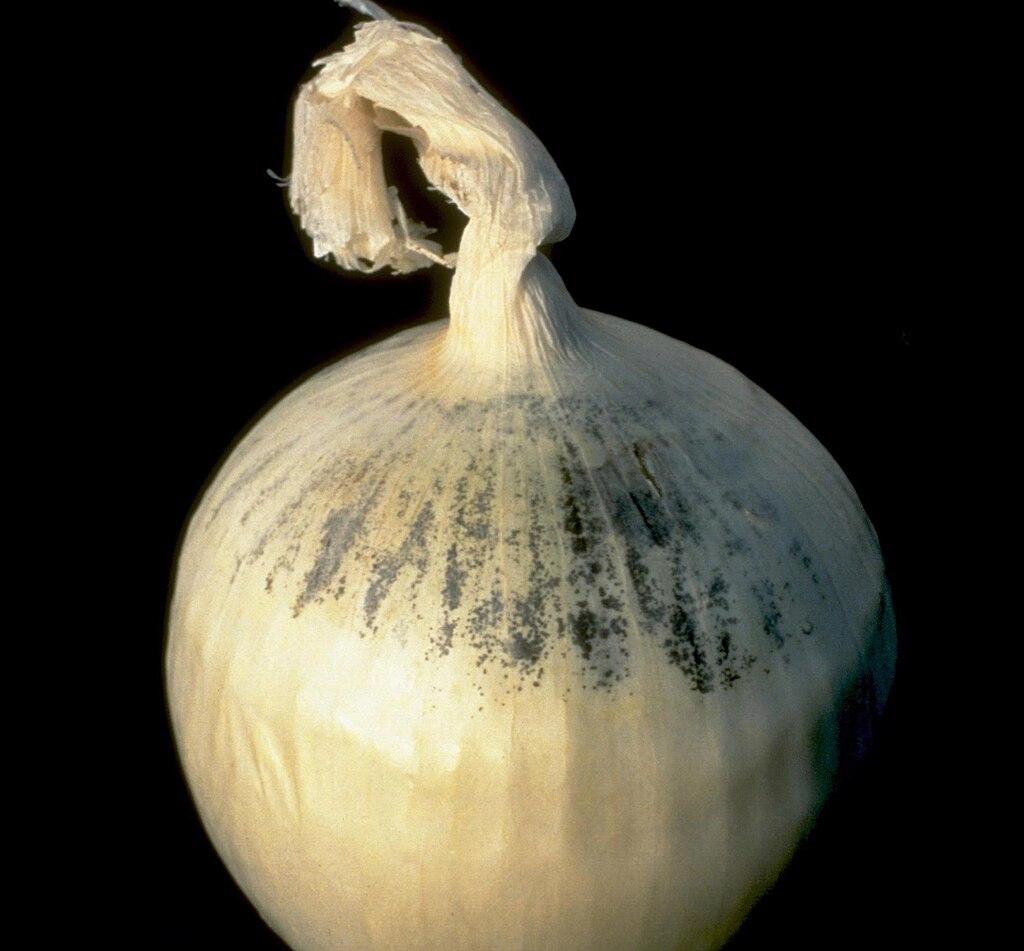
You slice into an onion and notice black, dusty streaks near the outer layers. Or maybe you see dark powdery patches clinging to the skin. It looks a bit scary — like something that definitely belongs in the trash. But take a breath. That black, sooty coating is usually a common mold called Aspergillus niger.
In fact, this type of mold is everywhere. Its spores live naturally in soil and air, and we inhale tiny amounts of them every day without realizing it.
When onions grow in the ground, they’re constantly exposed to these spores. Under the right conditions, warmth, moisture, and small surface wounds, the mold can settle onto the dry outer layers and start to grow.
What Exactly Is That Black Powder?
The black, dusty material you see is a mass of fungal spores. It often appears between the onion’s papery outer skins or near the neck where the leafy tops once attached.
Because onions are harvested, cured, and stored before reaching your kitchen, this mold can develop either in the field or during storage, especially if conditions are warm and humid.
The good news is that this mold usually stays on the surface. Unlike slimy, wet rot that signals deeper decay, black mold tends to remain dry and superficial. If the inner flesh of the onion is firm, crisp, and free of discoloration, the onion itself is often still usable.
Is It Safe to Eat?
Here’s where reassurance matters: in mild cases, yes, with precautions. If the mold is limited to the outer layers, you can peel away the affected skins or trim off any visibly dark areas. Rinsing the onion under cool running water can help remove remaining surface spores. As long as the interior is solid and fresh-smelling, it’s generally considered safe to use.
Some strains of Aspergillus niger can produce toxins, but research shows these toxins are typically less potent than those produced by more dangerous molds. More importantly, they rarely penetrate deeply into intact onion flesh.
That said, if the onion feels soft or slimy, smells off, or shows extensive mold growth, it’s best to discard it.
When You Should Be More Careful
If you have asthma or severe mold allergies, you may want to handle moldy onions more cautiously. Disturbing visible mold can release spores into the air, and sensitive individuals may react to inhaling them. Washing the onion gently and avoiding aggressive shaking or brushing can reduce airborne spores.
For most people, though, small amounts of surface mold aren’t a major health threat. The key is not to try to salvage onions that are heavily covered or clearly rotting.
Why Do Onions Get This Mold in the First Place?
Black mold thrives in warm, humid environments, especially above 75°F. Onions are particularly vulnerable if they’re bruised, stored in high humidity, or moved from cold storage into a warm kitchen where condensation forms on their surface. Even small wounds can give the mold an entry point.
You’ll often see mold near the neck of the onion because that’s a natural weak spot formed during growth. As the onion matures in the field, the green tops fall over, creating a small opening that fungi can exploit.
How to Prevent It
Prevention mostly comes down to storage. Onions prefer a cool, dry, well-ventilated space. Ideally, they should be kept between 34°F and 60°F with good airflow.
Mesh bags, baskets, or open crates work well because they allow moisture to escape. Avoid sealed plastic bags, which trap humidity and create the perfect breeding ground for mold.
It’s also helpful to keep onions separate from high-moisture produce like potatoes, which release humidity as they sit. Always choose firm, dry onions at the store and avoid ones with visible soft spots or moisture.