There’s something undeniably gorgeous about climbing plants—especially those that bloom in shades of purple. These vibrant vines can transform plain fences into living tapestries, turn archways into romantic entrances, and bring new life to overlooked corners of the garden. Beyond their visual appeal, climbing plants also serve practical purposes, such as covering unsightly spots or adding a layer of privacy from neighboring yards.
Here are seven climbing vines that offer a beautiful combination of vivid blooms, lush foliage, and seasonal color.
Wisteria (Wisteria sinensis/W. floribunda)
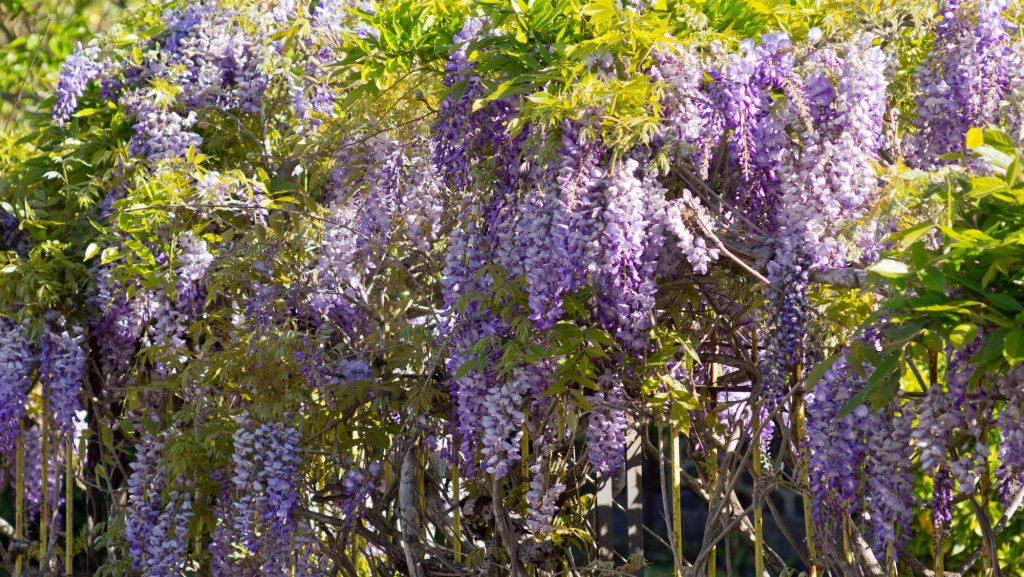
Wisteria climbs by twining thick stems around anything in its path and needs strong support from the start. They’re especially great for pergolas or porches and create a draping effect.
This vigorous vine thrives in full sun and fertile, well-drained soil. It suits USDA zones 5 to 9 and blooms in late spring. Choose grafted varieties and prune them hard; ungrafted wisteria can become invasive and take years to bloom.
Clematis (Clematis spp.)
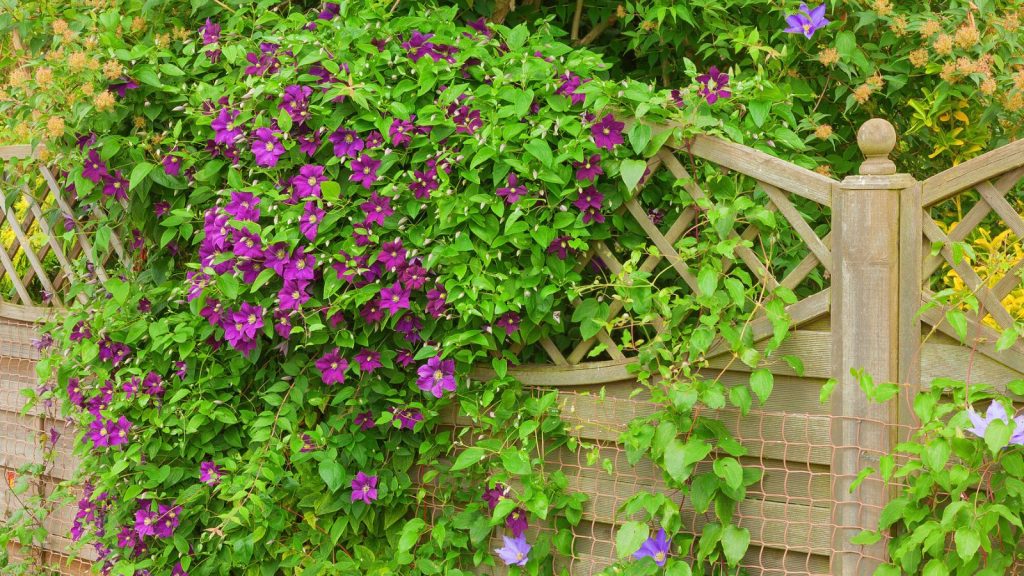
Clematis is often called the “queen of climbers” for good reason. With a huge variety of bloom colors, shapes, and sizes, this versatile vine can fit almost any garden style. It climbs by wrapping its leaf stems around supports, making it ideal for trellises, arbors, or obelisks.
Plant in full sun with its roots kept cool; mulch or low-growing plants can help. Clematis prefers rich, well-drained soil and thrives in USDA zones 4 to 9, depending on the variety. Bloom time ranges from spring to fall, with some types even blooming twice.
Morning Glory (Ipomoea purpurea)

Morning glories are fast-growing annuals known for their heart-shaped leaves and luminous trumpet-shaped flowers that open with the sunrise. They twine easily up trellises, fences, and poles, making them ideal for quick coverage.
They love full sun and do best in poor to average soil. Plant in USDA zones 3 to 10 as an annual. Blooming starts in early summer and continues until frost. They reseed easily, so deadhead spent flowers, unless you want them again next season.
Passionflower (Passiflora incarnate)

Passionflowers look like something from a fairytale. Their intricate blooms are eye-catching and often fragrant, and their tendrils climb rapidly along trellises and fences. They prefer full sun and well-drained soil. Depending on the species, they’re hardy in USDA zones 6 to 10.
Bloom time ranges from midsummer to fall, often followed by colorful fruit.
If you’re in colder zones, protect the roots with mulch; some types can die back to the ground and return to bloom in spring.
Chocolate Vine (Akebia quinata)

Chocolate vine produces clusters of purplish-brown flowers that smell faintly of vanilla or chocolate. Its twining habit and five-part leaves make it perfect for arbors or tall fences.
It grows well in USDA zones 5 to 9, full sun to partial shade, and moist, well-drained soil. Chocolate vine grows quickly, so prune hard after flowering to keep it in check.
Sweet Pea (Lathyrus odoratus)

Sweet peas have delicate, ruffled blooms and an irresistible scent that makes them perfect for fences, arches, and obelisks. These annual vines climb using slender tendrils that latch onto supports.
They prefer cool weather, rich soil, full sun, and are best grown in USDA zones 3 to 8 in spring or fall. They bloom from early to midsummer, putting on a dazzling show of pastels, bicolors, and deep jewel tones. Deadhead your
Moonflower (Ipomoea alba)
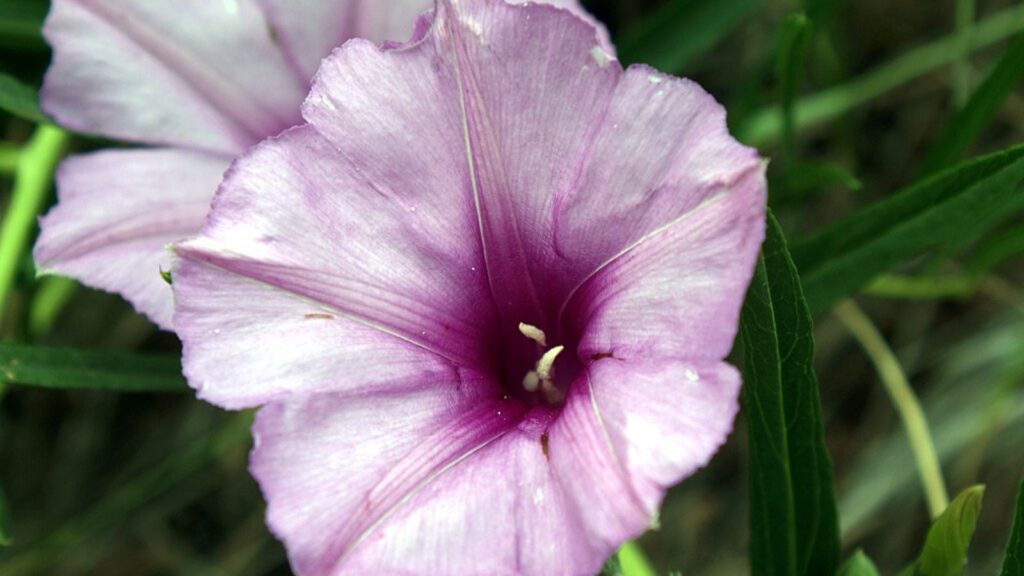
The moonflower is a tropical relative of the
It loves full sun and blooms from midsummer to frost. Nick the seeds or soak them overnight before planting to help germination.