Most of us think of gardens filled with bright flowers, cheerful colors, and plenty of greenery. But there’s something equally beautiful about a garden filled with deep purple blooms, nearly black flowers, and unusual foliage that looks like it belongs in an old fairytale.
This style of gardening is often called a goth garden, and it’s all about embracing darker colors, interesting textures, and plants that look a little different from what you’d typically find in a flower bed.
Felicia Feaster, author of The Goth Garden: The Mystery, Beauty, and Lore of Dark Gardening, connects the growing interest in these gardens to Victorian gardening traditions and Gothic literature. Think dark flowers, climbing plants, unusual shapes, and a few lighter colors mixed in for contrast.
Here are 12 beautiful plants worth considering if you want to give your garden a slightly mysterious look.
Black Cat Petunia

Petunias are usually associated with bright pinks, purples, and whites, but Black Cat is quite different. Its velvety flowers are such a deep purple that they appear almost black, giving an otherwise familiar garden flower a completely different look.
These petunias are particularly attractive in hanging baskets, window boxes, and containers where the dark flowers can spill over the edges. Give them plenty of sunlight, well-drained soil, and regular watering to keep them blooming.
Queen of the Night Tulip

If you’ve never seen a nearly black tulip, Queen of the Night is worth looking up. Its deep maroon petals are so dark they can appear almost black, especially when planted alongside lighter spring flowers.
These tulips bloom in late spring and look beautiful in garden borders or cut flower arrangements. Plant the bulbs in fall in well-drained soil and choose a location with plenty of sunlight.
Rex Begonia

Rex begonias are proof that you don’t need flowers to make a plant interesting. Their large, patterned leaves come in unusual combinations of purple, burgundy, silver, and green, sometimes with dramatic swirls that almost look painted on.
They’re especially beautiful in decorative pots where you can appreciate the foliage up close. Rex begonias prefer bright, indirect light and moderate to high humidity, making them a good choice for shaded patios in warm weather or indoor growing.
Hellebore, New York Night

Black Lenten Rose, often called Hellebore, is one of the first perennials to bloom in late winter or early spring. Its dark flowers—ranging from deep purple to nearly black—provide a striking contrast in shaded garden areas.
This plant thrives in zones 4 through 10 and is a reliable, low-maintenance choice for gardeners who want something that returns each year. Its long-lasting blooms and tolerance of cooler temperatures make it a valuable addition to any perennial bed in partial to full shade.
Persian Shield (Strobilanthes dyerianus)

Persian Shield, with its striking, iridescent foliage, shimmers in shades of purple, green, and silver. This small, bushy plant thrives in warmer climates and produces violet-blue flowers atop the lance-shaped leaves in late spring.
Persian shield deserves a spot on this list because its leaves shine, literally. Its iridescent purple, blue, and silver leaves shine in the light and look good even without blooms.
It thrives in partial shade and moist, well-draining soil in USDA zones 9–11, or as a houseplant. Maintain high humidity and prune to keep the plant bushy.
Bearded Iris, Blackwater

Black iris varieties bring a dramatic touch to the garden with their dark, velvety petals and elegant form. These perennials are eye-catching when in bloom. They grow best in full sun and well-drained soil, making them great for garden borders or mixed perennial beds. Hardy in zones 3 through 9.
Black Pansy
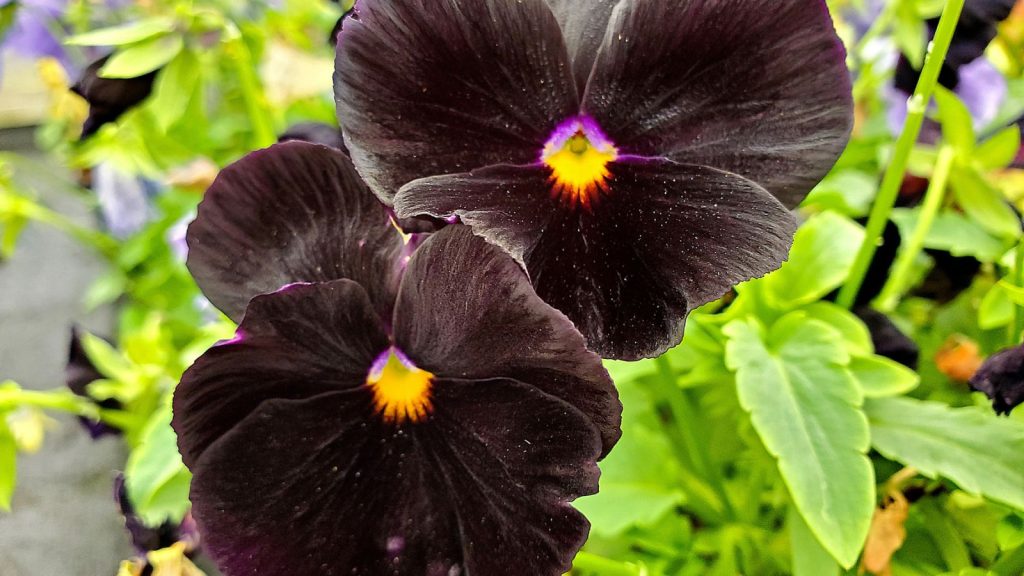
Pansies are fast-growing, vibrant flowers that work well in containers or garden beds. These black pansies will add the perfect amount of moodiness to your garden. They flourish in full morning sunlight and well-drained, fertile soil.
Black Bat Flower

The Black Bat Flower is a one-of-a-kind plant known for its unusual shape and deep, almost black blooms. The Black Bat Flower will add an exotic, mysterious vibe to any garden.
Its bat-like appearance comes from large, wing-like bracts that make it look as though it’s ready to take flight—giving the plant its fitting name. Native to subtropical regions, it thrives in warm, humid environments with plenty of shade.
Persian lily (Fritillaria persica)

Fritillaries, with their unique bell-shaped and checkered-patterned flowers, thrive in cool, well-drained soil and partial shade. They are ideal for woodland gardens or other shaded spots and are noted for their ability to deter squirrels and other rodents.
Although gardeners often grow Fritillaria imperialis as an annual, these bulbs can rebloom as perennials under the right conditions.
Black Prince Echeveria

Black Prince Echeveria is a striking succulent with rosettes that range from deep red to almost black, adding bold color and contrast to any plant arrangement. It’s drought-tolerant and does well in containers and rock gardens.
The more sun it gets, the darker and more vibrant its foliage becomes. This low-maintenance plant blooms in fall or winter and thrives in warm climates, particularly in USDA zones 9-11.
Black Calla Lily

Black Calla lilies bring a sleek, refined look to the garden with their smooth, trumpet-shaped flowers and deep, dark coloring. These unique bulbs should be planted in early spring, and with the right conditions, they’ll reward you with blooms that appear from late spring into early summer. Suited for USDA zones 8 to 10, Black Callas thrive in warm regions and add bold contrast to more traditional flower displays.
Black Hollyhock

This striking black hollyhock variety (Alcea) is known for its deep chocolate-mahogany flowers that bloom from mid-summer into fall, adding rich, dramatic color to the garden.
Towering on stalks that can reach up to 8 feet tall, it creates a stunning vertical element and easily becomes a focal point wherever it’s planted. Hardy in zones 2 through 10, this hollyhock grows best in full sun and prefers rich, moist, well-drained soil.