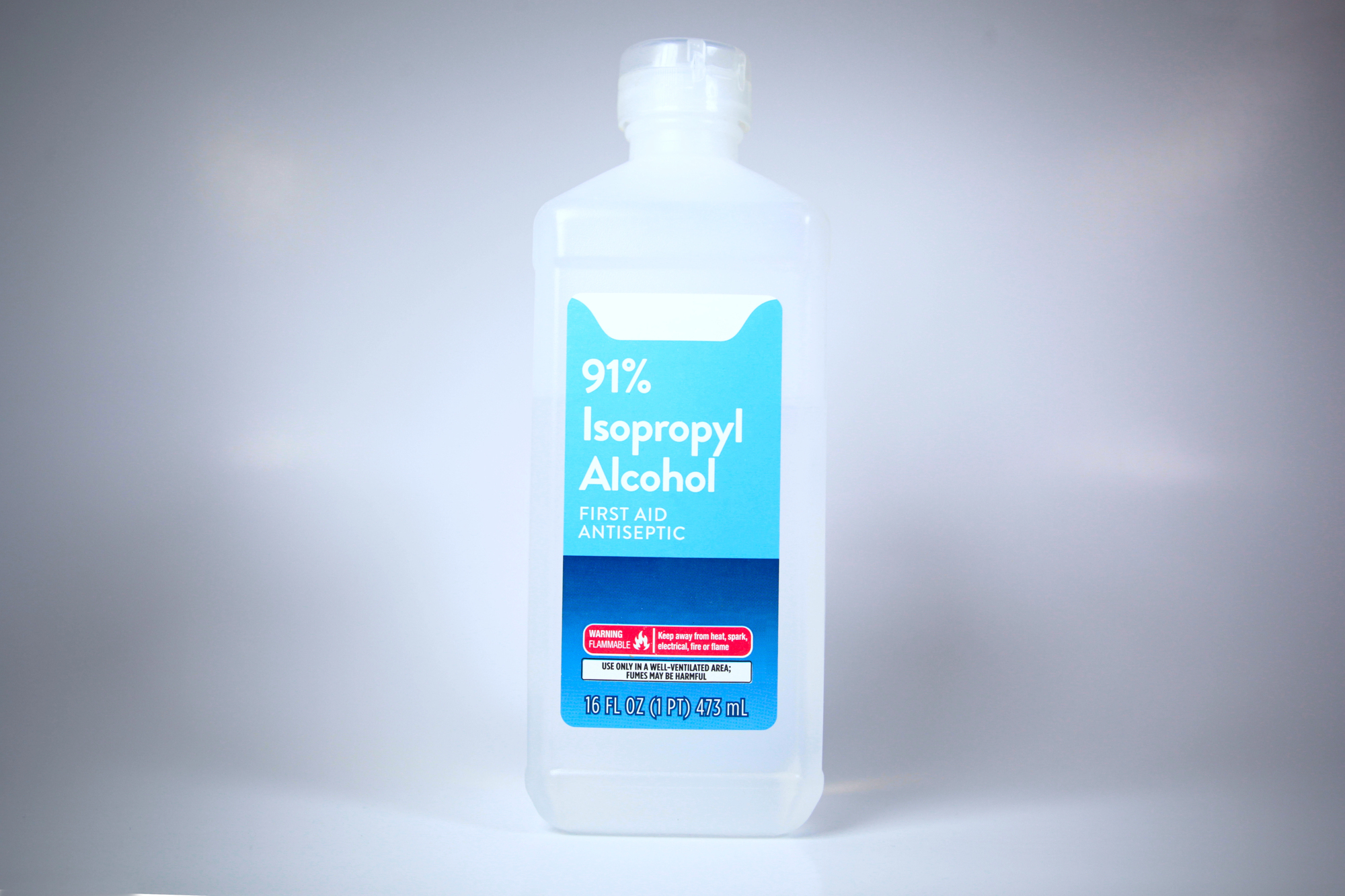
Most of us have a bottle of rubbing alcohol tucked away in the medicine cabinet that rarely sees the light of day. But this inexpensive household staple can come in handy for everything from removing stubborn sticker residue to tackling everyday cleaning tasks.
Here are 13 ways to put that bottle of rubbing alcohol to use, along with a few situations where you might be better off using something else.
Cleaning Tile Grout
Rubbing alcohol can help remove some surface grime from compatible tiles, but it’s not particularly effective at deep-cleaning grout or treating mildew. You’re better off using a dedicated grout cleaner for stubborn buildup and discoloration.
Freshening Up Jewelry
Certain types of jewelry can benefit from a quick wipe with a soft cloth lightly dampened with rubbing alcohol to remove oils and everyday grime. However, avoid using it on pearls, opals, plated jewelry, porous gemstones, or pieces with glued settings.
Cleaning Remote Controls
Considering how often we touch remote controls, it’s surprising how rarely we clean them. Remove the batteries and, if the manufacturer’s instructions allow it, use a lightly dampened cloth or cotton swab to clean around the buttons and remove accumulated grime.
Related: 10 Strange Things That Are Surprisingly Smart to Stockpile
Wiping Down Children’s Toys
Hard, non-porous toys can sometimes be cleaned with a cloth lightly dampened with rubbing alcohol. Check the manufacturer’s recommendations first, especially for painted toys, soft plastics, and anything children might put in their mouths, and let toys dry completely before use.
Disinfecting Frequently Touched Surfaces
Rubbing alcohol can be useful for disinfecting compatible hard surfaces such as certain doorknobs and cabinet handles. Always follow the product’s recommended concentration and contact time, and never mix rubbing alcohol with other household cleaners.
Removing Stubborn Stains
Before giving up on a shirt with an ink stain or makeup mark, consider reaching for the rubbing alcohol. Test an inconspicuous area first, then gently blot the stain with a dampened cloth before washing according to the garment’s care instructions.
Cleaning Electronics
Phones, keyboards, and computer mice tend to accumulate fingerprints, dirt, and oils from everyday use. If the manufacturer recommends alcohol-based cleaning, use the approved concentration on a lightly dampened microfiber cloth rather than spraying it directly onto the device.
Freshening Up Smelly Shoes
Rubbing alcohol may help reduce some of the odor-causing microbes that build up inside shoes. Check whether the material can tolerate alcohol, test a small area, and allow the shoes to air-dry completely before wearing them again.
Removing Sticky Price Tags and Adhesive Residue
Anyone who’s ever brought home a thrift store find knows how stubborn some price stickers can be. A little rubbing alcohol on a cloth can help loosen leftover adhesive on compatible surfaces, particularly glass and uncoated metal.
Cleaning Eyeglasses
Although rubbing alcohol can cut through oily fingerprints, it may also damage protective coatings on eyeglasses. Unless your eyewear manufacturer specifically recommends it, stick with an approved lens cleaner and a microfiber cloth.
Reviving Dried-Out Markers
Adding a little rubbing alcohol to a dried-out dry erase marker is a commonly shared household hack, but it doesn’t always work and could damage the marker. Keeping markers tightly capped between uses is a more reliable way to prevent them from drying out prematurely.
Related: 16 Survival Uses for Vaseline You’ve Probably Never Considered
Removing Nail Polish in a Pinch
If you’ve run out of nail polish remover, rubbing alcohol may help loosen certain types of polish. It generally takes more effort and can dry out your skin, so a dedicated nail polish remover is still the better option.
Cleaning Hairbrushes and Combs
Hairbrushes and combs collect more than just loose hair, including natural oils and leftover styling products. After removing trapped hair, wipe compatible hard, non-porous tools with a cloth lightly dampened with rubbing alcohol, avoiding wooden handles, cushioned brushes, and delicate finishes.