

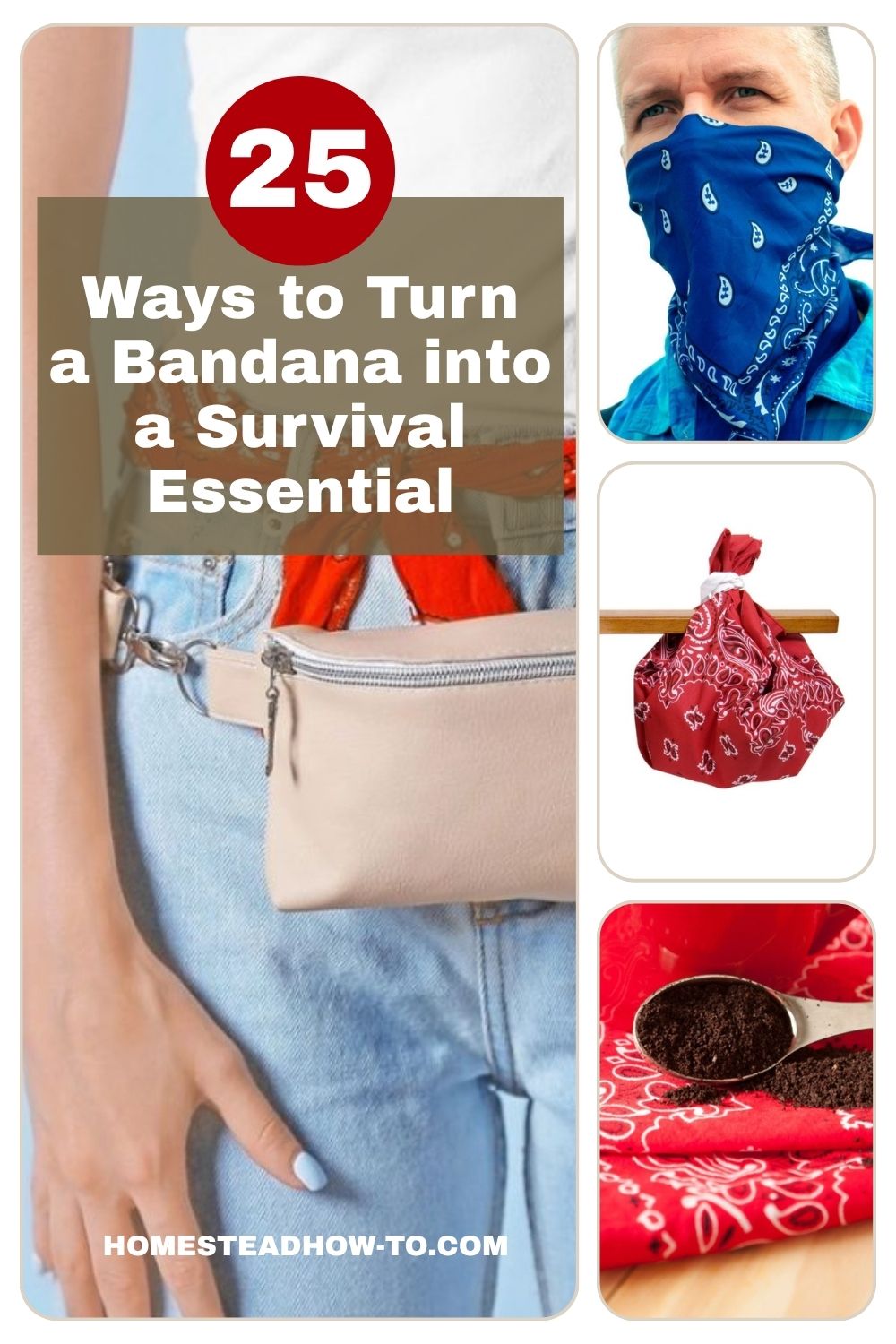

A bandana might not seem like essential survival gear, but it’s one of those simple things that can come in handy in more ways than you’d expect. It’s lightweight, inexpensive, and small enough to tuck into a pocket, backpack, or glove box without taking up much room.
Whether you’re camping, hiking, packing a bug-out bag, or just trying to be a little more prepared, it’s a good idea to have a few bandanas on hand. You can use them for everything from first aid and sun protection to carrying supplies and marking trails.
Here are 28 practical ways to use a bandana when you’re outdoors or in a survival situation.
1. Strain Debris From Water
Fold a clean bandana into several layers and pour water through it to remove leaves, sand, and other visible sediment.
Keep in mind that this doesn’t make the water safe to drink. You’ll still need to boil, disinfect, or properly filter it to remove harmful microorganisms.
2. Make an Arm Sling
If someone injures their arm, a bandana can work as a temporary sling until they can get medical attention. Fold it into a triangle and use it to support the injured arm against the body.
For serious injuries, avoid unnecessary movement and seek medical help.
3. Make Char Cloth:

If you have a 100% cotton bandana, you can turn a small piece into char cloth using a suitable metal container and a controlled heat source.
Char cloth catches sparks easily, making it useful for starting a fire with flint and steel. It’s a handy backup in your fire-starting kit, especially when dry tinder is hard to find.
4. Create a Signal Flag
A brightly colored bandana can make you easier to spot if you’re lost or waiting for help. Tie it to a tree branch, hiking pole, or backpack where rescuers might see it. You can also use strips of fabric as trail markers, but remove them afterward whenever possible.
5. Protect Your Head From the Sun

Spending hours outside without shade can leave your scalp, neck, and ears exposed to the sun. Tie a bandana around your head as a headband or scarf, or wear it as a neck wrap for a little extra coverage. It won’t replace sunscreen, but it can help protect you from sunburn.
6. Cover Your Face in Dusty Conditions

If you’re hiking along a dusty trail or working in a dry environment, a bandana can provide a basic barrier against larger particles.
Fold it over your nose and mouth to help reduce direct exposure to blowing dirt. Remember, a bandana isn’t a proper dust mask or respirator and won’t reliably protect you from smoke, fine particles, or dangerous airborne contaminants.
7. Hold a First Aid Dressing in Place
A clean bandana can help secure a sterile dressing over a minor injury.
For significant bleeding, apply firm, direct pressure with a clean dressing and seek emergency assistance. A regular bandana isn’t a reliable substitute for a commercial tourniquet.
8. Carry Small Supplies

Need to gather berries, nuts, or small pieces of gear? Spread out a bandana, place your items in the middle, and tie the corners together.
It makes a convenient temporary bag when you don’t have an extra container available. Only gather wild foods you’re certain are safe to eat.
9. Make Temporary Cordage
Cut or tear a bandana into long strips, then twist or braid them to make temporary cordage.
It’s useful for tying lightweight supplies together, securing loose gear, or making simple camp repairs. Just don’t rely on it for anything that needs to support significant weight.
10. Make a Simple Sling
Tie a bandana around a small object to make a basic carrying sling or pouch. It’s useful for transporting awkward items. Avoid using it as a weapon, since improvised slings can be unpredictable and dangerous.
11. Handle Warm Cooking Gear
A dry, folded bandana can offer some protection when handling warm cookware around camp.
However, thin cotton can transfer heat quickly and may scorch or catch fire. Use proper heat-resistant gloves for hot pots, pans, and anything near an open flame.
12. Make a Cooling Neck Wrap

On a hot day, soak a bandana in cool water and wrap it loosely around your neck. As the water evaporates, it can help you feel cooler. You can also wear it around your forehead to help manage sweat while hiking or working outside.
13. Add Padding Under Gear Straps
Backpack straps, belts, and other pieces of gear can rub against your skin after a long day outdoors.
Fold a bandana and place it under the irritating strap for temporary cushioning. Don’t put padding under a medical tourniquet; apply it according to its instructions.
14. Protect Blisters and Sore Spots
If your boots or backpack are causing friction, a folded bandana can provide temporary padding. Use it between the problem area and your gear to help reduce rubbing. For a blister or open wound, a proper first-aid dressing is a better choice.
15. Scoop Small Items From Shallow Water
Stretch a bandana between your hands or attach it loosely to two sticks to make a temporary scoop.
It can help you retrieve small objects from shallow water or collect debris near the shoreline. The fabric isn’t strong enough to replace a proper fishing net, but it may be useful in a pinch.
16. Cover Reflective Gear
If you need to reduce glare from shiny equipment, a dark or neutral-colored bandana can help. Wrap it around reflective surfaces on your pack or other gear. This also helps protect items from scratches during transport.
17. Make an Emergency Diaper
A clean bandana can serve as a temporary diaper cover or absorbent layer if you run out of supplies.
It’s not an ideal replacement for a regular diaper, but it may help in an emergency until you can get proper supplies. Change it promptly when wet or soiled to avoid irritating the baby’s skin.
18. Secure Small Shelter Materials
If you’re building a temporary shelter, strips of bandana fabric can tie lightweight branches or other materials together.
They’re useful for small repairs or for holding a tarp edge in place when you don’t have cordage. For larger shelters, stronger rope or paracord is a better choice.
19. Make a Warm Compress
Soak a clean bandana in comfortably warm water, wring it out, and place it over sore muscles.
A warm compress can temporarily relieve minor muscle stiffness. Avoid using hot water that could burn your skin, and don’t apply heat to a fresh injury with significant swelling.
20. Use It as a Trail Washcloth

A bandana can double as a washcloth, dish rag, or reusable napkin when you’re camping.
It’s also useful for wiping down gear, drying your hands, or cleaning up small spills. Keep a separate bandana for personal hygiene and wash it thoroughly after use.
21. Wrap a Water Bottle
Wrapping a damp bandana around your water bottle can provide a little evaporative cooling in hot, dry conditions.
In cooler weather, a dry bandana can provide a small amount of insulation, although it won’t prevent water from freezing in very cold temperatures.
22. Soften a Flashlight’s Light
If your flashlight or headlamp is too bright inside a tent, a light-colored bandana can help diffuse the beam.
Keep the fabric away from hot bulbs and vents, and only use this with cool-running LED lights. Never cover a light that becomes hot during use.
23. Help Keep Bugs Away
A bandana can provide some physical coverage around your neck and ears when insects bother you.
You can also use an insect repellent specifically labeled for clothing, following the manufacturer’s directions. Avoid soaking a bandana in concentrated essential oils, especially if it will touch your skin.
24. Make a Small Bait Pouch
If you’re fishing, you can tie small pieces of bait inside a bandana to make a temporary pouch. This helps contain bait while you prepare your fishing setup. Keep in mind that fabric may retain odors, so it’s best to use a bandana dedicated to fishing rather than one you also use for food or first aid.
25. Make a Temporary Belt

If your belt breaks while you’re hiking or working outdoors, a bandana can help keep your pants in place. Fold it into a long strip, thread it through your belt loops, and tie it securely. It’s a simple fix that can save you some frustration until you get home.
26. Use It as a Sweat Rag
A bandana makes a great reusable sweat rag when you’re hiking, gardening, or doing physical work outside. Keep one tucked in your pocket or tied to your backpack so you can grab it easily when you need it.
27. Secure a Makeshift Splint
A bandana can help hold a padded splint in place if someone has a suspected broken or injured limb.
Tie it gently around the splint without restricting circulation, and avoid moving the injured area unnecessarily. This is only a temporary first aid measure until proper medical care is available.
28. Keep Your Hair Out of Your Face

Sometimes the simplest uses are the most helpful. Tie a bandana around your head (like a headscarf) to keep your hair out of your eyes while you build a fire, prepare food, garden, or work around camp. It can also help keep sweat from running down your forehead.