
Coconut oil has become increasingly popular recently, but how do you cook with it? And is it as healthy as people claim?
Cooking with
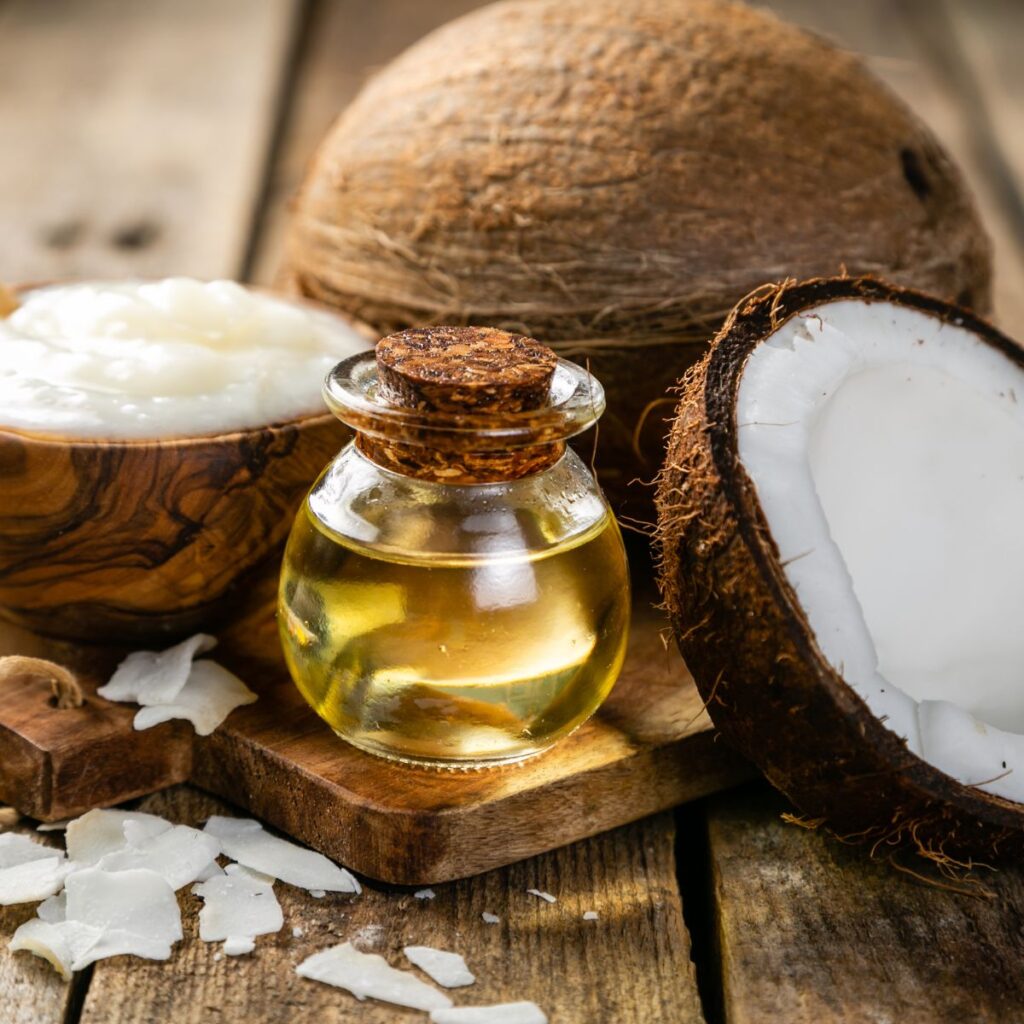
What is Coconut Oil ?
Coconut oil is oil pressed from the meat and liquid of coconuts. The word coconut is a misnomer, as coconuts are not nuts but drupes or fruits containing a single seed (like peaches). The seed of a coconut is the part we eat, lined with white, flaky “meat” and filled with the liquid we call coconut water.
Because coconut oil contains as much as 90% saturated fat, it is stable, resisting oxidation and rancidity, and typically remains solid at room temperature. It has a melting point of about 78 degrees Fahrenheit, so it might become liquid on warm summer days.
Coconut oil typically tastes like coconut and adds a very mild coconutty flavor to whatever you cook it with. It makes popcorn taste gourmet and takes black bean brownies to the next level. It’s also great in homemade granola.

Don’t confuse
Refined vs. Unrefined
When shopping for coconut oil, you may have encountered terms like refined, unrefined, virgin, expeller-pressed, and cold-pressed. The options can be dizzying! So, what does all of this mean?
Refined
Unlike olive oil, no regulations surround the terms “virgin” and “extra virgin” for
You will most likely want unrefined
How to Store Coconut Oil
As with most cooking oils, store

Use Coconut Oil in Moderation
Coconut oil may not be the superfood it’s touted as, but don’t purge it from your pantry yet. According to Ohio State University, moderation is the key to including
Extra virgin olive oil is a great alternative to
While
Tips for Cooking with Coconut Oil
- Coconut oil can be used as a one-to-one substitute for other cooking oils, but you will get the best results if you keep a few things in mind.
- Unrefined
coconut oil can be used in most cooking applications, such as baking and medium-heat sautéing. But refinedcoconut oil , with its high smoke point, will hold up better for high-heat cooking. - When you pull your
coconut oil out of the cabinet in the middle of summer, it may be liquid. If this happens and you need solid oil for your recipe, measure the required amount and put it in the fridge until it solidifies again. - Conversely, solid
coconut oil quickly melts for uses that require liquid fat; place it in a saucepan over low heat or stick it in the microwave for a few seconds. Ensure your other ingredients are at least room temperature; otherwise, the coconut oil will solidify again as soon as you pour it in. - When using
coconut oil instead of butter or shortening, measure out 1/4 lesscoconut oil than the amount of fat called for in the recipe. Coconut oil has a higher fat content, meaning you need less. Note also that it may affect the texture of baked goods, especially those that use butter and not oil. Feel free to experiment, but your best bet for baking is to find a recipe explicitly asking forcoconut oil . - Use
coconut oil in dishes with flavors it will complement, such as stir-fries, curry, or even a simple fried egg over leftover rice. It also adds a different flavor to sautéing veggies for soups or other dishes, like gingery squash soup. - Coconut oil enhances the flavor of recipes that call for coconut milk.
- Because
coconut oil is typically solid at room temperature, it works well for desserts that do not require baking, such as truffles and no-bake cookies. Although it might make baked cookies crispy, it’s great for baked desserts that call for oil, like brownies. Of course, it also adds a nice, subtle coconut flavor to these sweet treats! - If you pop popcorn on the stovetop or in a stir-stick popper, use coconut oil as the popping oil. The popcorn will be so delicious you won’t need to add any butter.
- Coconut oil can also be used in homemade nut butters that need a little extra creaminess (and naturally sweet flavor) or as a vegan butter alternative on toast. If you’re not vegan, spread
coconut oil on a slice of toast anyway and drizzle some honey on top. Yum!
15 Ways to Use Coconut Oil

- Add it to popped popcorn
- Make no-bake cookies
- Use it in quick breads.
- Make sweets, like this toasted coconut pound cake
- Coconut rice is delicious
- Use it for pancakes instead of oil
- Add to granola
- Make crispy brownies
- Add a touch of coconut flavor to roasted vegetables
- Fry eggs
- Add to coffee
- Stir a spoonful in a hot soup
- Add a tablespoon to your morning smoothie
- Use in curries
- Use it in vegan mashed potatoes instead of butter
These are just a few ideas for using this oil in the kitchen. You can also use it as a skin moisturizer, scrub, hair conditioner, and even a makeup remover in your beauty routine.
Mistakes when Cooking with Coconut Oil
When you first start cooking with
- First, make sure you have the correct product. That jar in your hand should say “coconut oil,” not “coconut butter.” The two are not interchangeable. One is a cooking oil, while the other is a spread more akin to peanut butter.
- You also want to ensure you use the right amount of
coconut oil . While it can be substituted one-for-one with other cooking oils, the same is not true when swapping out butter or shortening. Butter has a higher water content thancoconut oil , so use a quarter lesscoconut oil than the amount of butter called for. - Pay attention, too, to whether the recipe calls for a liquid or solid fat. Use solid
coconut oil instead of cold butter or shortening and liquidcoconut oil instead of vegetable oil or melted butter. And remember to let your other ingredients warm to room temperature if you need liquid oil! Otherwise, you’ll have a lumpy batter. - Similarly,
coconut oil is not a good choice for homemade salad dressing, as it can solidify and make your vinaigrette chunky (ew). - Finally, don’t use unrefined
coconut oil for deep-frying. It has a lower smoke point than what is required for the high temperatures of deep-frying, which means you might end up with a smoky kitchen and a screaming fire alarm.
Coconut is easy to use in the kitchen and fun to experiment with. The more you use it, the more intuitive it becomes.
While
Other posts you might like using coconut: Roasted Butternut Squash Soup
FAQ
Should I refrigerate coconut oil after opening it?
Refrigerating this oil is unnecessary, but you must keep it in a dark place under 75 degrees Fahrenheit.
Why did my coconut oil turn into liquid?
If the temperature in your storage space is above 75 degrees,
How do I know coconut oil has gone bad?
Coconut oil is usually dull white. If it turns green or yellow or has gray spots, it’s time to get rid of it.
This article originally appeared on Pink When.

Adriana Copaceanu
Adriana is a nature lover living her dream life in rural Virginia, on a 3.5 acre lot, and the founder ofBackyard Garden Lover. A large vegetable garden, a small flock of chickens, a patch of lavender flowers, and a wildflower meadow in front of her house keep her on her toes most of the year.