Grandpa always seemed to have a solution for whatever needed fixing around the house. A squeaky door, a rusty bolt, or a stubborn lock usually meant a quick trip to the garage, where a can of WD-40 was always within reach.
Back then, people didn’t always rush out to buy a different product for every little household problem. They used what they already had, and WD-40 was one of those dependable staples.
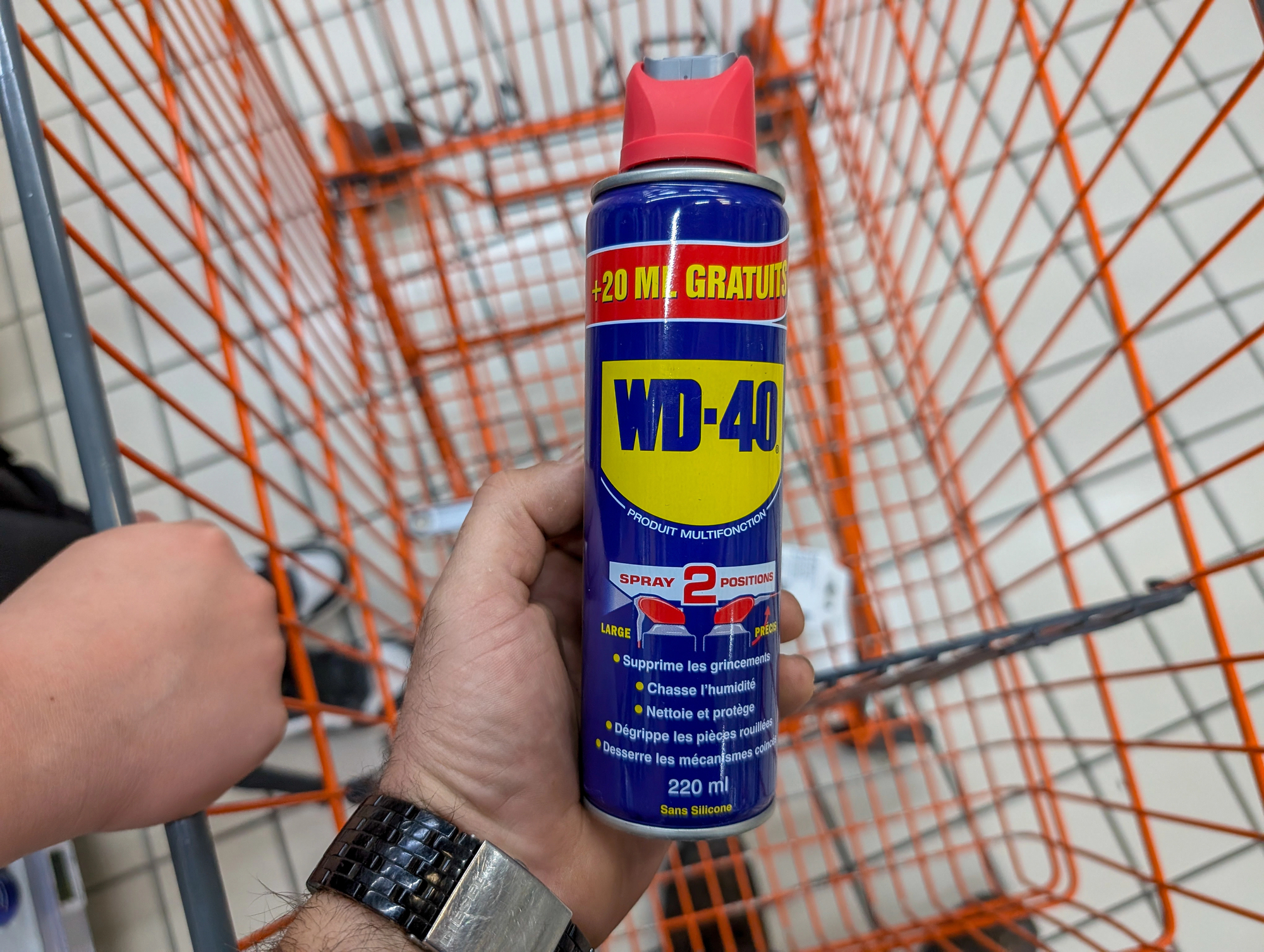
As it turns out, some of those old-school tricks are still useful today. Here are 14 ways to put that familiar blue-and-yellow can to work around your home, garage, and yard.
1. Remove Stubborn Stickers, Labels, and Tape Residue
Ever tried peeling a price sticker off a glass jar only to be left with a sticky mess? WD-40 can help loosen adhesive from stickers, tape, and old labels on compatible glass and metal surfaces, making the residue easier to wipe away. Test on a small area first, then wash treated items thoroughly afterward.
2. Quiet Squeaky Doors and Sticking Drawer Slides
That annoying squeak every time someone opens a door doesn’t always mean the hinges need replacing. A little WD-40 can help reduce friction and loosen grime on metal hinges and drawer slides. Wipe away the excess and use a dedicated lubricant if the problem keeps returning.
3. Loosen Rusty Nuts, Bolts, and Hose Connections
Rust can make even simple household repairs frustrating, especially when bolts or outdoor hose fittings haven’t moved in years. WD-40 can help loosen light corrosion around metal threads, making stubborn connections easier to separate. Let it penetrate before applying gentle pressure, and avoid using it on drinking-water connections.
4. Remove Crayon Marks From Certain Surfaces
If you’ve ever discovered a colorful masterpiece on a wall that wasn’t supposed to be an art project, you know how stubborn crayon marks can be. WD-40 may help loosen waxy residue on some washable surfaces, making it easier to wipe away. Always test a hidden spot first, since it can stain or damage certain paints and finishes.
5. Remove Paint Transfer and Road Tar From Your Car
Light paint transfer and sticky road tar can make your vehicle look worse than it is. WD-40 may help soften superficial residue on compatible exterior surfaces so you can gently wipe it away. Test the finish first, avoid aggressive rubbing, and wash the area afterward.
Related: 17 Survival Uses for Hydrogen Peroxide You’ve Likely Never Considered
6. Loosen Stuck Spark Plugs
Spark plugs can become difficult to remove after years of exposure to heat, moisture, and corrosion. WD-40 may help loosen light corrosion around accessible metal threads, although badly seized plugs often require a dedicated penetrating oil. Always work on a cool engine and avoid forcing a plug that won’t turn.
7. Remove Dried Bugs From Your Car
After a long road trip, the front of your car can end up covered in dried insects that won’t come off with an ordinary rinse. A small amount of WD-40 may help soften stubborn residue on compatible exterior surfaces. Apply it carefully with a cloth, then wash the area with automotive shampoo.
Related: 19 Winter Survival Items Every Car Should Have Before the Next Snowstorm
8. Free Up Rusty Padlocks and Outdoor Gate Latches
Outdoor locks and gate latches take a beating from rain, humidity, and changing temperatures. WD-40 can help displace moisture and loosen minor corrosion around metal mechanisms that have become difficult to move. Apply a small amount, work the mechanism gently, and follow up with an appropriate lubricant if needed.
9. Remove Chewing Gum From Hard Surfaces
Stepping in chewing gum is bad enough, but getting it off the bottom of your shoe can be even more annoying. WD-40 can help loosen sticky gum from compatible hard surfaces, making it easier to lift away with a plastic scraper. Clean the area afterward and avoid using it on skin, hair, or delicate fabrics.
10. Clean Fingerprints From Stainless Steel
Stainless steel appliances seem to attract fingerprints almost as quickly as you wipe them away. A tiny amount of WD-40 on a microfiber cloth can help remove greasy smudges from some stainless steel surfaces. Check the manufacturer’s care instructions first, especially for coated finishes, and avoid food-contact areas.
11. Clean and Protect Metal Tools
Garden tools, wrenches, and other metal equipment can collect grease, grime, and moisture after regular use. WD-40 can help loosen stubborn buildup while leaving a temporary protective film that helps prevent rust. Wipe away excess product and keep it off handles or surfaces that need to remain slip-free.
12. Loosen Stuck Metal Zippers
A zipper that refuses to budge can make an otherwise perfectly good bag or piece of equipment frustrating to use. A tiny amount of WD-40 may help free a sticking metal zipper, particularly when grime or corrosion is involved.
13. Remove Scuff Marks From Hard Floors
Dark scuff marks from shoes or furniture can be surprisingly difficult to remove from certain hard floors. WD-40 may help loosen rubber marks on compatible sealed surfaces, making them easier to wipe away.
14. Free Up Stiff Garden Tools
Pruning shears, loppers, and other garden tools can become difficult to operate when sap, dirt, and moisture collect around their moving parts. WD-40 can help loosen buildup around metal joints, so they’re easier to clean and move.