Planting a tree can feel like a long-term investment in your yard. You get shade, privacy, color, and something that grows more beautiful over time. But some trees come with problems people don’t think about until years later, such as cracked sidewalks, roots pushing into pipes, nonstop debris, or branches that become difficult to manage.
A tree that looks great at the garden center can turn into a constant headache once it starts spreading. Some grow far too large for a typical yard. Others steal sunlight from everything around them or send roots through lawns, driveways, and nearby garden beds.
Before you plant anything new, it helps to know which trees tend to create more trouble than they’re worth. Here are 11 trees that many homeowners end up regretting planting in their yard.
Mimosa (Albizia julibrissin)
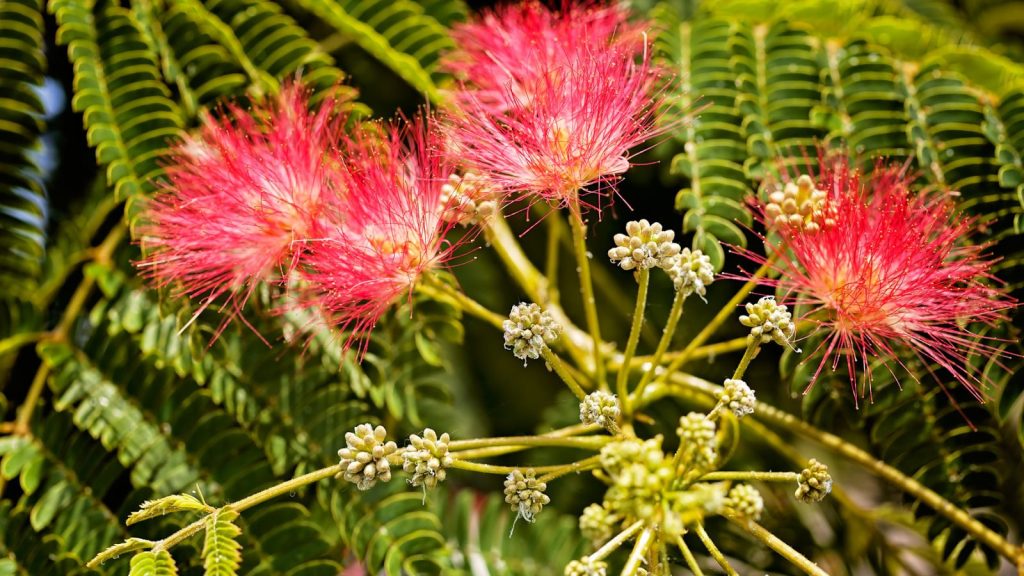
Mimosas are often introduced to yards and gardens as ornamental trees, but they spread rapidly through root sprouts and are considered invasive in many areas.
Hackberry (Celtis occidentalis)

Hackberry trees attract pests like the hackberry psyllid, which creates unsightly leaf galls and can infest homes. The trees also attract woolly aphids that feed on the leaves, dripping sticky honeydew onto the ground below.
Black Walnut (Juglans nigra)

Black walnuts are magnificent trees that can be a great addition to a large yard or garden. Unfortunately, they produce a substance called juglone, which is toxic to a vast number of other plant species. To plant this tree, careful planning is required to find plants and trees that will happily grow near it.
Related: 15 Plants That Get Along Great with Black Walnuts
Mulberry (Morus spp.)

Mulberry trees grow rapidly, quickly crowding out the surrounding flora in your yard. They also produce an abundance of messy fruits that stain driveways and cars. Some types of mulberry are classed as invasive in certain states, and attempts are being made to eradicate them.
Silver Maple (Acer saccharinum)

Silver maples, also known as sugar maples, are fast-growing trees with aggressive root systems that can damage sidewalks, foundations, and septic systems. Additionally, their wood is brittle and prone to breaking during storms, posing a risk to property.
Related: How to Tap a Maple Tree for Syrup
Bradford Pear (Pyrus calleryana)

Bradford pear trees are notorious for their unpleasant-smelling fruits – not what you want in your lovely garden or yard! They also have a weak branch structure that splits and breaks during storms.
Tree of Heaven (Ailanthus altissima)

Despite the celestial name, the Tree of Heaven should be avoided in your backyard! It is highly invasive, producing numerous seeds that spread rapidly, and is difficult to remove once established.
Siberian Elm (Ulmus pumila)

Siberian elm trees are highly invasive, growing quickly and outcompeting all other plants in your yard. Reaching heights of up to 60 feet, the weak wood breaks easily and can cause property damage.
Norway Maple (Acer platanoides)

Norway maple trees have dense canopies that block sunlight, inhibiting the growth of other plants beneath them. These invasive trees were often planted in urban areas but have since spread into woodlands, displacing local tree species.
Eucalyptus (Eucalyptus spp.)

Eucalyptus trees grow incredibly quickly, up to 6-8 feet per year. They are tough to eradicate once established and their highly flammable leaves create a high fire risk.
Poplar (Populus spp.)

Poplar trees will grow up to 8 feet per year, quickly reaching heights of 50-100 feet. Their aggressive root systems can cause significant damage to sidewalks, driveways, and plumbing systems.
12 Plants to Grow Alongside Your Blueberry Bushes to Keep Them Happy

Planting the right companion plants near blueberry bushes can help to ensure successful fruiting. Here are some plants that you should grow alongside blueberry bushes to help them thrive.
12 Plants to Grow Alongside Your Blueberry Bushes to Keep Them Happy
28 Budget-Friendly Front Yard Ideas for Stunning Curb Appeal

Improving your home’s curb appeal not only presents well but can also boost your home’s value. Here are 28 to give your front yard the attention it deserves and transform it into a beautiful and inviting space you can be proud of.
28 Budget-Friendly Front Yard Ideas for Stunning Curb Appeal
19 Stunning Red Flowers to Add Bold Color to Your Garden

Adding red flowers to your garden introduces vibrant pops of color, creating a warm and lively atmosphere. Here’s a list of 19 varieties to brighten your garden, bringing in the perfect touch of spring and summer cheer.