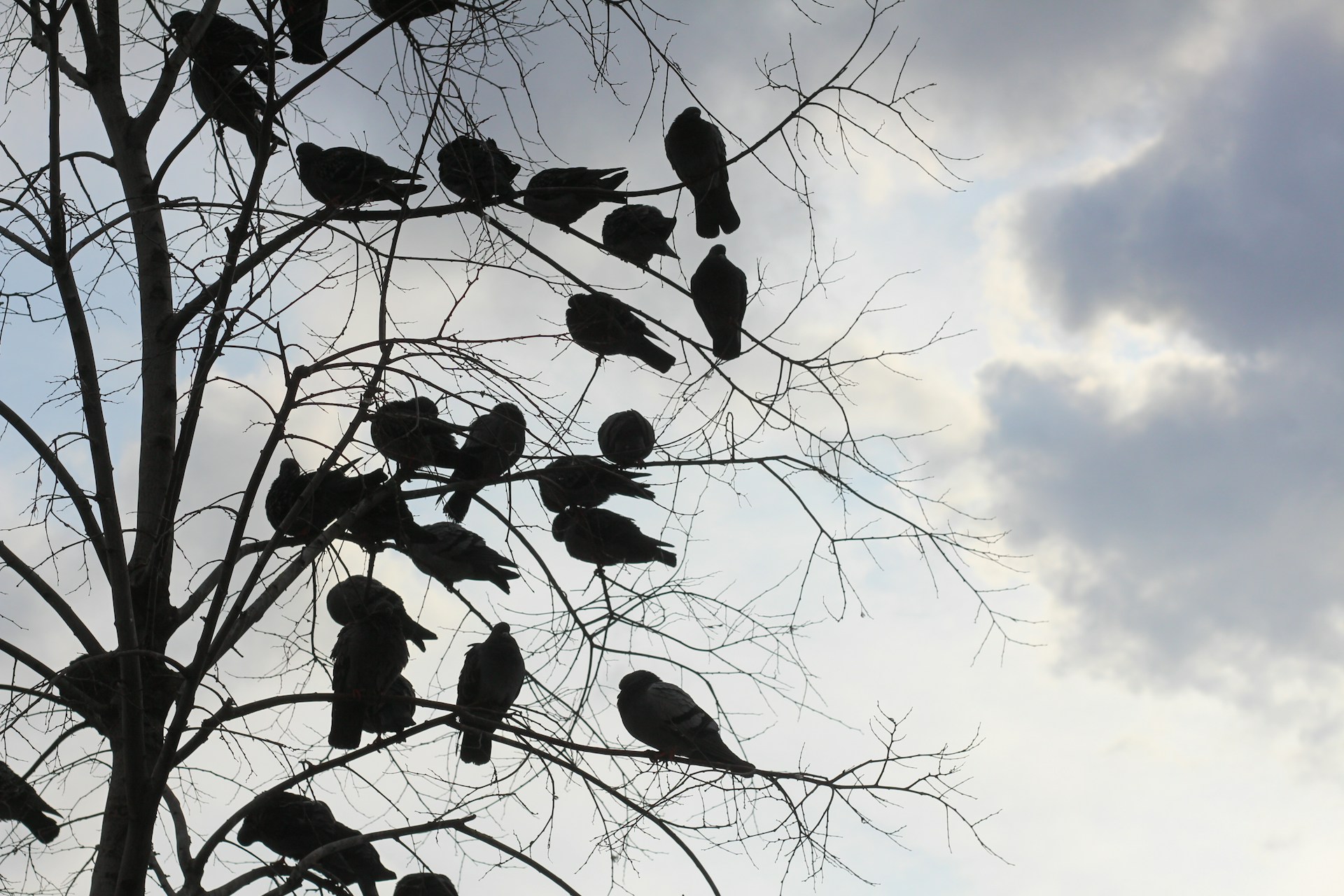
Imagine looking outside one afternoon and finding that your trees are suddenly filled with hundreds of black birds. They’re perched on branches, making all kinds of noise, and before you know it, the entire flock takes off together, practically darkening the sky.
It’s quite a sight, especially if you’ve never seen it happen before. You might even wonder if something unusual is going on or why the birds have suddenly gathered around your home.
As it turns out, this behavior is fairly common, particularly during fall and winter. According to wildlife researchers and university experts, large gatherings of blackbirds, starlings, grackles, and other dark-colored birds are often connected to seasonal changes, food availability, and safety.
Here’s what’s happening when these birds suddenly show up in large numbers.
They’re gathering for protection
One of the biggest reasons birds gather in large flocks is safety. A bird flying or resting alone can be an easier target for predators, but hundreds or thousands of birds together present a much bigger challenge.
According to the University of Delaware, large flocks can make it difficult for predators to single out an individual bird. With so many birds moving together, predators can become confused, while each bird may have a lower chance of being attacked.
Being part of a large group also means individual birds don’t have to spend quite as much time watching for danger. So while the gathering might look chaotic from your backyard, it has a practical reason.
Your trees may have become their overnight resting spot
If the birds tend to arrive in the late afternoon or around sunset, they may be gathering to settle down for the night.
This behavior is called communal roosting, and some species return to the same general resting areas night after night. During the day, birds spread out to search for food before regrouping in trees and other sheltered locations as evening approaches.
University of Missouri Extension explains that blackbirds, grackles, cowbirds, and starlings can form enormous winter roosts. Some contain thousands of birds, while particularly large gatherings can reach into the millions.
If your neighborhood has plenty of mature trees or thick evergreens, the birds may have found a comfortable place to spend the night.
The changing seasons are bringing them together
You might notice these large gatherings more often as summer ends and temperatures begin to drop. That’s because many birds change their behavior after breeding season, when they become less territorial and begin spending more time in groups.
Some species also migrate as temperatures change, joining other birds along the way. Others remain in the same general region but gather in much larger numbers during the colder months.
According to Kansas State University, blackbirds and starlings begin forming communal roosts after nesting season. As leaves fall from deciduous trees, some flocks move into evergreens and other sheltered areas where they can find better protection.
That means the sudden appearance of hundreds of birds could simply be part of their normal seasonal routine.
They may have found a reliable food source nearby
Sometimes the explanation is as simple as food. Blackbirds and other flocking species spend much of their day searching for seeds, grains, insects, and other available food.
A neighborhood near open fields, agricultural land, or other feeding areas may attract large numbers of birds. They can also discover backyard bird feeders and return repeatedly when food is easy to find.
Gathering in flocks may help blackbirds locate food more efficiently because they can benefit from information shared within the group.
If you’ve noticed birds gathering in your trees before moving down to the lawn or nearby fields, they may be using the branches as a temporary gathering place between feeding trips.
Those hundreds of birds may not all be the same species
From a distance, a large flock of dark-colored birds can look like hundreds of identical blackbirds. But take a closer look, and you might discover several different species traveling or resting together.
Red-winged blackbirds, common grackles, brown-headed cowbirds, and European starlings frequently gather in mixed flocks, especially outside the breeding season.
Red-winged blackbirds commonly join other species in large fall and winter gatherings. These flocks can feed across open areas during the day before returning to communal roosts at night.
Crows also gather in large groups, although their communal roosting behavior is separate from the mixed blackbird and starling flocks commonly seen during winter.
Should you be concerned if hundreds of birds gather in your yard?
For the most part, seeing a large flock of birds in your trees is a normal wildlife occurrence and isn’t necessarily a reason for concern. Many gatherings are temporary, and the birds may eventually move on as feeding conditions or seasonal patterns change.
However, large flocks can create problems if they regularly use the same trees around a home. Noise, accumulated droppings, and unpleasant odors can become an issue, particularly when hundreds of birds return night after night.
If birds are creating a persistent problem, consider contacting a local wildlife agency or extension office before attempting to move them. Different species have different legal protections, and disturbing an active roost may require special precautions.
What should you do when a huge flock suddenly appears?
In most cases, the best thing to do is simply observe the birds and give them space. Large flocks can be fascinating to watch, especially when hundreds of birds take flight together or settle into trees just before sunset.
Pay attention to when they arrive, how long they stay, and whether they return the following evening. If they consistently appear around dusk, your trees may be part of a communal roost or a nearby gathering area.
And while hundreds of black birds suddenly filling your backyard might seem a little unsettling, there’s usually a perfectly natural explanation. They’re likely looking for food, protection, or a safe place to rest as the seasons change.