There’s something special about spotting a bright red bird in your yard. Against green leaves, bare branches, or a snowy landscape, that flash of color is almost impossible to miss. It’s often the kind of sight that makes you stop what you’re doing for a moment just to watch.
In many bird species, the males wear the brightest feathers, while the females have softer, earth-toned coloring that helps them blend into their surroundings. Those vivid reds aren’t just beautiful, they also signal good health and help attract mates during breeding season.
Whether you keep a backyard feeder, enjoy gardening, or simply like watching birds from the porch, these colorful visitors make every day a little more interesting. Here are 15 stunning red birds you might be lucky enough to see.
1. Northern Cardinal (Cardinalis cardinalis)
The Northern Cardinal is probably the first bird that comes to mind when people think of bright red birds. Male cardinals are covered in brilliant red feathers from crest to tail, making them one of the easiest birds to recognize. Their black face masks only make the red stand out even more.
Females look quite different, with warm brown feathers highlighted by touches of red on the wings, tail, and crest.
Cardinals stay in many parts of the United States year-round, so they’re regular visitors to backyard feeders. Black oil sunflower seeds are one of their favorites, and once they discover a reliable food source, they often return every day.
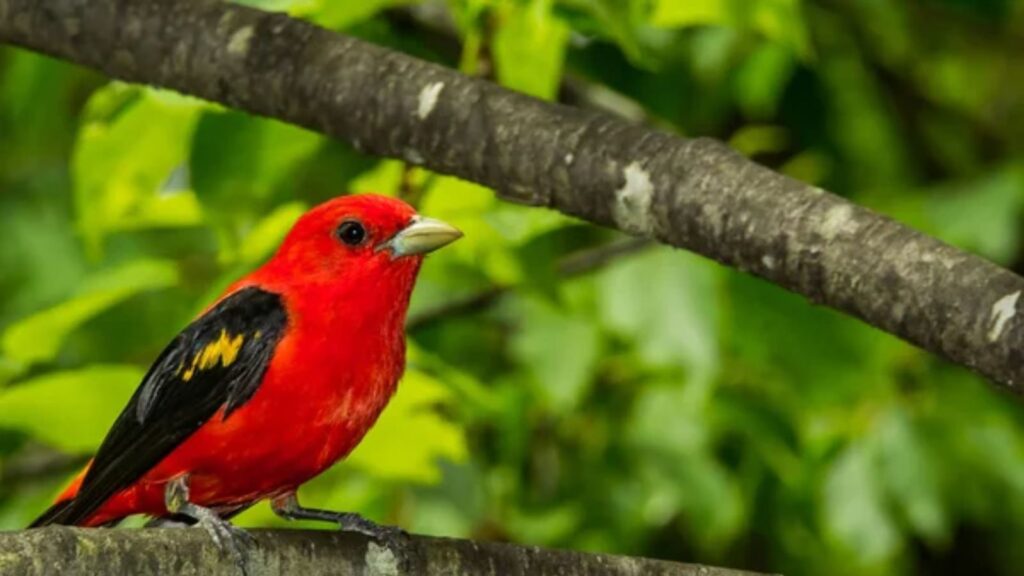
2. Scarlet Tanager (Piranga olivacea)
Few birds can match the striking appearance of a male Scarlet Tanager during breeding season. Its bright scarlet body paired with jet-black wings creates one of the most dramatic color combinations in North American birds.
Outside the breeding season, males lose much of their red coloring and resemble females, wearing olive-yellow feathers with darker wings.
Scarlet Tanagers spend summers nesting in forests across North America before returning to South America for winter. If your yard borders mature woodland, you may catch a glimpse of one during migration.
3. Summer Tanager (Piranga rubra)
Unlike the Scarlet Tanager, the male Summer Tanager is red from head to tail without any black markings. The rich cherry-red coloring makes this bird stand out wherever it lands.
Females wear golden-yellow feathers that blend nicely with tree leaves.
Summer Tanagers are often found in open woodlands with oak trees, though they’ll sometimes stop by gardens with fruit feeders. Orange slices and bananas can tempt them into making a visit.
4. House Finch (Haemorhous mexicanus)
House Finches have adapted extremely well to life around people. They’re common in neighborhoods, parks, and suburban gardens, where they happily visit feeders throughout the year.
Male House Finches display shades of red across the head, chest, and upper body, though the exact color varies from bird to bird. Some appear raspberry red, while others have orange or yellowish-red tones. Their coloring comes from pigments in their diet.
Females lack the red coloring altogether and instead have brown, streaked plumage that provides excellent camouflage.
5. Pine Grosbeak (Pinicola enucleator)
Pine Grosbeaks have a softer appearance than many of the birds on this list. Adult males are covered in rosy-red feathers that fade into gray wings and tails, creating a gentle, frosted look.
Their thick beaks are perfect for eating seeds, berries, and small fruits.
These birds usually stay in northern forests, though they sometimes move farther south during harsh winters. If you live in colder regions and have berry-producing trees or crabapples, you may be lucky enough to attract one.
6. Red-breasted Nuthatch (Sitta canadensis)
The Red-breasted Nuthatch earns its name from the rusty-orange feathers covering its chest and belly. Its blue-gray back, white face, and bold black eye stripe give it a distinctive appearance.
One of its most recognizable habits is climbing headfirst down tree trunks, something few other birds regularly do.
These energetic birds enjoy sunflower seeds, peanuts, and suet, especially during winter. They often nest in tree cavities and even seal the entrance with sticky tree sap.
7. Cassin’s Finch (Haemorhous cassinii)
Cassin’s Finch isn’t as brightly colored as a cardinal, but the male’s rosy-red crown and chest are still beautiful to see.
Females are brown with heavy streaking, making them easy to confuse with female House Finches.
These finches are most common in mountain forests across the western United States. During winter, they sometimes move to lower elevations, where backyard feeders stocked with sunflower seeds can attract them.
8. Crimson-collared Tanager (Ramphocelus sanguinolentus)
The Crimson-collared Tanager looks almost like it’s wearing a bright red hood over a black body. The deep crimson head and chest contrast sharply with glossy black wings, back, and tail.
Native to Central America, these birds feed on fruit, insects, and seeds. In tropical gardens, they’re often drawn to fruit feeders and berry-producing shrubs.
9. Purple Finch (Haemorhous purpureus)
Despite its name, the male Purple Finch looks more raspberry red than purple. The color spreads across its head and upper body before fading into lighter streaks along the belly.
Females have brown-and-white streaks highlighted by a bold white eyebrow stripe.
Purple Finches prefer forests with plenty of conifers but will visit backyard feeders stocked with sunflower or safflower seeds.
10. Pyrrhuloxia (Cardinalis sinuatus)
Sometimes called the desert cardinal, the Pyrrhuloxia shares many features with the Northern Cardinal but has a much softer color pattern.
Its gray body is accented by patches of red on the face, crest, wings, and tail. Its thick yellow bill also helps separate it from its famous cousin.
These birds live in dry landscapes across the southwestern United States and northern Mexico. Feeders stocked with sunflower seeds or millet can sometimes draw them into yards.
11. Common Redpoll (Acanthis flammea)
Common Redpolls are small birds that thrive in cold climates. They often travel in flocks, feeding among birch and alder trees.
Both males and females wear a bright red patch on the forehead. Males often develop a soft pink wash across the chest during breeding season.
Nyjer seed feeders are especially attractive to these lively little finches.
12. Harris’s Hawk (Parabuteo unicinctus)
Harris’s Hawks aren’t bright red like many of the songbirds on this list, but their rich reddish-brown shoulders and body stand out beautifully in sunlight.
These large birds hunt cooperatively, something that’s unusual among hawks. They live in deserts, grasslands, and open country throughout the American Southwest.
If your property borders wide-open spaces, you may occasionally see one soaring overhead while searching for prey.
13. Vermilion Flycatcher (Pyrocephalus rubinus)
The Vermilion Flycatcher is one of the brightest red birds in the Americas. Adult males glow with vivid scarlet feathers that seem almost unreal in direct sunlight.
Females are much more subdued, with gray backs and salmon-colored underparts.
These birds prefer open fields, grasslands, and desert areas where they can perch quietly before darting out to catch flying insects.
14. Red-headed Woodpecker (Melanerpes erythrocephalus)
With its brilliant red head, black back, and crisp white body, the Red-headed Woodpecker is one of North America’s most striking birds.
Unlike many woodpeckers, it’s an excellent flyer and often catches insects in midair. It also stores food in tree cavities for later use.
If you have mature trees, offer suet, nuts, or fruit to increase your chances of attracting one.
15. American Robin (Turdus migratorius)
The American Robin is one of the country’s most familiar birds. While its breast is actually a rich orange-red rather than true red, it’s still one of the easiest birds to recognize.
Robins spend much of their time hopping across lawns searching for earthworms, though they also eat berries and other fruits throughout the year.
They’re among the earliest singers each morning and are welcome visitors in gardens across much of North America.