Few backyard visitors are as exciting to spot as hummingbirds. Their quick movements, bright colors, and ability to hover in place make them a favorite among gardeners and bird lovers alike.
One of the best ways to attract hummingbirds is by planting flowers that provide a steady source of nectar. Many perennials do exactly that, returning year after year while adding color and life to your garden. With the right mix of blooms, you can create a space that hummingbirds will want to visit throughout the growing season. Here are 19 perennials that can help bring more hummingbirds to your yard.
Honeysuckle

Honeysuckle is an excellent choice for attracting wildlife and hummingbirds. It thrives in various conditions but does best in full sun and soil enriched with organic matter.
Penstemon (Penstemon spp.)

Penstemon, particularly the red-flowering varieties, is essential for a hummingbird garden. Its tubular flowers are ideally shaped for hummingbird feeding.
Black Eye Susan

Black-Eyed Susans, with their striking yellow flowers, are hardy and adapt well to various conditions. Butterflies, bees, and hummingbirds are attracted to these flowers.
Blazing Star
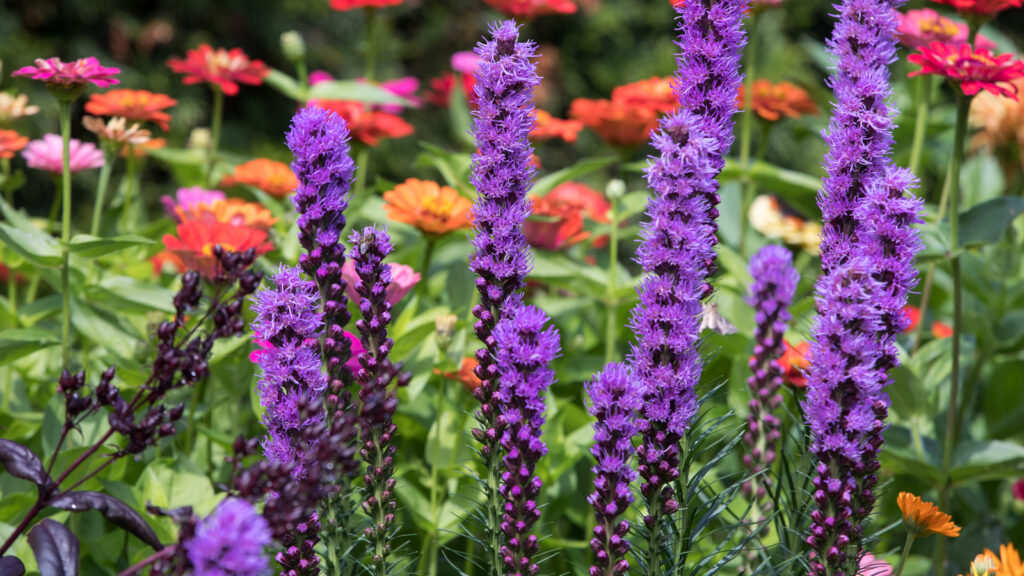
The tall spikes of purple flowers on the Blazing Star make it a standout attraction in the garden. This plant thrives in sunny spots and well-drained soil, adding a striking vertical element while providing nectar for visiting butterflies and hummingbirds.
Echinacea

Echinacea is a resilient plant that thrives in the sun and requires little care. It’s excellent for attracting butterflies and hummingbirds. Plus, it’s attractive and continues to bloom for an extended period.
Bleeding Heart (Lamprocapnos spectabilis)
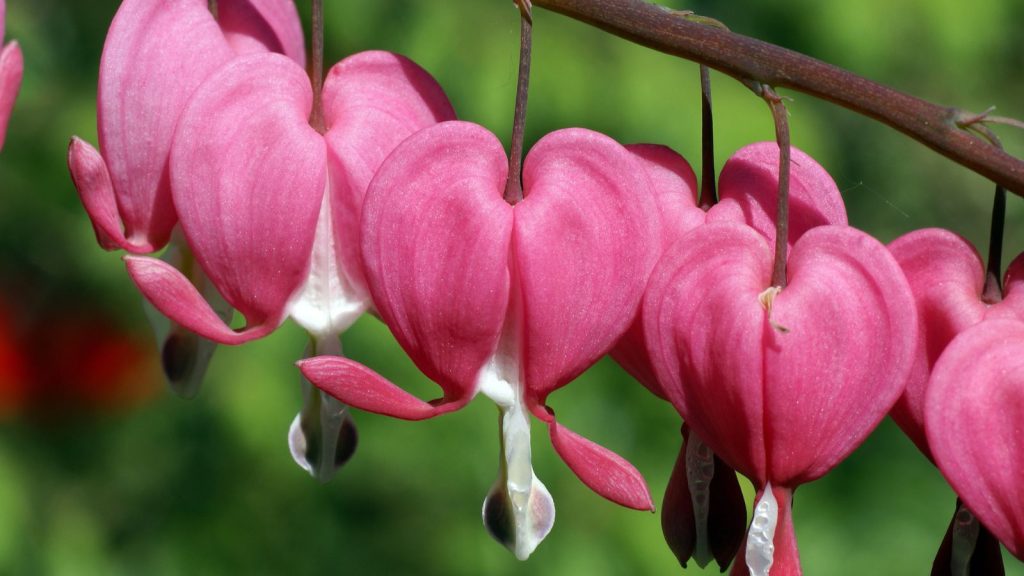
Bleeding Heart is an enchanting perennial that produces delicate, heart-shaped flowers along gracefully arching stems. These unique blossoms, typically pink with white tips, bloom in late spring, adding an elegant charm to shady garden spots.
This plant prefers rich, well-draining soil that remains consistently moist, making it ideal for woodland gardens or shaded borders. A
Catmint

Catmint produces beautiful flowers throughout the summer. It’s easy to grow, drought-tolerant, and thrives in full sun to partial shade. Deer despise the smell, but hummingbirds love them.
Delphinium

Delphiniums are known for their tall spikes of rich blue flowers, which add a dramatic vertical touch to garden borders. They are also excellent at attracting hummingbirds to your garden. These plants thrive in full sun and rich, well-drained soil and require regular watering and staking.
Lavender

With its rich purple color and comforting scent,
Daylily (Hemerocallis)

Daylilies are popular in gardens, offering a range of yellow hues from light to deep golden. These low-maintenance plants thrive in both full sun and partial shade, and hummingbirds are fond of them. As perennials, daylilies come back every year, becoming stronger and producing more flowers over time.
Agastache

Agastache is a favorite among bees, hummingbirds, and butterflies. It features tall spikes of fragrant purple, pink, and orange flowers. Agastache requires full sun and well-drained soil. This plant is fairly pest-free and will bloom through the summer.
Bee Balm

Bee balm is notorious for repelling mosquitoes and attracting butterflies, bees, and hummingbirds. As a member of the mint family, it spreads easily and produces abundant blooms.
Columbine (Aquilegia Canadensis)

Columbine is a perennial with bright flowers contrasting against dark, clover-shaped leaves. Available in various colors, including two-tone, its unique bell-shaped flowers with five spurs catch the eye. Ideal for slopes, ledges, or open garden spaces, Columbine adds beauty, attracts wildlife, and deters deer.
Butterfly Bush

True to its name, the butterfly bush is a magnet for butterflies, but it also attracts hummingbirds. Its long, fragrant flower spikes come in various colors, offering a rich nectar source for pollinators.