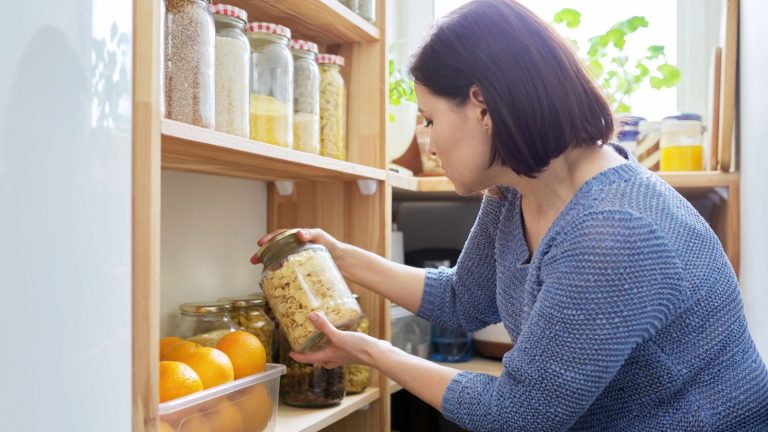
A sudden supply disruption, severe storm, or unexpected emergency can make grocery shopping more difficult than usual. Keeping a few weeks’ worth of familiar pantry foods at home can take some pressure off and save you from last-minute store runs.
You don’t need to buy everything at once or fill every cupboard. Build your supply gradually with items your household already eats, choose foods that store well, and keep an eye on expiration dates and storage conditions.
1. Rice
Rice is an affordable pantry staple that pairs well with beans, vegetables, meat, fish, and sauces. White rice can last for years in an airtight container in a cool, dry place, while brown rice has a shorter shelf life because it contains more natural oils.
Related: How to Reduce Your Grocery Bill
2. Canned Meat
Canned chicken, beef, turkey, and ham provide protein without needing refrigeration before opening. They work well in sandwiches, soups, casseroles, pasta dishes, and quick meals, so check the labels and rotate cans before their best-by dates.
3. Shelf-Stable Milk
Shelf-stable milk is handy to keep on hand because unopened cartons can stay safe at room temperature until their labeled date when stored as directed. Powdered milk is another useful option for drinking, baking, and cooking, and it takes up little pantry space.
4. Canned Vegetables
Canned corn, peas, carrots, green beans, and mixed vegetables let you add produce to meals without worrying about it wilting or spoiling in the refrigerator. Keep several varieties on hand so you can make soups, casseroles, rice dishes, and simple sides with whatever else you have.
Related: 13 Grocery Stores That Help Stretch Your Food Budget
5. Pasta
Dried pasta is inexpensive, easy to prepare, and works with many pantry ingredients. Store it in a cool, dry place, and pair it with canned tomatoes, canned meat, beans, or shelf-stable sauces for filling meals.
6. Flour
Flour lets you make bread, pancakes, biscuits, tortillas, muffins, and other basic foods at home. All-purpose flour works for everyday cooking, while whole wheat flour tends to last less time because of its higher oil content.
7. Sugar and Honey
Sugar and honey are useful for baking, sweetening drinks, making sauces, and preparing homemade preserves. Granulated sugar can last indefinitely when kept dry, and honey can remain usable for years when stored properly, though it may crystallize over time.
Related: 23 Everyday Grocery Items Worth Stocking Before a Food Shortage
8. Canned Fish
Canned tuna, salmon, sardines, and mackerel provide protein and can be eaten straight from the can or added to salads, sandwiches, pasta, and rice. Keeping a few different kinds on hand adds variety without taking up freezer space.
9. Cooking Oils
Cooking oil is useful for sautéing, roasting, baking, frying, and making salad dressings. Olive, canola, vegetable, and coconut oils have different shelf lives, so store them away from heat and direct sunlight, and replace them when they develop an unpleasant smell or taste.
10. Tomato Products
Canned tomatoes, tomato sauce, and tomato paste can turn basic ingredients into pasta sauces, chili, stews, soups, and casseroles. These products are easy to store and offer different levels of flavor and thickness for a range of recipes.
Related: 13 Grocery Stores Where Budget Shoppers Save the Most Money
11. Salt
Salt adds flavor to meals and is used in many recipes, including pickling and preserving foods. It can last indefinitely when kept dry in a sealed container, making it one of the easiest pantry items to store long-term.
12. Powdered Eggs
Powdered eggs can be useful for baking and cooking when fresh eggs aren’t available. Shelf life depends on the product and its packaging, so follow the manufacturer’s instructions and choose a product suited to how you plan to use it.
13. Dried Beans
Black beans, kidney beans, pinto beans, and navy beans are affordable sources of protein, fiber, and other nutrients. Keep dried beans in airtight containers in a cool, dry place, and remember that older beans may take longer to soften during cooking.
14. Bouillon Cubes or Powder
Bouillon cubes and powdered broth add flavor to soups, rice, beans, gravies, and casseroles without requiring cartons of liquid broth. A small container can season many meals, but check the sodium content if you need to limit salt.
15. Dried Fruit
Raisins, dates, dried apricots, and dried cranberries make convenient snacks and can be added to oatmeal, baked goods, trail mix, and grain dishes. Store them in a cool, dry place in a tightly sealed container, and follow the package directions because shelf life varies by fruit and processing method.
16. Butter and Margarine
You can freeze butter to extend its shelf life, making it useful for baking and everyday cooking when kept properly wrapped. Margarine varies by type, so check the package instructions and don’t assume every product lasts the same amount of time in the freezer.
17. Lentils
Lentils are a practical pantry choice because most varieties cook faster than many other dried beans and usually don’t need soaking. They work well in soups, stews, curries, and salads, and can provide protein and fiber for filling meals.
18. Popcorn
Popcorn kernels are an inexpensive whole-grain snack that takes up little pantry space. Store them in an airtight container away from moisture so they retain their quality and continue to pop well.
19. Coffee and Tea
Coffee, black tea, and herbal tea can provide a familiar daily comfort when normal routines are disrupted. Keep your preferred varieties sealed and stored as directed on the packaging, since ground coffee, whole beans, tea bags, and loose-leaf tea have different freshness timelines.
20. Bottled Water
Clean drinking water belongs in your emergency supplies because storms and other disruptions can interrupt local water service. Store commercially bottled water in a cool place away from direct sunlight, follow the storage guidance on the packaging, and check official emergency-preparedness advice on how much water your household should have available.
21. Couscous and Quinoa
Couscous cooks quickly with hot water or broth, while quinoa provides protein and works well in grain bowls, soups, and side dishes. Both offer a change from rice and pasta and store well in sealed containers in a cool, dry pantry.
22. Chickpeas
Chickpeas are versatile pantry ingredients for soups, curries, salads, pasta dishes, and homemade hummus. Canned chickpeas are ready to use after draining and rinsing, while dried chickpeas take longer to prepare but can be stored dry for extended periods.
23. Chocolate
Chocolate isn’t a basic food supply, but a favorite treat can be a welcome comfort during a stressful week. Store bars in a cool, dry place away from strong odors, and check the label because the shelf life depends on the ingredients and type of chocolate.