A garden doesn’t have to lose its color once spring flowers fade. By planting a mix of summer-and fall-blooming bulbs, you can enjoy fresh blooms for months. Many of these plants are easy to grow, return year after year in the right climate, and look just as beautiful in containers as they do in flower beds.
Here are 15 bulbs that will keep your garden colorful from summer well into fall.
Calla Lily
Calla lilies are known for their graceful, trumpet-shaped flowers that bring a clean, elegant look to the garden. They grow best in USDA hardiness zones 8-10 and prefer partial shade or bright, indirect sunlight. Plant the bulbs in early spring for blooms that begin in late spring and continue into early summer.
Gladiolus
Gladiolus produces tall flower spikes that instantly add height to flower beds and borders. Plant the bulbs in spring, and they’ll reward you with colorful blooms from mid-summer into early fall.
These flowers grow well in USDA hardiness zones 7-10 and appreciate regular watering and occasional feeding during the growing season. Their blooms are also a favorite of hummingbirds and bees.
Lilies
Few flowers make an impression quite like lilies. Their large blooms and sweet fragrance make them a highlight of the summer garden. From colorful Asiatic lilies to fragrant Oriental varieties, there’s a type for nearly every landscape.
Lilies grow well in USDA hardiness zones 4-9. Give them well-drained soil, plenty of sunlight, and consistent moisture for the best display.
Begonia
Begonias are prized for both their colorful flowers and attractive foliage. Some varieties grow upright, while others spill beautifully over the edges of containers and hanging baskets.
They thrive in USDA hardiness zones 9-11 and prefer partial shade with rich, well-drained soil. Keep an eye out for slugs, snails, and aphids, which occasionally feed on the plants.
Canna
Cannas bring a tropical feel with their large leaves and bold flowers in shades of red, orange, yellow, and pink. They love warm weather and bloom throughout summer.
These bulbs grow best in USDA hardiness zones 7-10 in full sun and consistently moist soil. Butterflies and hummingbirds are frequent visitors, though it’s wise to check the leaves now and then for caterpillars or spider mites.
Iris
Irises have been garden favorites for generations thanks to their distinctive blooms and wide range of colors. Bearded, Siberian, and Japanese irises each offer something a little different.
Most varieties grow well in USDA hardiness zones 3-9 and prefer sunny locations with well-drained soil. Plant rhizomes in late summer or early fall for flowers the following spring and early summer.
Allium
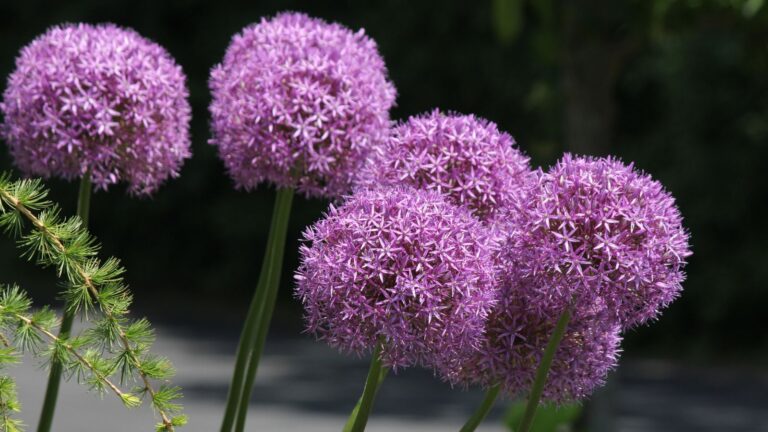
Alliums produce round flower heads that seem to float above the garden on sturdy stems. Their unusual shape adds texture to flower beds, and pollinators love them.
These bulbs grow best in USDA hardiness zones 4-8 in full sun and well-drained soil. Plant them in fall for blooms the following late spring or early summer.
Freesia
Freesias are best known for their sweet fragrance, making them a favorite for bouquets and cut flower gardens. Their colorful blooms also brighten borders and containers.
They grow well in USDA hardiness zones 9-11 and prefer rich, well-drained soil with regular moisture. Plant bulbs in fall for flowers in spring and early summer.
Agapanthus
Agapanthus, often called Lily of the Nile, produces large rounded clusters of blue, purple, or white flowers that stand above long, narrow leaves.
Plant the bulbs in early spring for blooms that appear in late summer. They thrive in USDA hardiness zones 7-11. Popular varieties include ‘Peter Pan,’ ‘Midnight Blue,’ and ‘Twister.’
Dahlia
Dahlias are famous for their huge range of flower colors, shapes, and sizes. Whether planted in borders, raised beds, or containers, they provide steady color from midsummer until the first frost.
These plants grow best in full sun with rich, well-drained soil. They’re hardy in USDA hardiness zones 8-11 and attract plenty of bees and butterflies throughout the season.
Liatris
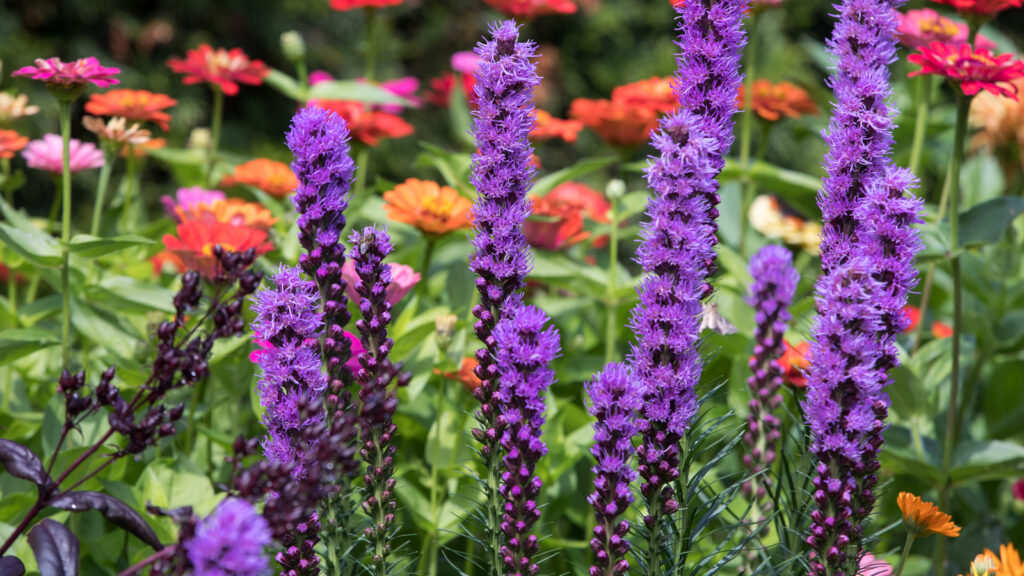
Also called blazing star or gayfeather, liatris produces tall purple flower spikes that bloom from the top down, making them stand out in any planting.
Native to North America, liatris grows well in USDA hardiness zones 3-9. It prefers full sun and well-drained soil and attracts butterflies, bees, and other pollinators.
Autumn Crocus
Autumn crocus brings welcome color just as many other flowers begin to fade. Its goblet-shaped blooms appear in shades of purple, pink, and white during late summer and early fall.
One of its most unusual features is that the flowers emerge without leaves, earning the plant the nickname “naked lady.” Keep in mind that every part of the plant is poisonous if eaten, so choose its planting location carefully.
Chrysanthemums
No fall garden feels complete without chrysanthemums. Available in nearly every color, mums bloom just as summer flowers begin to wind down and continue well into autumn.
They thrive in USDA hardiness zones 5-9 with full sun and well-drained soil. Their ability to handle cooler temperatures makes them one of the best choices for late-season color.
Asters
Asters fill the garden with cheerful daisy-like flowers from late summer through fall. Their blooms provide an important late-season food source for butterflies and bees.
These hardy perennials grow in USDA hardiness zones 3-9 and perform well in full sun, though they can also handle a little afternoon shade. They’re easy to grow in many different soil types.
Nerine
Nerine is a South African bulb prized for its clusters of delicate, funnel-shaped flowers that bloom in shades of pink, red, or white during late summer and early fall.
It grows best in full sun or light shade with well-drained soil. The long-lasting blooms also make excellent cut flowers, bringing color indoors long after many other garden flowers have finished blooming.