
Home economics was once a regular part of school, giving students practical skills they would use for the rest of their lives. Kids learned how to cook, sew, manage money, and take care of a home before they graduated.
Those classes have disappeared from many schools, but the skills themselves are just as valuable today. If anything, they’re more useful now that so many young adults are living on their own without much hands-on experience.
Parents and caregivers have a chance to pass those lessons along. Teaching these everyday skills gives kids the confidence to solve problems, care for themselves, and feel more prepared for adult life.
Basic Cooking
Every child should know how to make a few simple meals before leaving home. Start with easy recipes like scrambled eggs, pasta, grilled cheese, or oatmeal. These are meals they can make safely without much experience.
Teach them how to use the stove, handle hot pans, and keep pot handles turned inward to avoid spills. Reading a recipe from start to finish is another habit worth learning early. Once they’re comfortable with the basics, trying new recipes becomes much less intimidating.
Related: 17 Pantry Staples That Make Cooking From Scratch Easier
Meal Planning and Grocery Budgeting
Shopping without a plan often leads to overspending and wasted food. Show your kids how to plan a week’s worth of meals before making a grocery list.
Talk about comparing prices, buying ingredients that work in several meals, and choosing affordable staples like rice, pasta, beans, and frozen vegetables. Learning how to stretch a grocery budget is something they’ll appreciate for years.
Laundry Skills
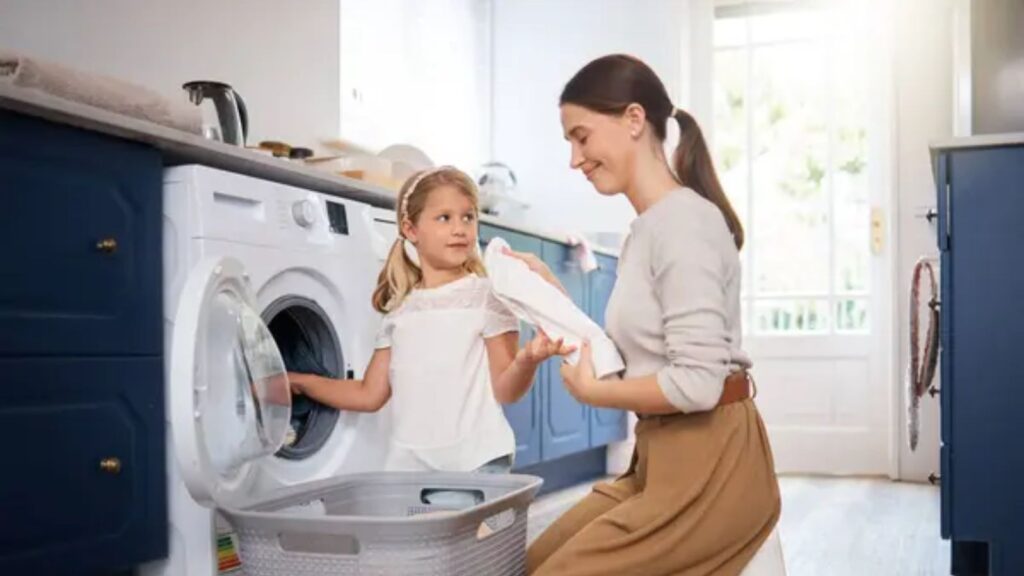
Doing laundry involves more than pressing the start button. Teach kids how to sort clothes by color and fabric, choose the right wash cycle, and measure detergent correctly.
They should also know when hot or cold water makes more sense, which items should stay out of the dryer, and why bleach isn’t right for every load. These small lessons help clothes last longer and prevent expensive mistakes.
Related: 14 Outdated Laundry Habits That Could Be Ruining Your Clothes
Cleaning and Basic Household Care
Knowing how to keep a home clean is part of living independently. Show your kids how to clean a bathroom, vacuum properly, mop a floor, and wipe down kitchen counters.
Simple tasks like taking out the trash, cleaning the garbage can, unclogging a slow drain, and loading the dishwasher correctly are easy to overlook but become part of everyday life once they’re on their own.
Related: 9 Easy Homemade Cleaning Products You Can Make Yourself
Basic Sewing and Mending
A missing button or small tear doesn’t always mean it’s time to throw something away.
Teach your kids how to sew on a button, stitch a small seam, or patch a hole. They can also learn quick fixes with iron-on patches or hem tape. These simple repairs help clothing last longer and can save quite a bit of money over time.
Ironing and Steaming Clothes
Wrinkled clothes happen, but knowing how to fix them is still a useful skill.
Show your kids how to use an iron safely, choose the correct heat setting for different fabrics, and remove wrinkles without damaging clothing. A handheld steamer is another good option, and learning to use either one helps them look polished for school, interviews, or work.
Time Management
Learning how to manage time is just as valuable as learning how to cook.
Help kids break large tasks into smaller ones, estimate how long chores actually take, and plan their day around priorities. Good time management reduces stress and helps them stay on top of responsibilities instead of constantly feeling rushed.
First Aid Basics
Every child should know how to handle everyday injuries.
Teach them how to clean and cover a cut, treat a minor burn, remove a splinter, and use an ice pack for bumps and bruises. They should also know when a situation is serious enough to call an adult or emergency services.
These basic skills help them stay calm and respond appropriately when accidents happen.
Home Safety and Emergency Preparedness
Kids should know what to do if something unexpected happens at home.
Show them where flashlights are stored, how to exit the house during a fire, where the water shutoff valve is located, and how to reset a tripped circuit breaker. These lessons only take a few minutes to teach but can make a big difference during an emergency.
Gardening and Plant Care
Growing plants teaches patience and responsibility.
Start with herbs on a windowsill or a few vegetables in the backyard. Show your kids how often to water, how much sunlight plants need, and how to recognize weeds or unhealthy leaves.
Watching something grow because of their care can be incredibly rewarding.
Related: 14 Vegetables That Make Raised Bed Gardening Easy
Etiquette and Hosting
Good manners never go out of style.
Teach your kids how to greet guests, set a table, write a thank-you note, and offer visitors something to drink. Learning how to be a thoughtful host or guest helps build confidence in both social and professional situations.
Using Basic Tools
Every child should know how to handle a few common household tools.
Teach them how to use a screwdriver,
These everyday skills make small repairs much less intimidating.
Saving Money, Budgeting, and Paying Bills
Money management is one of the biggest lessons kids can learn before adulthood.
Teach them how to create a simple budget, save for future goals, and tell the difference between needs and wants. Explain how bills work, why paying them on time matters, and how small spending decisions add up over time.
Building good habits early makes managing money much easier later.
Basic Car Maintenance
A few simple car skills can save money, time, and frustration.
Show your kids how to check the oil, add windshield washer fluid, inflate tires, and change a flat tire. They should also know where the spare tire and jack are stored and what warning lights on the dashboard mean.
Knowing these basics helps them feel more confident behind the wheel.
Cooking with Leftovers
Leftovers don’t have to be boring.
Teach your kids how to turn yesterday’s dinner into something completely different. Leftover spaghetti can become baked pasta, roasted chicken can fill tacos or sandwiches, and cooked vegetables can go into soups, fried rice, or omelets.
Learning how to make the most of what’s already in the refrigerator helps reduce food waste and stretches the grocery budget.